

⏱ 2 min read
The Short Version
Forget sterile trade shows; the Shenzhen tea expo is a high-decibel collision of sensory overload and raw human connection. From scaffolding-dependent wild harvests to masters pan-firing leaves in wooden barrels, it’s where the industry's visceral traditions meet its harsh economic realities.
Get ready to sip on this: the Shenzhen tea expo is less a formal trade show and more a high-decibel collision of tradition and commerce. Inside the Convention and Exhibition Center, the air is a heavy, inseparable blend of tea leaves and incense. The sheer scale of the hall flattens hundreds of private conversations into a constant white noise, yet within that chaos, the individual stories of producers emerge with startling clarity.
He sat in a crowd of onlookers but never looked up once.
From Yunnan Woodlands to Wok Mastery
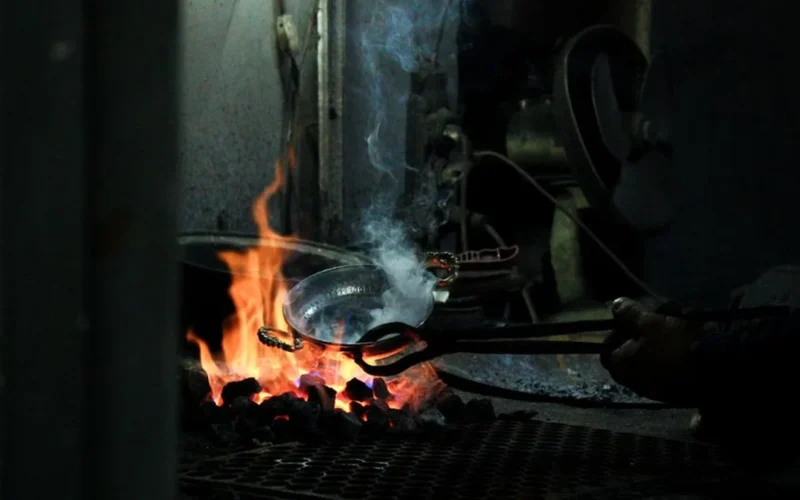
The true value of wandering these aisles lies in bypassing the corporate veneer to find the actual makers. Fu Yuanyuan, for instance, sources her Dianhong from a mix of cultivated bushes and wild ancient trees in Yunnan—some so high they require scaffolding just to reach them. Her tea pours a brilliant gold rather than the expected red, offering unexpected notes of honey and orchid. Elsewhere, the craft remains visceral; an elderly maker was seen pan-firing pre-Qingming Longjing in a wok set into a wooden barrel. He worked with a singular, unblinking focus, pressing the leaf flat against the hot metal to create those signature blade-like shapes. He sat in a crowd of onlookers but never looked up once.
The Reality of the Harvest
Beyond the technical skill, the expo reveals the economic pressures facing modern tea families. A couple from Lincang shared how they had to skip production this year because the rising cost of fresh leaves made it untenable. Their Puer is defined by its cleanliness and a hint of structured bitterness, a profile that suggests it will age exceptionally well. Even the traditions are shifting; while Xin Xin’s family has produced Wuyi tea for generations, she admits that the intensive task of roasting Rou Gui over lychee charcoal still requires the hands of old masters. The expo serves as a reminder that whether it is black tea beer on tap or hand-pressed cakes, the industry is a living, breathing organism. We left with more tea than we could possibly consume, simply because every encounter felt like a connection rather than a transaction. Do you prefer discovering new teas through organized tastings or by wandering aimlessly through large trade shows?
Questions & Answers
What makes the tea produced by Fu Yuanyuan unique?
Fu Yuanyuan's Dianhong tea is unique because it is sourced from a blend of cultivated bushes and wild ancient trees located high in the Yunnan Woodlands. This specific sourcing method results in a liquor that pours a brilliant gold color rather than the traditional red hue associated with black teas. The flavor profile of her tea is also distinctive, offering unexpected tasting notes of honey and orchid that differentiate it from more common varieties found at the expo.
How do traditional makers prepare Longjing tea at the expo?
Traditional makers prepare Longjing tea by using a manual pan-firing technique with a wok set into a wooden barrel. This visceral process requires intense focus as the maker presses the leaves flat against the hot metal to create the signature blade-like shapes characteristic of high-quality Longjing. Even amidst the loud and crowded environment of the Shenzhen Convention and Exhibition Center, these artisans maintain a singular concentration on the physical craft of shaping the tea leaves by hand.
Why are some tea families struggling with production costs?
Some tea families are skipping production due to the rising cost of fresh tea leaves making it economically untenable to harvest. This financial pressure was highlighted by a couple from Lincang who faced these exact challenges despite producing high-quality Puer characterized by cleanliness and structured bitterness. These economic realities show that even though the tea industry is a living organism, modern producers face significant hurdles in maintaining traditional production cycles amidst fluctuating market costs.
What traditional methods are still required for roasting Wuyi tea?
The intensive task of roasting Rou Gui tea requires the specialized skills of old masters who use lychee charcoal. While many aspects of the industry are shifting and modernizing, certain processes like this specific type of roasting remain deeply rooted in generational expertise. Families that have produced Wuyi tea for generations still rely on these traditional master craftsmen to ensure the quality and authenticity of their products through time-honored heat management techniques.
Originally reported by Reddit Tea.

[…] toward specialized knowledge like Chinese gongfu brewing and rare Thai botanicals. We are seeing tea move past being a mere ingredient in a latte; it is becoming a complex flavor profile used in everything from […]
[…] flavor element. We are finally moving beyond the trend cycle and toward an actual understanding of tea’s global breadth. Do you prefer your tea as a quiet ritual or a complex culinary […]