⏱ 2 min read
The Short Version
Forget the sushi counter; cocktail omakase is bringing high-stakes theatricality to the bar top with caviar bumps and smoked pours. Whether this pivot toward guided liquid degustations is a legitimate evolution of craft or just expensive marketing remains the industry's biggest debate.
In This Article
At Ophelia in midtown Manhattan, the “Omacocktail” experience begins with a bartender anointing a frothy coupe with three drops of Louis XIII Cognac while a server presents a bump of caviar on ice. This 90-minute tasting features seven petite cocktails and small bites, sold via Bucket Listers for approximately $100. The theatricality—defined by smoked drinks and edible glitter—feels more like Benihana than Nobu. Yet, this spectacle highlights a broader industry pivot toward guided liquid degustations designed to lure younger drinkers through mindful bar experiences.
Instead of one drink standing entirely on its own, we can think about how four drinks build on and contrast with one another.
The Philosophy of Trust
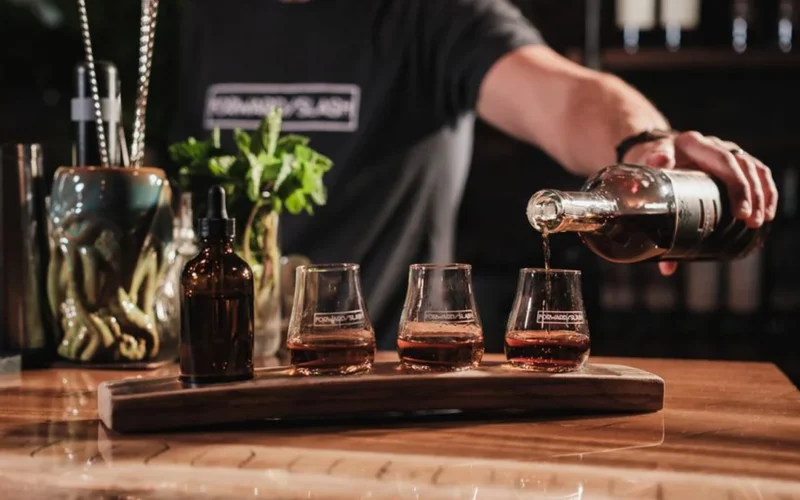
The term omakase, meaning “I leave it to you,” originated in Japan’s Edo period as a way for diners to trust vendors with the freshest seasonal fish. Today, that vocabulary is being co-opted by bars seeking to showcase technique. Greg Boehm, founder and CEO of Cocktail Kingdom, launched Cocktail Omakase on NYC’s Lower East Side to prioritize this connection. His $55 four-course menu changes every two weeks, utilizing a low-slung design inspired by traditional sushi counters so guests can watch every pour. Instead of one drink standing entirely on its own, we can think about how four drinks build on and contrast with one another. Similarly, Tiger Sun in Atlanta offers a $95 themed cocktail omakase inside a refurbished vintage tour bus, using the concept to mitigate consumer decision fatigue.
Gimmickry vs. Gastronomy
Critics remain wary of whether the trend represents true artistry or mere marketing cachet. Shinya Yamao, beverage director at Don’t Be Shyin NYC, argues that simply serving a predetermined sequence does not constitute omakase; instead, it requires a specific relationship between guest and creator. For some owners, like Army Sadeghi of The Arc Room, the label isn’t even intentional—it is often a byproduct of media branding rather than an explicit menu choice.
While some experts like Hiro Nishida see value in consumers embracing new vocabularies for hospitality, others suggest the market may be reaching a saturation point. As brands move toward terms like kaiseki to avoid buzzword exhaustion, the longevity of the cocktail omakase remains unproven. Whether these experiences are genuine evolutions of craft or merely status-driven “bromakases” depends on if they can balance spectacle with substance.
Do you view cocktail tasting menus as a legitimate evolution of craft, or just another way to charge a premium for theater?
Questions & Answers
What is cocktail omakase?
Cocktail omakase is a guided liquid degustation experience where a bartender selects a predetermined sequence of drinks for the guest. The term is derived from the Japanese phrase meaning I leave it to you, which traditionally implies a high level of trust between the diner and the vendor. These tasting menus, such as those found at Cocktail Kingdom, allow guests to watch every pour and experience how multiple drinks build upon or contrast with one another through a curated progression.
How much does a cocktail omakase tasting menu cost?
The cost of a cocktail omakase experience varies significantly depending on the venue and the complexity of the service. At Ophelia in midtown Manhattan, a 90-minute tasting featuring seven petite cocktails and small bites costs approximately $100 via Bucket Listers. Other establishments offer different price points, such as a four-course menu at Cocktail Kingdom for $55 or a themed cocktail experience inside a vintage tour bus in Atlanta for $95.
Why are bars adopting the omakase concept?
Bars are adopting the omakase concept to showcase technical skill and to mitigate consumer decision fatigue among drinkers. By providing a guided experience, establishments can lure younger drinkers through mindful bar experiences that emphasize the connection between the creator and the guest. This approach also allows bartenders to prioritize technique and storytelling, moving away from individual standalone drinks toward a cohesive narrative that uses seasonal ingredients and specific design elements like low-slung counters.
What are the criticisms of the cocktail omakase trend?
Critics argue that the trend may sometimes prioritize marketing cachet and theatrical spectacle over genuine culinary artistry. Some beverage professionals suggest that a true omakase requires a specific relationship between the guest and the creator rather than just a predetermined sequence of drinks. There is also concern regarding buzzword exhaustion and whether these experiences are legitimate evolutions of craft or simply status-driven gimmicks designed to charge a premium for entertainment.
Originally reported by VinePair.