

⏱ 2 min read
The Short Version
Hario’s new NEO swaps classic spiral ridges for 72 ultra-fine vertical ribs to stabilize water flow and eliminate uneven pressure zones. It trades the original's sharp, bright acidity for a more consistent, rounded extraction that favors sweetness over extreme transparency.
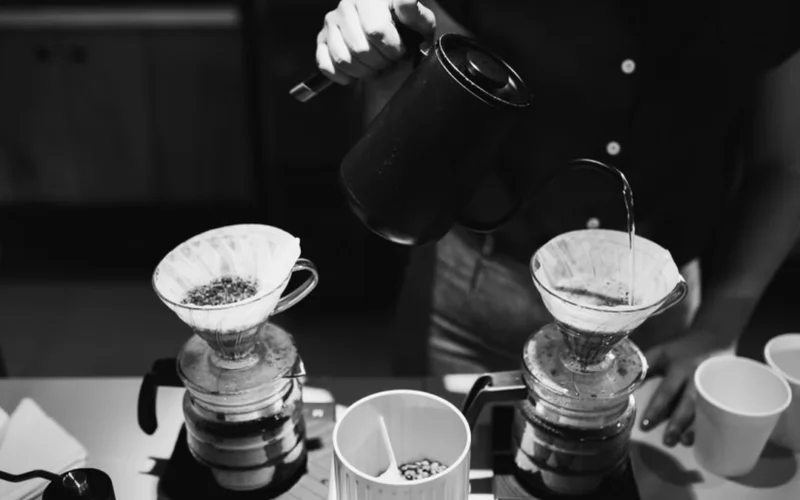
Pour yourself a cup for this one: the Hario V60 is less a piece of equipment and more a global industry reference point. Since its debut in 2004, its specific geometry has defined pour-over standards, rewarding precision while occasionally punishing inconsistency. Now, Hario has introduced the NEO, a redesign that swaps the classic spiral ribs for an entirely different internal architecture.
The NEO’s 72 ribs create a more even distribution of air channels around the full circumference.
A shift in geometry
The traditional V60 relies on a few raised ridges to create air channels, but these can lead to uneven pressure zones where water finds lateral pathways through the bed. The NEO replaces this with 72 ultra-fine vertical ribs that run straight down the interior. This change isn’t just aesthetic; it fundamentally alters how water moves through the coffee. The NEO’s 72 ribs create a more even distribution of air channels around the full circumference. By ensuring a uniform flow, the design guides water directly downward rather than allowing it to wander, resulting in a faster, more stable draw-down and a much more forgiving extraction process.
Tactile evolution
Beyond the geometry, the physical presence of the NEO marks a departure from tradition. It is handle-free and crafted from Tritan PCT resin—a material that feels considered rather than economized. While the ultra-thin walls are designed to minimize heat loss and the build is noticeably lighter, it does not feel cheap. Instead, the rigidity of the resin combined with a silicone rubber base provides a sense of solidity and grip that makes the object feel both minimal and intentional.
Trading clarity for consistency
But how does this structural stability translate to the palate? Because the NEO stabilizes the brew, it produces a rounder, fuller cup compared to its predecessor. On natural or anaerobic processed coffees, the effect is excellent, emphasizing sweetness and texture. However, there is a trade-off: the NEO tends to soften the sharp edges of high-altitude washed coffees. If you are brewing a delicate Panamanian Geisha where vivid acidity and floral transparency are the primary goals, the classic V60 remains the superior tool. For most daily drinkers, however, the benefit of a predictable, consistent draw-down outweighs the loss of extreme brightness. The NEO essentially trades some of the V60’s signature reactivity for increased accessibility.
Does your morning ritual demand the bright, unpredictable edge of the original, or do you find more satisfaction in the reliable, rounded profile of the new guard?
Questions & Answers
How does the Hario V60 NEO differ from the classic V60 design?
The Hario V60 NEO differs from the original model by replacing the traditional spiral ridges with 72 ultra-fine vertical ribs. While the classic version uses raised ridges to create air channels, the NEO's new internal architecture ensures a more even distribution of air around the entire circumference. This structural change guides water directly downward rather than allowing it to wander through lateral pathways. Consequently, the redesigned geometry provides a faster and more stable draw-down during the brewing process.
What materials are used to construct the new Hario NEO?
The Hario NEO is constructed from Tritan PCT resin and features a silicone rubber base. This specific choice of material allows for ultra-thin walls designed to minimize heat loss while keeping the device noticeably lightweight. Although the build is lighter than previous models, the rigidity of the resin combined with the silicone base provides a sense of solidity and grip. This combination makes the handle-free brewer feel like a minimal and intentional piece of equipment rather than an economized product.
Why might a coffee enthusiast prefer the classic V60 over the NEO?
A coffee enthusiast might prefer the classic V60 when they want to highlight the vivid acidity and floral transparency of high-altitude washed coffees. While the NEO is designed for stability, it tends to soften the sharp edges of delicate beans like a Panamanian Geisha. The original V60 remains a superior tool for those seeking extreme brightness and reactivity in their cup. In contrast, the NEO trades some of that signature clarity for a more predictable and accessible extraction profile.
How does the Hario NEO affect the flavor profile of brewed coffee?
The Hario NEO produces a rounder and fuller cup of coffee compared to the classic V60 design. By stabilizing the brew and ensuring a consistent draw-down, the NEO emphasizes sweetness and texture in the final result. This makes it an excellent choice for brewing natural or anaerobic processed coffees. However, this increased stability comes with a trade-off, as the brewer tends to prioritize a balanced and consistent mouthfeel over the sharp, bright acidity found in traditional pour-overs.
Originally reported by Barista Magazine.


[…] Pour yourself a cup for this one: entering the Pakistani coffee market requires more than just opening another cafe. While the local landscape is currently saturated with sugary lattes and frappes that mask poor quality, there is a growing opportunity to introduce true specialty standards through a dedicated roastery model. The goal isn’t just to sell caffeine, but to redefine the palate by introducing clean, naturally sweet profiles from Ethiopia and Colombia via precise brewing methods like Chemex or V60. […]
[…] new TBL structure prioritizes live judge interaction and conceptual service over mere technical repetition. For Levina and Gorelov, success relied on treating the judges not as distant examiners, but as […]
[…] Beyond these shifts, the industry continues its rapid expansion through strategic partnerships and equipment evolution. Weber Workshops has secured a major win, with its Unibasket named the official espresso basket for […]
[…] a 6-cup Moccamaster puts you in a specific ratio range that must be precisely dialed in with your grind size to ensure even extraction across the entire bed. If your grind is too coarse for that dose, you […]
[…] maximum potential from even the most rudimentary hardware. Is it time to invest in a dedicated pour-over setup, or can these manual hacks sustain you […]