⏱ 2 min read
The Short Version
Forget predictable sweetness; this tasting pits a chaotic, petrol-tinged German Riesling against a lushly floral Moscato. While the Selbach Oster oscillates between tropical fruit and industrial notes, its bracing acidity demands fatty foods to survive the experience.
In This Article
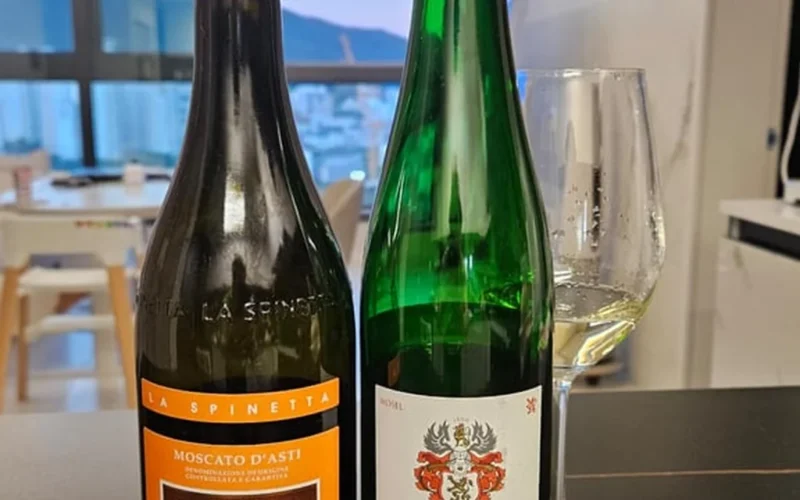
Unexpected tension often defines a tasting experience—specifically when guests anticipating sweetness encounter the bracing acidity of a dry German Riesling. A side-by-side comparison of the 2022 Selbach Oster Zeltinger Kabinett Trocken and the 2025 La Spinetta San Rocco Moscato d’Asti reveals a sharp divide between mineral complexity and pure fruit joy.
The wine exists in a state of perpetual ambiguity, oscillating between tropical fruit and industrial petrol.
The tension of dry Riesling
The Selbach Oster is a study in nuance and, occasionally, confusion. On the nose, it presents a chaotic mix of Anjou pear and aromatic hints of tropical fruit that teeter on the edge of petroleum. As the temperature drops, the profile settles into something more grounded, offering notes of sweet chalk and petroleum jelly. The palate is medium-bodied with a semi-reductive entry, moving through lemon toward a surprising mid-palate reminiscent of sour gummy strings. The wine exists in a state of perpetual ambiguity, oscillating between tropical fruit and industrial petrol. While the finish is quite dry—evoking diet Sprite and limestone leaf—it suffers from notable diminishing returns with every subsequent sip. This high acidity demands a fatty counterpoint; it is a perfect partner for pork belly or spicy Thai aromatics that can cut through its sharp, structural edges.
The brightness of Moscato
In stark contrast, the La Spinetta San Rocco offers an immediate, unapologetic floral explosion. This bottling trades mineral austerity for lushness, prioritizing accessibility over intellect. The bouquet is heavy with grapefruit, peach blossom, and acacia, leading into a light-bodied palate of nectarine and lychee. It feels like sipping premium lemon soda, characterized by a refreshing effervescence and a short, sweet finish that leaves no trace of alcohol. While the Riesling requires a meal to anchor it, the Moscato functions as a standalone treat or a companion to fresh fruit tarts. Where the Riesling demands intellectual engagement, the Moscato provides pure, linear pleasure.
The takeaway is clear: complexity does not always equate to enjoyment in a social setting. The Selbach Oster is an intellectually stimulating wine for a quiet moment, but the La Spinetta is the one that actually disappears from the table. One offers a puzzle of flint and fruit, while the other delivers a bright, tropical escape.
Which do you prefer when hosting: a wine that sparks a debate or one that everyone simply enjoys?
Questions & Answers
What are the primary flavor profiles of the Selbach Oster Riesling?
The Selbach Oster Zeltinger Kabinett Trocken features a complex mix of Anjou pear, tropical fruit, and aromatic hints of petroleum. As the wine cools, its profile shifts toward notes of sweet chalk and petroleum jelly on the palate. This medium-bodied Riesling offers a unique sensory experience that moves from lemon flavors to a mid-palate reminiscent of sour gummy strings. The finish remains quite dry, evoking tastes of limestone leaf and diet Sprite rather than traditional sweetness.
How does the La Spinetta San Rocco Moscato differ from the Riesling?
The La Spinetta San Rocco Moscato d'Asti prioritizes lushness and floral accessibility over the mineral austerity found in the Riesling. While the Riesling offers a complex and sometimes ambiguous profile, the Moscato provides an immediate explosion of grapefruit, peach blossom, and acacia. It is characterized by a light-bodied palate featuring nectarine and lychee flavors. This wine feels like sipping premium lemon soda, offering a refreshing effervescence and a short, sweet finish that lacks any trace of alcohol.
What food pairings work best for a dry German Riesling?
High acidity in a dry German Riesling makes it an ideal partner for fatty foods or spicy dishes. Because the wine possesses sharp structural edges, it requires a heavy counterpoint to balance its profile. Specifically, pork belly serves as an excellent pairing to complement its bracing nature. Additionally, spicy Thai aromatics work well to cut through the acidity and navigate the wine's complex notes of lemon and tropical fruit during a meal.
Why is the Moscato d'Asti considered a standalone treat?
The Moscato d'Asti functions as a standalone treat because it offers pure, linear pleasure without requiring a heavy meal to anchor its flavors. Unlike the Riesling, which demands intellectual engagement and food pairing, the Moscato is highly accessible and refreshing. Its light body and sweet profile make it perfect for sipping on its own or serving alongside fresh fruit tarts. The experience is defined by easy fruit notes like nectarine and lychee rather than intense mineral complexity.
Originally reported by Reddit Wine.