

⏱ 1 min read
The Short Version
One squeeze of citrus transforms Anchan tea from deep sapphire to vibrant violet via a pH-driven molecular shift. Master this botanical alchemy by playing with acidity for purples or alkalinity for unexpected greens, turning a simple steep into a spectrum of color.
In This Article
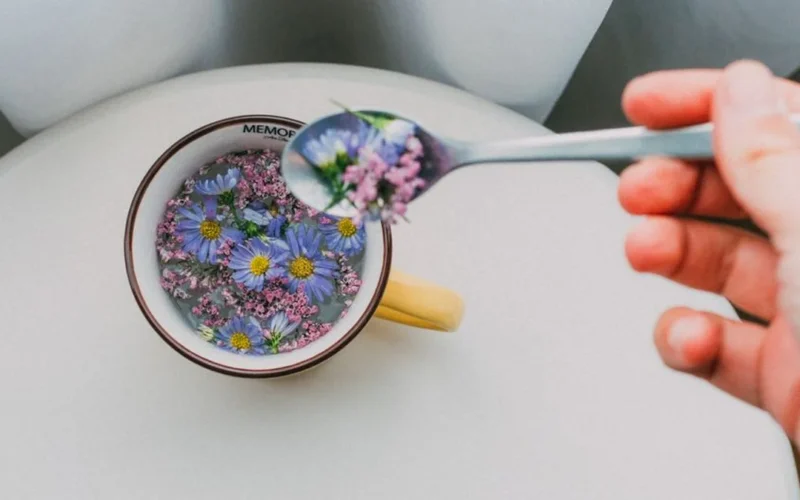
This is worth savoring: the visual transformation of butterfly pea flower tea offers a rare intersection of botanical beauty and chemistry. Known as Anchan, this herbal infusion relies on the delicate properties of blue flowers to create a drink that reacts instantly to its environment.
Brewing the Blue
Preparation requires minimal equipment but demands attention to temperature. Steeping the dried flowers in water heated to approximately 90°C for three minutes is enough to extract their deep pigment. Unlike more finicky teas, Anchan does not require a filter; you can simply scoop the spent blooms from the cup once the infusion reaches its peak intensity. The base flavor remains solid and grounded, providing a clean canvas for whatever acidity you choose to introduce.
This vivid coloration is dictated by pH levels. While the natural state of the brew is a striking, deep blue, adding citrus fundamentally alters its molecular structure. A squeeze of lemon or lime shifts the hue toward purple, while increased acidity can push the spectrum even further into vibrant reds.
Mastering the Spectrum
Achieving a full color palette requires an understanding of alkalinity just as much as acidity. While most drinkers gravitate toward the sour side of the scale to witness the shift to violet, the tea can also transition into green when exposed to alkaline elements. To achieve this without ruining the taste, try adding a tiny pinch of baking soda or using a high-mineral alkaline water. These subtle adjustments allow you to explore the full chromatic range of the infusion.
If you are seeking more brightness, lime may offer a sharper, more defined profile than lemon, though both serve the purpose of triggering the visual change. The true value of Anchan lies in its ability to turn a standard tea service into an interactive experiment. It is a drink designed for those who prioritize visual spectacle alongside a clean, herbal finish.
What alkaline ingredient would you experiment with to turn your next cup green?
Questions & Answers
How do you change the color of butterfly pea flower tea?
You can change the color of butterfly pea flower tea by adjusting its pH levels with acidic or alkaline ingredients. Adding citrus fruits like lemon or lime will shift the deep blue liquid toward shades of purple and vibrant red. To move the color in a different direction, you can introduce alkaline elements such as a small pinch of baking soda or high-mineral alkaline water. These adjustments allow you to transform the tea through a visual spectrum of colors.
What is the best way to brew Anchan tea?
The best way to brew Anchan tea is by steeping dried butterfly pea flowers in water heated to approximately 90°C for three minutes. This specific temperature and timing are necessary to extract the deep blue pigment from the blossoms effectively. Unlike many other herbal infusions, this tea does not require a specialized filter during preparation. Once the infusion reaches its peak intensity, you can simply scoop the spent blooms directly from your cup before serving.
Why does butterfly pea flower tea change color?
Butterfly pea flower tea changes color because of its unique reaction to different pH levels in its environment. The natural state of the infusion is a striking deep blue, but its molecular structure reacts instantly when acidity or alkalinity is introduced. Adding acidic citrus fruits triggers a shift toward violet and red hues. Conversely, exposing the brew to alkaline substances can cause the liquid to transition into green, making the tea an interactive chemical experiment.
What ingredients create different colors in Anchan tea?
Different ingredients like citrus fruits and alkaline additives create various colors within an Anchan tea infusion. Squeezing lemon or lime into the blue tea shifts the hue toward purple or vibrant red depending on the acidity level. If you want to explore the green side of the chromatic range, you can use a tiny pinch of baking soda or high-mineral alkaline water. These subtle adjustments allow for complete control over the visual spectrum of the drink.
Originally reported by Reddit Tea.


[…] yourself a cup for this one: a cardiologist’s personal experiment reveals why green tea is more than just a gentle alternative to coffee. After replacing his second daily cup of coffee […]
[…] made from Zhuni clay, you are holding one of the most prized yet temperamental materials in the tea world. Its reputation for beauty is matched only by its vulnerability to thermal […]
[…] Indian tea market is undergoing a fundamental structural realignment. While the morning ritual remains sacred, […]
[…] never thinning out or losing its character. While early rounds focus on damp, mineral notes, the tea shifts as the session progresses. By the seventh infusion, the sweetness becomes unexpectedly […]