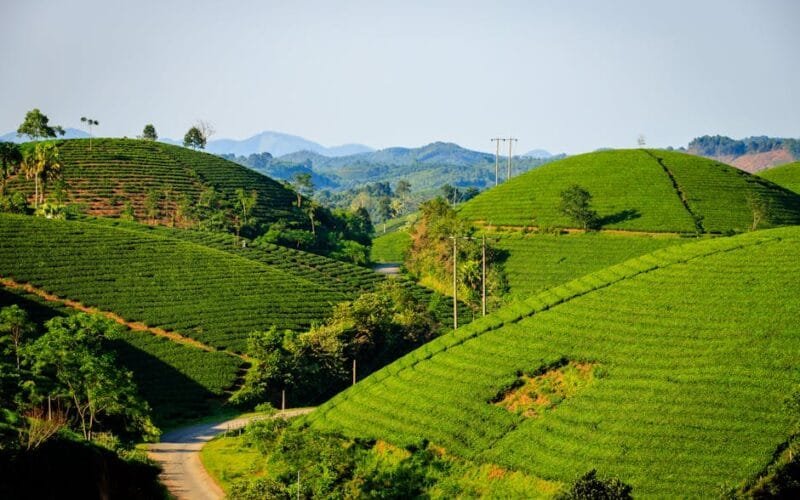
Get ready to sip on this: California is about to plant its next big crop—tea. While the state dominates almonds, grapes, and citrus, a quiet shift is brewing in the Central Valley. Tea, the world’s second-most consumed beverage after water, is now being grown here for the first time in decades. UC researchers are betting that California’s climate and soil can turn this ancient crop into a lucrative alternative to water-intensive crops like almonds.
The stakes are high. Every year, the U.S. imports 120 million pounds of tea, spending $6 billion. That’s a problem for growers facing tighter water regulations under the Sustainable Groundwater Management Act. Atef Swelam, director of UC Kearney Agricultural Research and Extension Center, sees tea as a way to maximize profit per acre. “This isn’t just about tea,” he says. “It’s about adapting to a changing landscape.” The event on March 19 is a chance to see how far California has come—from 1967, when Lipton funded a short-lived tea project, to today’s 18 distinct cultivars thriving in the field.
What makes California’s approach unique? The state’s warm days and cool nights mimic the ideal conditions for tea plants, which need specific humidity and temperature ranges. UC scientists are testing varieties that can withstand local pests and diseases, while also exploring sustainable irrigation methods. The result? A potential crop that could reduce reliance on imported tea and create new markets for local farmers.
But this isn’t just about agriculture. It’s about redefining what California can grow. Tea Day invites growers, researchers, and tea lovers to taste, test, and debate the future of this crop. Participants can sample brews made from varieties grown at Kearney REC, vote on their favorites, and even buy young plants for $25 each. The event is a microcosm of a larger movement: turning California into a tea-producing powerhouse.
The event provides a rare opportunity to engage with growers, researchers, and tea enthusiasts.
Key points: California’s climate is uniquely suited for tea cultivation, offering a viable alternative to traditional crops. The event provides a rare opportunity to engage with growers, researchers, and tea enthusiasts. UC’s research could reshape the state’s agricultural future by reducing reliance on imports.
What if California’s next agricultural boom isn’t in almonds or grapes—but in tea? Share your thoughts below.
Questions & Answers
Is tea becoming a major crop in California?
Yes, tea is emerging as a significant crop in California, with UC researchers exploring its potential for the state’s agriculture industry.
What’s the role of UC in California tea farming?
UC provides research and resources to support sustainable tea farming, helping growers adapt to California’s climate and market demands.
Information sourced from industry reports and news outlets.