⏱ 1 min read
The Short Version
Brewing tea at high altitude, where water boils at 92°C instead of 100°C, alters tea chemistry, challenging Gongfu techniques by reducing extraction and shifting flavor dynamics. Adjusting steeping time or leaf ratios can still yield depth, but the science of tea chemistry changes at altitude.
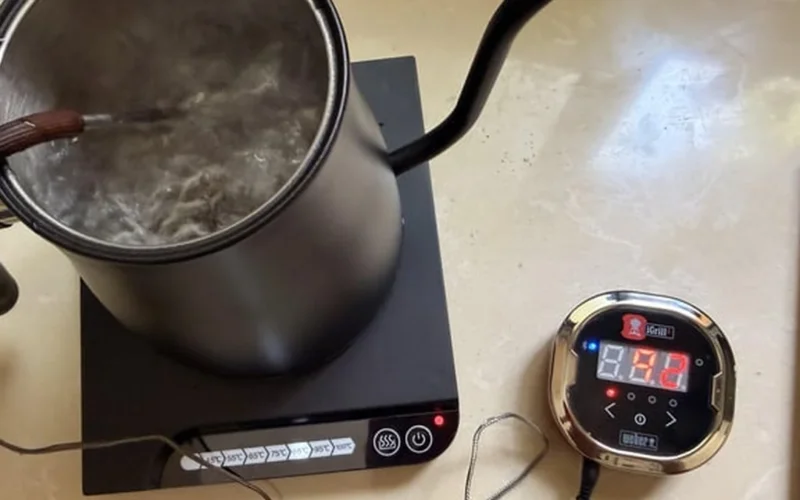
If you’ve ever brewed tea at altitude, you’ve probably noticed that water doesn’t behave as expected. At 2000 meters, it boils at 92°C—far from the 100°C you’re used to. This isn’t just an inconvenience; it’s a fundamental shift in how tea is extracted, and it challenges the very principles of Gongfu brewing. The real question isn’t whether you can brew tea at lower temperatures—it’s whether you can still achieve the depth and complexity you expect.
The temperature of water determines the chemistry of extraction. At 92°C, the equation changes—and so does the tea.
The Science of Boiling Points at Altitude
Atmospheric pressure decreases with elevation, which means water reaches its boiling point at a lower temperature. This isn’t a limitation—it’s a physical law. For tea, this means slower extraction, reduced solubility of compounds, and a different dynamic between leaves and water. The threshold for flavor activation changes, potentially leaving some aromatics and tannins underdeveloped. It’s not about the heat itself; it’s about the chemical reactions it influences.
Gongfu’s Threshold: Extraction Beyond the Boil
Gongfu tea thrives on precision, where timing and temperature are inseparable. At lower temps, the same steeping duration yields different results. Some compounds—like delicate floral notes or volatile oils—might not fully emerge, while heavier elements like tannins linger. This isn’t a failure; it’s a recalibration. The challenge becomes how to coax the same depth from a lower-temperature brew, whether through extended contact time or adjusted leaf ratios.
The temperature of water determines the chemistry of extraction. At 92°C, the equation changes—and so does the tea.
Different tea varieties respond uniquely to lower boiling points. For instance, green tea, which relies heavily on delicate amino acids, may lose its fresh, vegetal character at lower temps, while oolong’s complex floral and woody notes can become more pronounced. Black tea, with its robust tannins, might develop a smoother, more mellow profile. Understanding these variations is key to adapting your Gongfu technique to altitude.
How do you adjust your method when the water won’t reach 100°C?
Questions & Answers
How does altitude affect tea brewing chemistry?
Lower boiling points at high altitude change tea chemistry by slowing extraction and altering solubility. This impacts flavor activation, potentially leaving some aromatics underdeveloped. The temperature shift influences how compounds like tannins and volatile oils interact with water, resulting in a different tea profile.
Can Gongfu brewing still produce depth at lower temperatures?
Yes, Gongfu brewing can still achieve depth at lower temperatures through adjustments like extended contact time or modified leaf ratios. The challenge is recalibrating techniques to coax the same complexity from a lower-temperature brew, rather than relying on heat alone.
Why do different teas react differently to high altitude brewing?
Different teas react uniquely because their chemical compositions vary. Green tea may lose its vegetal character, while oolong can develop more floral notes, and black tea might become smoother. These variations stem from how each tea’s compounds respond to lower boiling points and slower extraction.
What role does temperature play in tea extraction at high altitudes?
Temperature dictates the chemistry of extraction, influencing how compounds dissolve in water. At 92°C, the equation changes, affecting the balance of tannins, aromatics, and other elements. This shift means that even the same tea can taste different when brewed at high altitude.
Originally reported by Reddit Tea.