Light

Dark Roasts Are Making a Bold Return

Dark Roasts Are Making a Bold Return

Get ready to sip on this: Dark roasts are reclaiming their throne in the coffee world. After years of light roasts dominating the conversation, the heavy hitters are back—thick crema, syrupy flow, and that unmistakable deep-fried-butter richness. These beans, roasted to perfection at around 10 days off, are hitting that sweet spot where flavor and texture align. The magic? A wider extraction window that makes dialing in less of a gamble and more of a ritual. Shots feel consistent, results are reliable, and the body? Dense, velvety, and utterly satisfying. Light roasts still have their fans—bright acidity, floral notes, and…
Read More
Understanding Coffee Roast Levels: From Light to Dark

Understanding Coffee Roast Levels: From Light to Dark

Real talk: If you’re a home roaster trying to nail the perfect roast, you’re not alone. The confusion between light, medium, and dark roasts is a common pitfall, even for seasoned brewers. Take the case of a Kenyan AA batch roasted three ways: light at the first crack, medium at the start of the second, and dark after the second crack. The results? A spectrum of flavors that reveal how roast level transforms a bean’s character. Light roasts, like the first batch, stop just after the first crack. This is where acidity shines, and the bean’s origin shines through. Think…
Read More
The First Roast: Navigating the CBR-101’s First Crack

The First Roast: Navigating the CBR-101’s First Crack

Here’s something to stir your curiosity: Your first coffee roast didn’t go as planned—but that’s where the magic begins. You’re not alone in the chaos of first-time roasting, especially with a machine like the GeneCafe CBR-101, which demands precision and patience. The story of your first attempt? A mix of trial, error, and a dash of determination. You started with Yoshihara’s Ethiopian beans, a trusted partner in Kyoto, and your own batch, but the results? A roast that dropped before first crack, darker than intended, and a re-roast that pushed it into medium territory. The question isn’t just how you…
Read More
The Light Roast Dilemma: When Darkness Hides the Flavor

The Light Roast Dilemma: When Darkness Hides the Flavor

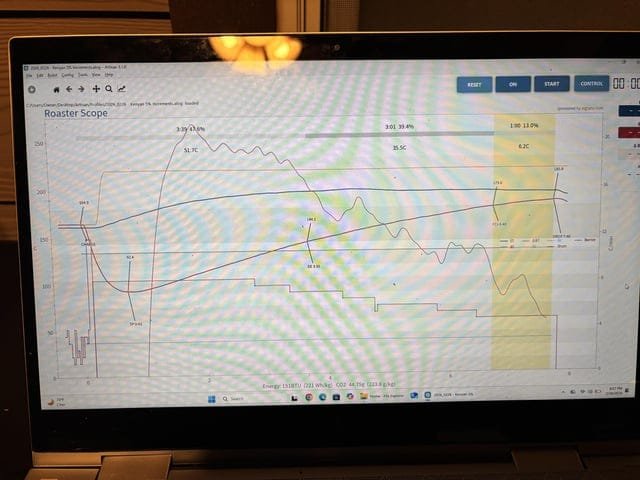
Pour yourself a cup for this one: You’re chasing fruit-forward light roasts, but your beans keep emerging dark, their flavor buried under roast character. It’s a common trap—especially when juggling gear like the Kaleido M1 Lite, Skywalker v1, and sr800. The problem isn’t the equipment; it’s the disconnect between roast time, temperature, and how lightness translates to color. Here’s the crux: Light roasts don’t always look light. A 1:00 to :30 development time after first crack might seem like a safe bet, but if your beans are still dark when you grind them, you’re missing the bigger picture. Temperature curves…
Read More
The Acidity Paradox: How to Brew Coffee That Matches Its Flavor Notes

The Acidity Paradox: How to Brew Coffee That Matches Its Flavor Notes

Coffee lovers, wine enthusiasts, tea devotees—here’s a question that’s been gnawing at the edges of your brewing process: should you adjust your grind size to amplify acidity in a Kenyan SL28, or is that just chasing shadows? The confusion is real. You’ve got a washed Kenyan with bright, acidic notes, but the cup feels flat. Should you grind finer to extract more acidity, or coarser to dial it back? The answer isn’t in the beans’ inherent acidity—it’s in how you coax it out. Acidity in coffee isn’t a fixed trait. It’s a dance between roast level, water temperature, and extraction…
Read More
Mastering Light Roasts: The SR800’s Secret to Nordic Perfection

Mastering Light Roasts: The SR800’s Secret to Nordic Perfection

Here’s something to stir your curiosity: Light roasts are the espresso of the coffee world—intense, complex, and wildly misunderstood. Yet when you try to dial them in on an SR800, the numbers don’t always align. Take Rwanda Nyamasheke Muhororo Natural, for instance. Hacea recommends light to ultra-light profiles, targeting 405°F, 10–11% weight loss, and 90–95 Agtron. But in practice, you’re hitting 13% loss, temps keep climbing post-drop, and the Agtron scale feels like a moving target. Why? Because light roasts demand precision that’s as much art as science. The SR800’s extension tube and thermometer are your allies, but they’re only…
Read More
Skywalker for Light Roasts: A Roaster’s Dilemma

Skywalker for Light Roasts: A Roaster’s Dilemma

Get ready to sip on this: If you’re a pourover purist chasing precision, the Skywalker roaster isn’t just a tool—it’s a conversation starter. The debate between the Cubean and SR800 isn’t just about size; it’s about how well each handles the delicate dance of light roasts. Light roasting demands finesse, and the Skywalker’s reputation for consistency makes it a contender, but the smaller Cubean’s limited user base raises questions. Are you willing to trade control for compactness? The Skywalker’s strength lies in its ability to dial in exact temperatures, critical for light roasts where underdevelopment can ruin a cup. The…
Read More
Unlocking the Fruity Soul of Natural Process Coffee

Unlocking the Fruity Soul of Natural Process Coffee

If you’ve ever wondered why some light roasts sing with fruitiness while others fall flat, you’re not alone. Natural process coffees, especially from Colombia, are known for their vibrant acidity and tropical notes, but mastering their aroma is an art. The user’s struggle—capturing that elusive bright, berry-forward profile—highlights a common challenge: balancing light roasting’s delicacy with the risk of underdeveloped flavors. The key lies in understanding how temperature, timing, and bean origin shape aroma. Light roasts preserve the coffee’s inherent characteristics, but they demand precision. A natural process coffee’s fruitiness stems from its high acidity and fermentation during drying, which…
Read More
How Roasters Taste Fresh Coffee Without Waiting Weeks

How Roasters Taste Fresh Coffee Without Waiting Weeks

Let’s talk about the quiet art of cupping fresh coffee—yes, even before it’s rested. Light roasts, with their bright acidity and floral notes, often need weeks to mellow, but roasters still need to evaluate quality early. How do they do it without waiting? The answer lies in a blend of science, intuition, and a few clever tricks that turn the clockwork of coffee into a dance of precision. First, roasters don’t wait for perfection—they wait for enough. A few days post-roast might reveal a coffee’s raw potential, but it’s not the full story. Think of it like tasting a young…
Read More
Light Roast Isn’t Weak—Here’s Why the Myth Persists

Light Roast Isn’t Weak—Here’s Why the Myth Persists

Listen up: The idea that light roast coffee is “weak” is a relic of outdated stereotypes. Men everywhere have long claimed dark roast is the only way to sip like a warrior, but the truth is roast level has nothing to do with strength. It’s all about flavor. Light roasts deliver bright acidity, citrus notes, and a vibrant body—qualities that make them ideal for espresso or cold brew. Dark roasts, meanwhile, trade acidity for bitterness and a heavier mouthfeel. The confusion stems from a cultural shorthand: darker = deeper, stronger = more masculine. But coffee strength isn’t measured in roast…
Read More