⏱ 2 min read
The Short Version
Roasting with the Kaleido M1 Pro is about letting heat work, not controlling it—second batch showed better development by trusting the process over cautious underfeeding.
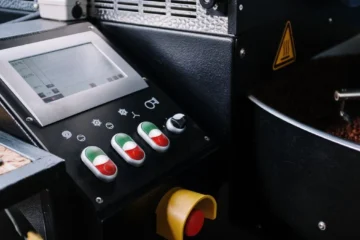
Get ready to sip on this: Roasting with the Kaleido M1 Pro isn’t about precision—it’s about mastering the interplay of heat and time. The second batch was a revelation, not just because it tasted better, but because it exposed how early heat control fails when you’re too cautious. The first roast was a lesson in how underfeeding the beans limits their ability to develop fully. By the time the first crack arrived, there was barely time to breathe.
By the time FC hits, the ROR should already be settling.
The First Roast: A Lesson in Underestimating Heat
Starting at 50% burner was a rookie move. It protected the beans? No, it starved them. The drying phase? A sprint, not a marathon. By the time the beans hit first crack, the clock had already run out on development. The ROR curve? A jagged spike, not a smooth descent. The beans didn’t have room to expand, to caramelize, to live. It was a lesson in how mass affects timing—135g vs. 180g isn’t just a scale issue; it’s a whole new conversation.
Roast Two: Building Momentum, Not Holding Back
This time, the approach shifted. Starting at 65% and stepping down at 3:00 and 6:00 wasn’t just a tweak—it was a mindset. The idea? Let the beans work through drying, then shape the curve for Maillard. By the time first crack hit, the ROR had already started to settle. The curve? A proper decline, not a frantic drop. The dev ratio? 11.5%, still short of ideal, but a real step up from 8–9%. The beans? Lighter, livelier, and finally drinkable. By the time FC hits, the ROR should already be settling. The third roast? A refinement. More runway for development, a tighter grip on heat. But the takeaway? Roasting isn’t about holding back. It’s about trusting the beans to respond to heat, not just survive it. The Kaleido M1 Pro’s advanced heat control allows for this nuanced approach, offering precise modulation that supports both drying and development without overstepping. So here’s the question: Would you trade your first crack timing for a slower, more deliberate curve? What’s your breaking point?
Questions & Answers
How does heat control affect the roast development in Kaleido M1 Pro?
Heat control significantly impacts roast development by influencing the rate of roast (ROR) and the beans' ability to expand and caramelize. Starting at 50% burner in the first roast limited development, while increasing to 65% in the second allowed for a smoother ROR curve and better flavor.
What is the importance of the first crack timing in roasting?
First crack timing is crucial as it marks the transition from drying to development. By the time first crack hits, the ROR should already be settling, allowing the beans to expand and caramelize properly. This was evident in the second roast, where the curve declined smoothly, leading to a more drinkable result.
Why is the dev ratio significant in roasting?
The dev ratio indicates how much the beans have developed during roasting. A dev ratio of 11.5% in the second roast showed improvement over the first roast’s 8–9%, showing better development. This ratio helps gauge whether the beans have had enough time to caramelize and release flavor.
How does the Kaleido M1 Pro support nuanced roasting techniques?
The Kaleido M1 Pro supports nuanced roasting through advanced heat control, allowing for precise modulation during both drying and development phases. This enables roasters to trust the beans to respond to heat, rather than just survive it, resulting in more flavorful and balanced roasts.
Originally reported by Reddit Coffee Roasting.