⏱ 2 min read
The Short Version
In specialty coffee, twenty seconds of development is the razor-thin margin between brilliance and mediocrity. Mastering the Aillio Bullet requires managing thermal momentum early in the roast to prevent being trapped by a window that closes in mere moments.
In This Article
Precision in light roasting is measured in seconds, not minutes. When transitioning from a traditional drum roaster to the high-velocity thermal profile of an Aillio Bullet, that window of control becomes even more critical. Many roasters find themselves trapped in a frustrating development paradox where dropping too early results in underdeveloped, sour notes, but waiting just a few moments longer pushes the bean into a medium roast territory they never intended to reach.
In specialty coffee, twenty seconds of development is the difference between brilliance and mediocrity.
The development time dilemma
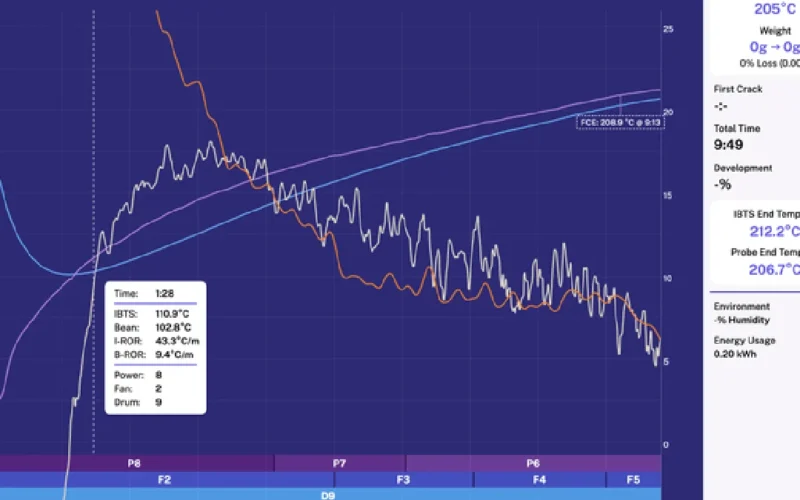
The tension between flavor and color often centers on the narrow window following first crack. If your first crack hits at the nine-minute mark, you are essentially hunting for a sweet spot that might only exist within a thirty-second span. In specialty coffee, twenty seconds of development is the difference between brilliance and mediocrity. A drop at nine minutes and thirty seconds might leave the acidity jarring and raw, while ten minutes could result in a profile that is too muted for high-end Ethiopian or Colombian beans.
Managing thermal momentum
If you are consistently hitting a wall where development feels rushed or color creeps up too quickly, the solution likely lies earlier in the roast profile rather than just at the finish line. You may need to adjust how much momentum you carry into the first crack phase. Increasing your charge temperature can help ensure the beans have enough thermal energy to sustain a steady development without needing to crank the heat at the very end, which often causes an unwanted color shift.
To refine this control on the Bullet, you must actively manipulate fan speed to manage convective heat and smoke removal. Increasing airflow during the final stages can strip away excess surface heat and clear chaff, preventing the beans from “baking” or darkening too rapidly due to trapped heat. It is about finding the balance where you achieve internal development without sacrificing the bright, clean characteristics that define a true light roast. Achieving this consistency is less about following a rigid recipe and more about mastering the thermal inertia of your specific machine.
How much weight do you place on exact development time versus visual color when deciding to drop your roast?
Questions & Answers
How can I avoid underdeveloped or sour notes in light roasts?
You can avoid underdeveloped and sour notes by ensuring you do not drop the beans too early during the development phase. In specialty coffee, even a difference of twenty seconds in development time can be the deciding factor between brilliance and mediocrity. If your roast is dropped too soon after first crack, the acidity may remain jarring and raw rather than reaching its full potential for sweetness.
What role does fan speed play when roasting on an Aillio Bullet?
Fan speed manages convective heat and smoke removal to help maintain precise control over the roast profile. Increasing airflow during the final stages of a roast can strip away excess surface heat and clear out chaff effectively. This manipulation prevents the beans from baking or darkening too rapidly due to trapped heat, allowing you to achieve internal development without sacrificing the bright and clean character of the coffee.
Why does my light roast turn into a medium roast too quickly?
Your roast may be turning into a medium roast too quickly because you are carrying too much thermal momentum into the first crack phase. To prevent this unwanted color shift, you should focus on adjustments made earlier in the roast profile rather than at the very end. Increasing your charge temperature can provide enough thermal energy to sustain steady development without requiring a sudden increase in heat during the final stages.
How much time is required for precise light roast development?
Precision in light roasting is measured in seconds rather than minutes because the window of control is extremely narrow. For many specialty beans, the ideal sweet spot for development might only exist within a thirty-second span following first crack. Dropping the beans just slightly too late can push high-end Ethiopian or Colombian beans into a muted medium roast territory that loses their intended bright characteristics.
Originally reported by Reddit Coffee Roasting.