⏱ 1 min read
The Short Version
In Savennières, there is no such thing as a decorative vine; even the most isolated plant serves a rigorous functional purpose. With only 170 hectares planted, this tiny Loire Valley appellation treats every single grape as a high-stakes investment in terroir.
In This Article
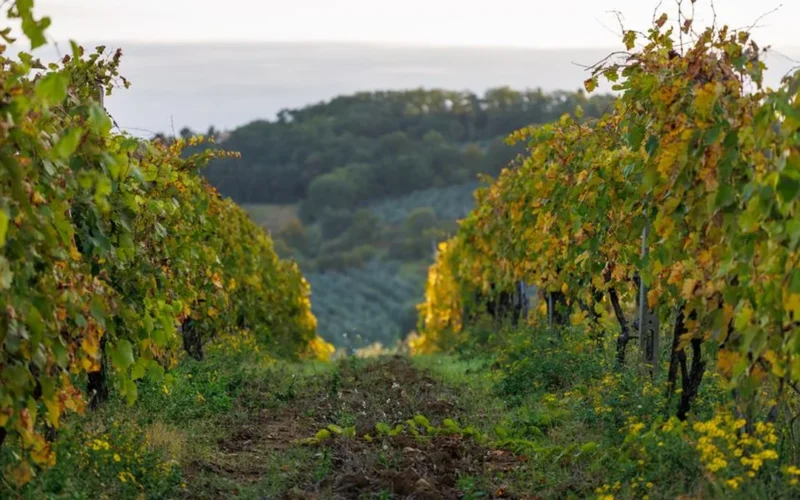
This might just change your perspective on vineyard aesthetics: those lonely, seemingly ornamental vines are often the hardest workers in the field. In the Loire Valley, specifically within the tiny footprint of the Savennières appellation, space is the ultimate luxury. With only about 170 hectares actually planted out of a 350-hectare total area, there is no room for waste.
In the Savennières appellation, there is no such thing as a spare vine.
The scarcity of Chenin Blanc
The energetic and delicious Chenin Blanc produced here relies on a density of quality that leaves zero margin for error. At Domaine du Closel, even the two vines standing prominently out front serve a functional purpose. They aren’t merely decorative landscaping meant to frame an entrance; they are part of a rigorous production cycle. In the Savennières appellation, there is no such thing as a spare vine. Every single plant must contribute to the character of the wine, making the management of these small plots an exercise in absolute precision.
A landscape of intention
When land is this limited, every hectare becomes a high-stakes investment in terroir. This scarcity dictates the very soul of the region, forcing growers to focus intensely on the health and output of every individual plant. It creates a landscape where nothing is accidental and every branch serves a goal. While some might see a stray vine as an afterthought, in this corner of France, it represents intentionality. To understand Savennières is to recognize that even the most isolated grapevines are essential components of a much larger, highly pressurized ecosystem. Do you prefer wines from vast, sprawling estates or those grown in tiny, high-pressure appellations?
Questions & Answers
How much land is actually used for grape cultivation in Savennières?
Approximately 170 hectares of land are currently planted with vines within the Savennières appellation. While the total area of the region spans about 350 hectares, the scarcity of available space makes every hectare a high-stakes investment in terroir. This limited footprint means that growers cannot afford to waste any ground, leading to a highly pressurized ecosystem where land is treated as an ultimate luxury for producing quality Chenin Blanc.
Why are individual vines in Savennières considered functional rather than ornamental?
Individual vines in this region serve a rigorous production purpose because there is no room for waste or spare plants. Even vines that appear to be decorative landscaping, such as those standing prominently at the entrance of Domaine du Closel, are actually part of the active production cycle. Because space is so limited, every single plant must contribute to the specific character of the wine through precise management and intentionality.
What role does Chenin Blanc play in the Savennières appellation?
Chenin Blanc is the primary grape variety used to produce energetic and delicious wines within the Savennières region. The production process relies on a density of quality that allows for zero margin of error due to the limited amount of planted land. Because growers focus intensely on the health and output of every individual plant, the resulting Chenin Blanc reflects a landscape where nothing is accidental and every branch serves a specific goal.
How does land scarcity affect the way vineyards are managed in the Loire Valley?
Land scarcity forces growers to manage their plots with absolute precision and intense focus on the health of every individual plant. In areas like Savennières, the small footprint dictates that every vine must be an essential component of the larger ecosystem rather than a decorative afterthought. This high-pressure environment creates a landscape of intention where even isolated or seemingly stray vines are carefully integrated into the rigorous production cycle.
Originally reported by Vinography.