

⏱ 2 min read
The Short Version
Brazilian Arabica shipments have plummeted to a six-year low, even as total export volumes climb. Heavy rains and crumbling port infrastructure are choking specialty supply, forcing a massive pivot toward Robusta exports while logistical bottlenecks drain producer profits.
In This Article
Consider this your morning briefing: Brazil’s coffee export numbers for July show a landscape of stark contradictions. While total volume rose nearly 10% to over three million bags, the surge masks a troubling trend for specialty drinkers. Despite a bumper crop, Arabica shipments have plummeted by almost 9%, marking their lowest July volume since 2018.
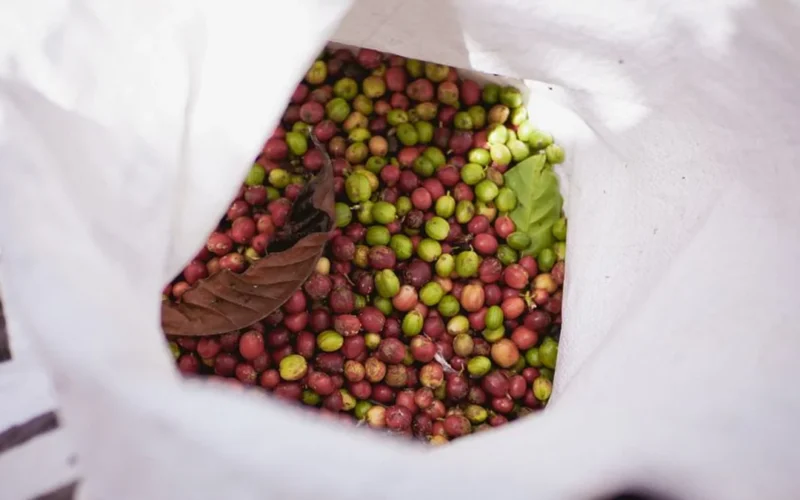
Rainfall in key producing regions has delayed harvesting work, impacting exports.
The Robusta Surge
The data reveals a massive shift in what is actually leaving Brazilian ports. While Arabica struggles, Robusta exports skyrocketed by more than 84%. This divergence suggests that while the country’s total output remains significant, the specific variety that drives much of the global specialty market is facing unique hurdles. Even looking at the first seven months of the year, the deficit for Arabica is even more pronounced, sitting at a 16.6% decline compared to last year. Rainfall in key producing regions has delayed harvesting work, impacting exports. According to Cecafé president Márcio Ferreira, weather and infrastructure are the primary culprits behind this sluggishness. Heavy rains have stalled the harvest for Arabica, while outdated port facilities continue to create expensive logistical bottlenecks. These delays result in millions of reais lost to storage and detention charges, preventing exporters from capitalizing on high market prices.
Shifting Markets and Recovery
Destination trends are equally fragmented. Exports to traditional heavyweights like the US fell by over 30%, yet demand remains resilient in Italy and Belgium. There is a silver lining on the horizon, however; processed coffee sales—primarily soluble varieties—are climbing. Furthermore, recent decisions to lift US tariffs on instant coffee could provide an additional tailwind for Brazil’s manufactured coffee sector. While the current figures look lean, the outlook isn’t entirely bleak. Producers are currently well-capitalized from previous harvests, allowing them to be selective about when they sell. Shipments are likely to pick up from mid-August, marking a clear recovery between now and the end of the year. As the weather stabilizes and the new crop matures, we should see the flow of beans return to more predictable levels. Do you think these logistical delays will lead to a significant price spike in specialty Arabica later this year?
Questions & Answers
Why are Brazilian Arabica coffee shipments at a six-year low?
Logistical bottlenecks and heavy rainfall in key producing regions are the primary reasons for the decline in Arabica shipments. Heavy rains have delayed harvesting activities, which directly impacts the volume of beans available for export. Additionally, outdated port facilities create significant infrastructure hurdles that slow down the movement of goods. These combined factors led to July volumes hitting their lowest levels since 2018, despite an overall increase in total Brazilian coffee export volumes during the same period.
How has the recent trend in Brazilian coffee exports shifted between Arabica and Robusta?
Brazilian coffee exports have seen a massive divergence where Robusta shipments skyrocketed by more than 84% while Arabica shipments plummeted by nearly 9%. This shift indicates that while total output remains high, the specific varieties being exported are changing significantly. While Arabica faces unique hurdles that have led to a 16.6% decline in the first seven months of the year, Robusta is seeing unprecedented growth. This trend suggests a major movement in what is actually leaving Brazilian ports.
What impact do port delays have on Brazilian coffee exporters?
Port delays cause significant financial losses for exporters through expensive storage and detention charges. Outdated infrastructure creates logistical bottlenecks that prevent companies from efficiently moving their products to international markets. These delays are particularly problematic because they stop exporters from being able to capitalize on high market prices during critical windows. Consequently, even when a bumper crop is available, the inability to move beans quickly through the supply chain results in millions of reais lost due to these mounting administrative and storage costs.
When can coffee shipments from Brazil be expected to recover?
Coffee shipments are expected to begin picking up from mid-August and should see a clear recovery between now and the end of the year. This projected upturn is tied to stabilizing weather patterns and the maturation of the new crop. As environmental conditions improve and the harvest progresses, the flow of beans into the global market is likely to return to more predictable levels. Producers are also currently well-capitalized from previous harvests, which provides them with more flexibility regarding their selling timelines.
Originally reported by Comunicaffe International.




[…] they were largely dismissed by the authors as insignificant for the average person. Habitual coffee consumption showed a very low association with sleep patterns. Even when accounting for genetic variants, the […]
[…] of agricultural commodities was linked to roughly 29,000 hectares of global deforestation. While coffee accounts for an estimated 1% of agriculture-driven forest loss, current corporate accountability remains […]