⏱ 1 min read
The Short Version
A 1996 Croizet-Bages defies expectations, revealing Bordeaux’s quiet evolution as a mature, structured wine that’s more about legacy than youthful exuberance. Thirty years later, it’s a lesson in patience, not a disappointment.
In This Article
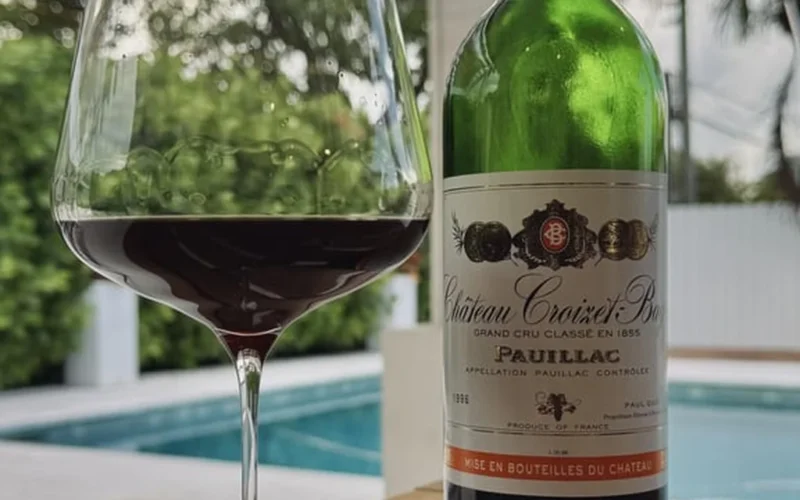
A 1996 Croizet-Bages reveals Bordeaux’s quiet evolution—both in bottle and in the mind of a collector. Stepping into a Paris shop with $250 and a list of Sauternes and left-bank Bordeaux, the recommendation came as an unexpected twist. This bottle, with its pristine label and fill level past the shoulder, felt like a relic of a bygone era. The producer, a fifth growth, didn’t need to explain its blend—yet the wine’s narrative unfolded with quiet authority in the glass.
It’s a heck of a learning experience for $50, but that’s part of the game.
A Bottle of Time and Tannin
The wine’s deep red garnet hue, already bricking at the rim, hinted at its age. A cork with a faint mold mark yielded a clean pour, releasing oaky notes of cocoa, mocha, and baking spice. The nose teased a distant sweet pastry, but the fruit had faded—blackberry and blackcurrant retreated within thirty minutes. Cedar and potpourri emerged as it warmed, while the palate delivered a medium body with tannins that tickled the tongue. Alcohol lingered at 12.5%, yet the wine felt light for a Pauillac.
The Paradox of Patience
Pairing it with grilled steak felt like an exercise in contrast. The steak overwhelmed the wine’s faint grip, a reminder that even great vintages can outpace their time. Online, the wine’s reputation as “underperforming” lingered, but this bottle defied expectations. It wasn’t a disappointment—it was a lesson. Aged thirty years, it had simply reached a crossroads where its youth had faded, leaving a skeleton of structure and aroma.
It’s a heck of a learning experience for $50, but that’s part of the game. The evolution of Bordeaux’s wine culture—shaped by modern winemaking techniques and shifting consumer preferences—has redefined how we value and perceive older vintages. Once prized for their complexity and aging potential, wines like this 1996 Croizet-Bages now sit at the intersection of tradition and transformation. What does aging do to a wine’s soul? Have you ever tasted a vintage that felt like it belonged to another era?
Questions & Answers
How does aging affect the taste of a 1996 Croizet-Bages?
Aged thirty years, the 1996 Croizet-Bages shows a faded fruit profile with blackberry and blackcurrant retreating, replaced by cedar, potpourri, and oaky notes. Its tannins have softened, leaving a skeletal structure, while the wine feels light for a Pauillac, highlighting how time can reshape a wine’s character.
What makes the 1996 Croizet-Bages a unique find in Bordeaux?
The 1996 Croizet-Bages stands out as a fifth growth with a pristine label and a rare, aged bottle. Its unexpected presence in a Paris shop, alongside Sauternes and left-bank Bordeaux, reveals Bordeaux’s quiet evolution in both wine production and collector interest.
Why is pairing the 1996 Croizet-Bages with steak a paradox?
Pairing the 1996 Croizet-Bages with grilled steak creates a contrast, as the wine’s faint grip is overwhelmed by the steak’s intensity. This highlights how even great vintages can feel out of place with time, offering a lesson in patience and balance.
How has Bordeaux’s wine culture changed over time?
Bordeaux’s wine culture has evolved through modern winemaking and shifting consumer preferences, redefining how older vintages are valued. Wines like the 1996 Croizet-Bages now sit at the crossroads of tradition and transformation, reflecting a broader shift in how we perceive aging and complexity.
Originally reported by Reddit Wine.