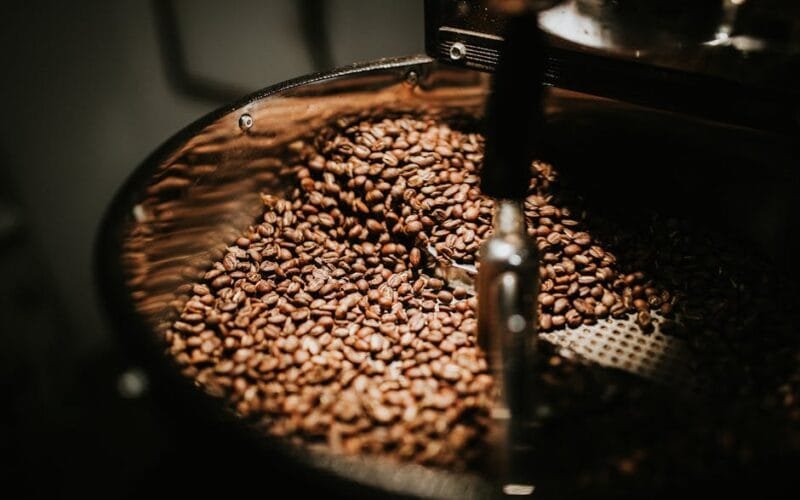
Coffee roasting is undergoing a silent revolution—here’s how it’s redefining the craft. For decades, drum roasters have operated on 20th-century engineering principles, their designs unchanged despite rising climate risks, price volatility, and shifting consumer demands. Yet the industry is at a tipping point. As green coffee prices swing and sustainability becomes non-negotiable, roasters and manufacturers are confronting a stark reality: without reimagining roasting technology, the specialty coffee world risks stagnation.
The shift began with third-wave coffee’s emphasis on precision. In the late ’90s, roasters demanded consistency, pushing manufacturers to adopt automation and advanced sensors. Today’s machines collect data, replicate roast profiles with surgical accuracy, and prioritize control over guesswork. But as Ioannis Papadopoulos of IRM points out, many systems still mimic old mechanics with flashy touchscreens. “They take freedom away from the roaster,” he argues. The answer? Machines that empower, not constrain—like IRM’s IRM30E, which reduces emissions and noise to fit a library-based roastery.
Yet the real breakthrough lies in AI-driven innovation. Konstantinos Perpinias of Mr. Bean Coffee Company highlights how data analytics and machine learning are transforming roasting into a science. “We’re not just optimizing—we’re redefining what’s possible,” he says. IRM’s Pro AI feature, for instance, lets roasters leverage real-time analytics to refine profiles without manual curve-chasing. This isn’t just efficiency; it’s a paradigm shift. Machines now adapt to roasters, not the other way around, enabling double the output with comparable capacity.
The stakes are high. Climate change is shrinking growing regions, while younger consumers seek stories behind their coffee—not just a cup. Roasters must balance tradition with agility, embracing tools that align with their values. “Technology democratizes excellence,” says Axel Simon of Mare Terra Coffee. “It lets smaller players compete with giants.” The IRM3, for example, streamlines training and production, proving innovation isn’t just about speed—it’s about creating space for creativity.
As the industry faces unprecedented challenges, the question isn’t whether change is needed—it’s whether the coffee world will lead it.
As the industry faces unprecedented challenges, the question isn’t whether change is needed—it’s whether the coffee world will lead it.
KEY POINTS Modern roasting tech is evolving beyond incremental tweaks, prioritizing AI-driven precision and sustainability. Machines like IRM’s IRM30E reduce emissions and noise, aligning with eco-conscious roasters. Data analytics and machine learning are redefining roasting as a science, enabling consistency and scalability without sacrificing craftsmanship.
CLOSE As the coffee industry stands at a crossroads, what kind of innovation do you think will shape the next era of roasting? Share your vision in the comments.
Questions & Answers
What defines a small-batch coffee roaster?
Small-batch roasters focus on quality over quantity, using precise methods to highlight bean characteristics. They often prioritize traceability and direct trade, offering unique, flavorful profiles.
How does cold brew differ from regular coffee?
Cold brew uses cold water and steeping, resulting in a smoother, less acidic taste. It’s typically stronger and lower in caffeine than regular coffee, made with a longer brewing process.
Information sourced from industry reports and news outlets.