Yet

A Forgotten Bottle of 2002 Matrot Puligny-Montrachet: The Aged White Burgundy Revelation

A Forgotten Bottle of 2002 Matrot Puligny-Montrachet: The Aged White Burgundy Revelation

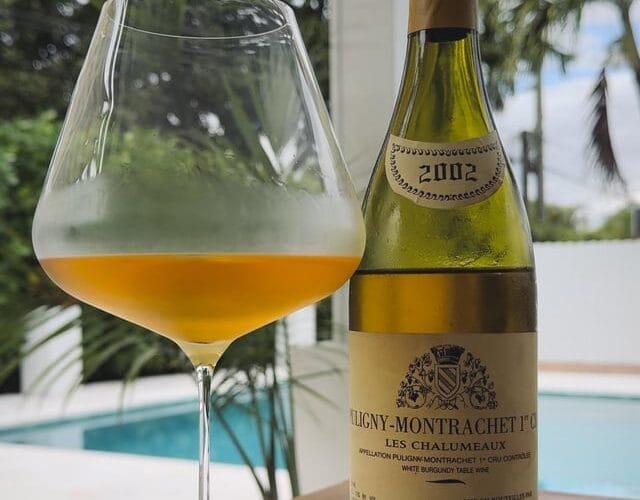
If you’ve ever wondered what happens when time turns a Burgundy white into something otherworldly, here’s your first lesson: age doesn’t always sweeten the deal—it can rewrite the rules. I stumbled upon a 2002 Matrot Puligny-Montrachet 1er Cru “Les Chalumeaux” in a dusty corner of a local store’s cellar, its label faded but its story intact. The bottle, priced at $50, was a gamble—a relic from a producer I’d never heard of, buried under decades of dust. I took it home, not knowing what to expect, but armed with a notebook and a hunger for discovery. The wine’s condition was…
Read More
The Return to Comfort: Why Familiar Wines Are Resurging

The Return to Comfort: Why Familiar Wines Are Resurging

The wine world has been in a frenzy of exploration for a decade—experimenting with obscure grapes, far-flung regions, and avant-garde styles. But now, the pendulum is swinging back. As Amber Gardner observes, consumers are craving the familiar, the comforting, and the recognizable. This shift isn’t just a trend; it’s a cultural realignment. After years of chasing novelty, people are rediscovering the solace of classic varieties like Chardonnay, Pinot Noir, and Cabernet Sauvignon. The reason? A growing disillusionment with the chaos of the “wine revolution.” For years, the industry trumpeted the virtues of terroir, esoteric appellations, and artisanal minimal intervention. Yet,…
Read More
The Rise of NoLo Wines: A Wine Critic’s Take on the Low-Alcohol Movement

The Rise of NoLo Wines: A Wine Critic’s Take on the Low-Alcohol Movement

The wine world is undergoing a quiet revolution. NoLo—no- and low-alcohol wines—has become the latest obsession, despite its messy definitions and polarizing reception. Definitions vary wildly: the EU and UK lack standardized terms, while the U.S. classifies “non-alcoholic” as under 0.5% ABV and “alcohol-free” as under 0.05%. Low-alcohol wines span a broad range, making labels the only reliable guide. Yet, this ambiguity hasn’t stopped the trend from gaining traction. With global wine sales declining, NoLo wines are projected to grow by 7% annually through 2028, and 10.4% by 2034. Sales have already surged 88% since 2021, signaling a seismic shift…
Read More
The Forgotten Coffee Trail: Why Puerto Rico’s Beans Are Flying Under the Radar

The Forgotten Coffee Trail: Why Puerto Rico’s Beans Are Flying Under the Radar

If you’ve ever wondered why Puerto Rican coffee feels like a secret whispered between beans, you’re not alone. This Caribbean island, known for its vibrant culture and sun-soaked beaches, quietly cultivates some of the world’s most complex coffee. Yet, it’s rarely mentioned alongside Colombia, Ethiopia, or Java. Why? The answer lies in a mix of history, geography, and a stubborn underdog spirit. Puerto Rico’s coffee story is written in its soil. Volcanic rock, limestone, and coastal breezes create a terroir that’s both fierce and forgiving. Farmers here grow Arabica at elevations above 3,000 feet, where cool nights and sunny days…
Read More
Ukraine’s Wine Resilience: Surviving War, Crafting Legacy

Ukraine’s Wine Resilience: Surviving War, Crafting Legacy

Time to spill: A missile strike turned Kyiv’s Pilot’s Wines into a smoldering ruin, but Ukraine’s vintners are rewriting the script. For four years, bombs have shattered vineyards, supply chains, and dreams. Yet amid the chaos, a quiet revolution is brewing. Wineries once reliant on domestic markets now pivot to global stages, leveraging competitions and exports to keep their craft alive. The war has been a scalpel, carving through Ukraine’s wine industry. Pilot’s Wines lost decades of curated bottles to a drone attack, while Artwinery fled Bakhmut’s ruins. Russian troops loom over Beykush’s vineyards, yet the winery keeps fermenting. This…
Read More
The Geisha-Gesha Debate: Coffee Etiquette in the Making

The Geisha-Gesha Debate: Coffee Etiquette in the Making

This might just change your routine: The coffee world is fighting over a single word. For years, "geisha" was shorthand for a rare, floral Panamanian coffee, while "gesha" referred to the broader, less prestigious category. But now, the cognoscente are cracking down on the misuse of "geisha," demanding it be reserved for the specific variety. Is this a victory for precision, or a battle over exclusivity? The answer hinges on how we navigate the evolving language of coffee. The confusion began when "geisha" became a marketing tool, stripped of its origins. The true geisha, a mutation of the arabica plant…
Read More
How Specialty Coffee Roasters Can Lead the Innovation Revolution

How Specialty Coffee Roasters Can Lead the Innovation Revolution

Specialty coffee’s early focus on quality is no longer enough. Market consolidation limits risk-taking, creating space for independent brands to lead meaningful change. As giants like Keurig Dr Pepper acquire JDE Peet’s in a $18bn deal, the industry’s power dynamics shift. Consolidation breeds caution, but it also opens a window for roasters to redefine what innovation means. The stakes are high: without bold moves, the sector risks becoming a commodity battleground. Real innovation in specialty coffee isn’t about flashy gimmicks—it’s about solving real problems. Partnering with producers to tackle overripe cherries through fermentation, as Mió and Coffee Sensorium did, turns…
Read More
Specialty Coffee’s Hospitality Shift: Why Service Matters More Than Ever

Specialty Coffee’s Hospitality Shift: Why Service Matters More Than Ever

The specialty coffee scene is undergoing a quiet revolution. As prices climb, consumers aren’t just paying for beans—they’re paying for experience. Brands like WatchHouse and Proud Mary are redefining success by treating every interaction as a curated moment. This isn’t just about coffee anymore; it’s about crafting an environment where guests feel seen, guided, and valued. The shift is clear: hospitality isn’t a perk—it’s the currency of the trade. At the heart of this movement is the barista, who now serves as both bartender and curator. From pre-warmed cups to meticulously maintained plants, small details add up to create a…
Read More
Feedback Imbalance in Specialty Coffee: Who’s Listening?

Feedback Imbalance in Specialty Coffee: Who’s Listening?

The coffee world thrives on critique—until it doesn’t. In specialty coffee, feedback is the lifeblood of quality, yet its flow is anything but equal. Producers, often working in remote regions with thin margins, crave input to refine their craft. Roasters, meanwhile, wield taste authority like a badge of honor, sometimes dismissing feedback as a threat to their expertise. This asymmetry isn’t just a cultural quirk—it’s a systemic gap that shapes who gets heard and who gets left in the dark. Producers are the unsung heroes of this equation. They need precise, actionable feedback to improve moisture levels, fermentation techniques, or…
Read More
Time to spill: Armenia’s Wine History Museum isn’t just a museum—it’s a time machine

Time to spill: Armenia’s Wine History Museum isn’t just a museum—it’s a time machine

Time to spill: Armenia’s Wine History Museum isn’t just a museum—it’s a time machine. Nestled in Sasunik, 30 kilometers from Yerevan, this immersive space transforms visitors into participants, threading millennia of viticulture through hands-on exhibits and jaw-dropping relics. Here, wine isn’t just a drink; it’s a narrative etched into stone, bone, and barrel. Ancient coins from the region depict kings entwined with grapevines, a visual testament to Armenia’s millennia-old bond with viticulture. Yet the real magic lies in the museum’s ability to make history feel alive. Director Hayk Gyulamiryan, an archaeologist by trade, has turned this space into a living…
Read More