

⏱ 1 min read
The Short Version
By transforming unpredictable fermentation into 128 precise scientific protocols, researchers have rescued the near-extinct "Black Gold" of the Silk Road. This high-tech revival trades ancient guesswork for industrial consistency, turning millennium-old Fucha tea bricks into modern cafe staples like fruit blends and milk teas.
In This Article
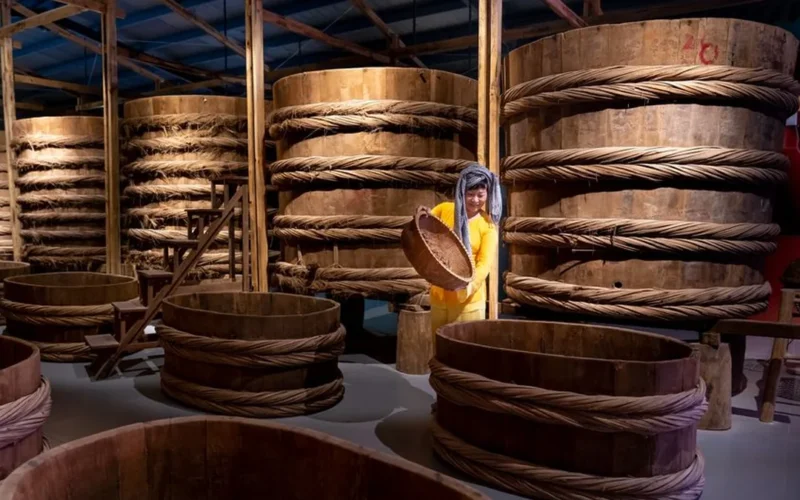
Once known as the “Black Gold” of the Silk Road, Fucha brick tea was once on the brink of extinction. For centuries, this fermented specialty relied on the unpredictable whims of nature to develop its signature character. Today, however, a high-tech renaissance is transforming this millennium-old tradition from a dusty relic into a mainstay of modern tea culture.
The traditional 14-step production sequence was refined into 128 quantifiable, standardized procedures.
Deciphering the Golden Flower
The soul of Fucha lies in Eurotium cristatum, a probiotic microorganism often called the “Golden Flower.” This heritage faced a critical fracture in the late 1950s when shifts in industry policy caused production to migrate south, leaving the traditional techniques of its birthplace, Jingyang, perilously close to being lost forever. The turning point came when researchers at Northwest A&F University moved beyond guesswork to treat fermentation as a rigorous science. By isolating and purifying specific microbial strains, they transformed the ancient process into a standardized protocol. The traditional 14-step production sequence was refined into 128 quantifiable, standardized procedures. This precision replaces environmental uncertainty with industrial consistency.
From Bricks to Milk Teas
Modernization has extended far beyond the laboratory. Automated warehousing and intelligent pressing equipment have replaced weather-dependent manual labor, allowing the industry in Xi’an to reach an annual output value exceeding 2.7 billion RMB. But technology isn’t just about efficiency; it’s about accessibility. Through collaborations between research labs and innovative beverage brands, Fucha is being reimagined for a new generation. Instead of heavy bricks meant for long caravan journeys, consumers now find its essence in fruit-infused blends and creamy milk teas. This evolution translates an ancient legacy into the fast-paced ritual of the modern cafe.
This intersection of microbiology and commerce proves that tradition doesn’t have to stay frozen in time to remain authentic. By mastering the microbial foundation of the tea, producers have unlocked a way to carry an ancient legacy into the modern world.
Do you think high-tech standardization helps or hurts the soul of traditional fermented foods?
Questions & Answers
What is the Golden Flower in Fucha tea?
The Golden Flower refers to Eurotium cristatum, which is a probiotic microorganism essential to the fermentation of Fucha tea. This specific microbe is considered the soul of the tea because it develops its signature character during the aging process. Researchers at Northwest A&F University have helped preserve this heritage by isolating and purifying these microbial strains. By treating the fermentation as a rigorous science rather than relying on nature, they can now ensure consistent quality in every batch produced.
How has technology changed the production of Fucha tea?
Technology has transformed Fucha tea production from an unpredictable manual process into a highly standardized industrial operation. Modern advancements include automated warehousing and intelligent pressing equipment that replace traditional weather-dependent labor. Furthermore, researchers have refined the ancient 14-step fermentation sequence into 128 quantifiable and standardized procedures. This shift from guesswork to microbial precision has allowed the industry in Xi'an to reach an annual output value exceeding 2.7 billion RMB while maintaining consistent flavor profiles.
Why was Fucha tea production at risk of disappearing?
Fucha tea faced extinction due to shifts in industry policy during the late 1950s that caused production to migrate south. This migration left the traditional techniques used in its birthplace, Jingyang, at risk of being lost forever. For a long time, the specialty relied on the unpredictable whims of nature for its fermentation, making it difficult to maintain consistently. It was only through scientific intervention and the isolation of specific microbial strains that the millennium-old tradition was successfully revitalized for modern use.
In what ways is Fucha tea being consumed by modern consumers?
Modern consumers are enjoying Fucha tea through innovative beverage formats like fruit-infused blends and creamy milk teas. While the tea was historically sold in heavy bricks designed for long Silk Road caravan journeys, new collaborations between research labs and beverage brands have reimagined its use. This evolution adapts an ancient legacy into the fast-paced rituals of contemporary cafe culture. By moving beyond traditional brick forms, the tea has become more accessible to a younger generation looking for convenient and trendy drink options.
Originally reported by 中国科技网.



[…] is fundamentally broken. It relies on misapplied studies and nonsensical curves that ignore how tea actually interacts with water. This is a case study in what happens when pseudo-scientific authority meets ungrounded […]