

⏱ 1 min read
The Short Version
Forget sterile extraction math; at The Barista League Mexico City, service and concept accounted for a massive 62 percent of the total score. Winners Karla Bravo and Victor Granados proved that technical mastery is meaningless unless you can actually communicate its value through genuine hospitality.
Competition culture is undergoing a fundamental shift, moving away from sterile technical displays toward something far more visceral. When The Barista League arrived at Mexico City’s Foro Indie Rock, it delivered much more than a contest; it staged a full-scale festival. A Roasters Village featuring names from across Mexico and a dedicated second stage for talks and panels transformed the venue into an immersive, day-long experience centered around the main event. This new format treats judges as actual café customers, making service and concept responsible for a staggering 62 percent of the total score.
The freedom to create, to serve, to just be ourselves—without setting aside technique, but with the focus firmly on service and concept.
Hospitality as a competitive edge
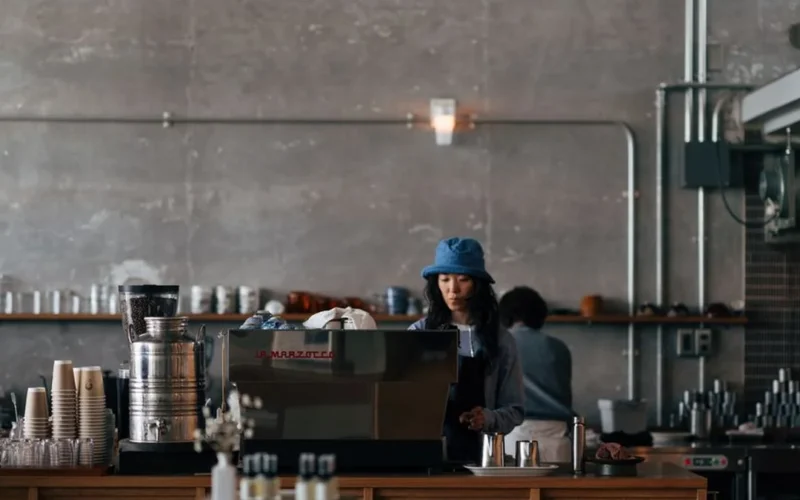
The winners, Karla Bravo and Victor Granados, understood this pivot better than anyone else on stage. While many competitors focus solely on extraction math, they leaned into their natural rhythm, treating the stage like a busy morning shift behind a local counter. They developed recipes centered around Mexican ingredients and maintained an infectious warmth that bridged the gap between performer and spectator. The freedom to create, to serve, to just be ourselves—without setting aside technique, but with the focus firmly on service and concept. By prioritizing connection alongside chemistry, they proved that technical mastery only matters if you can actually communicate its value to a guest.
Redefining the barista archetype
This approach effectively dismantles the barrier between “expert” and “server.” In the heat of the competition, the interaction was casual rather than scripted, allowing for real-time dialogue that felt alive rather than rehearsed. For Bravo and Granados, success came from maintaining a sense of ease that allowed them to dance through the pressure while delivering high-level coffee. Their victory serves as a blueprint for a new era where personality is just as vital as a calibrated grinder.
Do you think hospitality should carry more weight than technical precision in professional competitions?
Questions & Answers
Who won the Barista League competition in Mexico City?
Karla Bravo and Victor Granados are the winners of The Barista League in Mexico City. They secured their victory by prioritizing hospitality and connection alongside technical coffee skills. Instead of focusing solely on extraction math, they utilized Mexican ingredients and maintained a warm, natural rhythm during their performance. Their approach demonstrated how service and concept can be just as vital to success as traditional technical mastery in a modern competitive environment.
How is the scoring structured for The Barista League?
The Barista League uses a scoring system that places a heavy emphasis on service and concept, which account for 62 percent of the total score. This format treats judges like actual café customers rather than technical inspectors to evaluate the overall experience. By weighting hospitality so highly, the competition encourages baristas to focus on how they communicate value to a guest. This shift moves the focus away from purely sterile technical displays toward more visceral engagement.
What makes the Barista League format different from traditional coffee competitions?
The Barista League transforms a standard contest into an immersive festival experience that includes a Roasters Village and dedicated stages for educational talks. Unlike traditional events that focus on rigid technical perfection, this competition emphasizes hospitality by treating judges as regular café customers. This new format allows competitors to showcase their personality and service skills through casual, unscripted interactions. It effectively bridges the gap between being an expert professional and providing excellent customer service.
Why did Karla Bravo and Victor Granados succeed in the competition?
Karla Bravo and Victor Granados succeeded because they successfully balanced high-level coffee delivery with infectious warmth and hospitality. They treated the competition stage like a busy morning shift at a local café rather than a scripted performance. By developing recipes centered around Mexican ingredients and maintaining an easy, natural rhythm, they were able to connect with spectators. Their victory proved that technical skill is most effective when paired with the ability to communicate its value through genuine service.
Originally reported by Barista Magazine.


[…] the most critical design elements are those that work so perfectly they become invisible. When a barista moves with logical efficiency and a customer finds their seat without friction, the design has succeeded. […]