⏱ 1 min read
The Short Version
A user’s experiment shows that even high-precision Hibrew grinders can fail to deliver great espresso if grind size and brewer settings aren’t aligned, revealing a critical pressure mismatch that affects flavor.
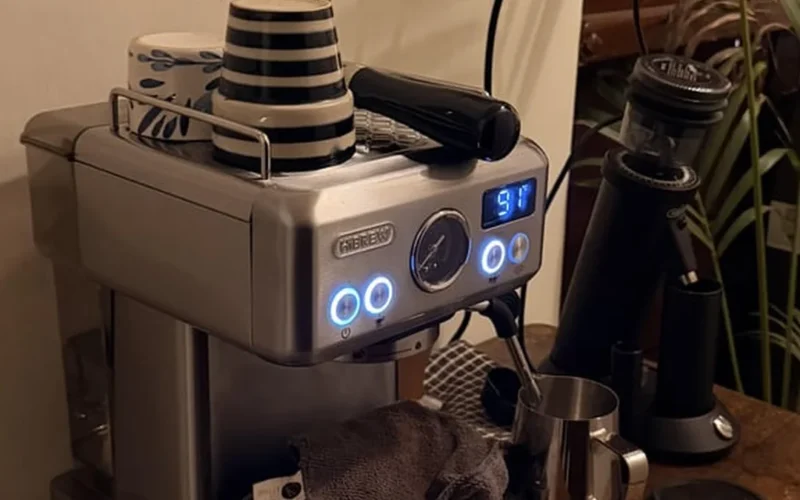
Consider this your morning briefing: the Hibrew H10a and G5 grinder’s pairing reveals a critical flaw in extraction dynamics. A user’s experiment exposes how even high-precision equipment can deliver inconsistent results when grind size and brewer settings aren’t aligned. Starting with a dark roast at grind size 4 to 8-8.5 yields a shot that meets technical standards but lacks depth. The machine’s pressure remains stable, yet the flavor profile is underwhelming. Increasing the grind to 8.5-8.8 lands the shot in the optimal pressure range—but the taste remains elusive, signaling a deeper issue beyond the beans.
When readings cross into espresso range during pre-infusion, it points to a mismatch between the grinder’s output and the brewer’s extraction profile.
Grind Size and Extraction Balance
Switching to a medium roast with the same grind size produces a dramatic shift. The bitterness of the dark roast fades, revealing a cleaner, more balanced cup. However, the real issue surfaces during pre-infusion: the pressure meter spikes into espresso range, nearing 9-13 bars by the end of a 26-second shot. This over-extraction indicates a misalignment between the grinder’s output and the brewer’s expectations. The problem isn’t the beans—it’s the setup.
Pressure Readings: The Hidden Indicator
The H10a’s pressure meter isn’t just a gauge; it’s a diagnostic tool. When readings cross into espresso range during pre-infusion, it points to a mismatch between the grinder’s output and the brewer’s extraction profile. The G5’s consistency is impressive, but without matching grind size to the H10a’s extraction characteristics, results remain unpredictable.
When readings cross into espresso range during pre-infusion, it points to a mismatch between the grinder’s output and the brewer’s extraction profile.
So here’s the question: Have you encountered a brewer that flags pressure readings during pre-infusion? How did you resolve the mismatch?
Questions & Answers
How does grind size affect extraction with the Hibrew H10a and G5 grinder?
Grind size directly impacts extraction by altering how water interacts with coffee. A darker roast at grind size 4 to 8-8.5 yields technically correct shots but lacks depth. Increasing the grind to 8.5-8.8 aligns pressure with optimal ranges, yet flavor remains elusive, showing the need for precise setup.
Why do pressure readings matter in coffee brewing with the Hibrew H10a?
Pressure readings indicate extraction efficiency and alignment between grinder and brewer. During pre-infusion, spikes into espresso range (9-13 bars) signal over-extraction, showing a mismatch in grind size and brewer settings. This highlights the importance of calibration for consistent results.
What causes inconsistent results with the Hibrew H10a and G5 setup?
Inconsistent results stem from a misalignment between grind size and brewer settings. A medium roast at the same grind size as a dark roast produces a cleaner cup, but pressure spikes during pre-infusion reveal over-extraction. This underscores the need for matching grind size to extraction profiles.
How can you resolve pressure mismatch issues with the Hibrew H10a and G5?
To resolve pressure mismatch, adjust grind size to match the brewer’s extraction profile. For example, increasing the grind to 8.5-8.8 aligns pressure with optimal ranges, improving flavor. Regularly checking pressure readings during pre-infusion helps identify and correct misalignments for better consistency.
Originally reported by Reddit Espresso.