Coffee Facts

Expert guides on coffee brewing, roasting, beans, and equipment. Master your coffee journey with in-depth articles.

Idyll Coffee Roasters’ Wauwatosa Cafe: A Masterclass in Coffee and Community

Idyll Coffee Roasters’ Wauwatosa Cafe: A Masterclass in Coffee and Community

Get ready to sip on this: Idyll Coffee Roasters has transformed a Milwaukee suburb into a coffee haven, blending hyper-local sourcing, artisanal craftsmanship, and a design that feels like a curated living room. The new 14,000-square-foot space in Wauwatosa isn’t just a cafe—it’s a statement. With two-story windows spilling light onto lush plants, a two-sided fireplace anchoring the ground floor, and a flower-like circular couch wrapping a structural pillar upstairs, the interior feels less like a commercial space and more like a gathering place for thinkers, creators, and coffee lovers. The heart of the operation is the 1,000-square-foot roastery, where…
Read More
First Roast Lessons: Ethiopian Guji’s Bold Awakening

First Roast Lessons: Ethiopian Guji’s Bold Awakening

Coffee lovers, wine enthusiasts, tea devotees—here’s a lesson in humility and fire. My first roast attempt with Ethiopian Guji was a masterclass in chaos, blending ambition with rookie mistakes. I chased a light roast, but the machine’s heat and my nerves conspired to deliver something darker than intended. The result? A bold, smoky profile that defies expectations, proving that even flawed experiments can spark revelation. The SR800’s drum spun faster than I’d anticipated, turning 225g of green beans into 188g of roasted coffee in a blur of timing and tension. I’d mapped out the roast curve, yet the process felt…
Read More
Mastering Chocolate Notes: A Cubean Roaster’s First Manual Roast Breakdown

Mastering Chocolate Notes: A Cubean Roaster’s First Manual Roast Breakdown

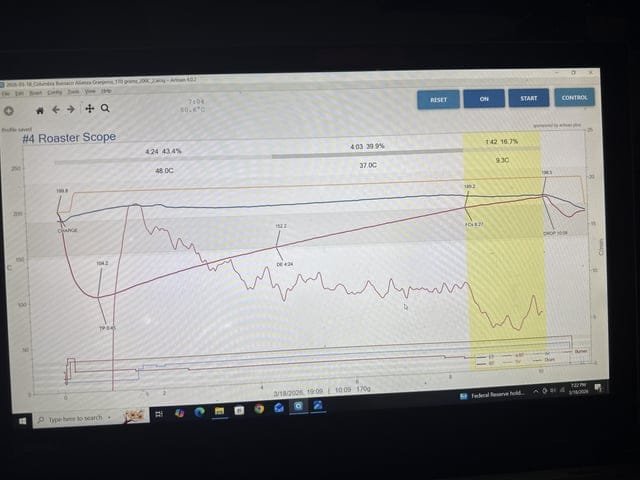
Real talk: Your first manual roast with a Cubean roaster isn’t just about timing—it’s about precision, patience, and a dash of science. You’ve already seen how automatic profiles can feel like a passive exercise, leaving your beans flat and underdeveloped. Now, you’re chasing that sweet, chocolatey complexity—and the question is: how do you nail it? The answer lies in understanding the rhythm of the roast, not just the heat. The key is the ROR (Rate of Rise) curve. You noticed it’s tricky to get that curve to trend down, and that’s not a mistake—it’s a clue. A steep ROR early…
Read More
Behmor 2000AB Plus: A Home Roaster’s Honest Take on Indoor Roasting

Behmor 2000AB Plus: A Home Roaster’s Honest Take on Indoor Roasting

If you're eyeing the Behmor 2000AB Plus as a step up from your popcorn popper, you’re not alone. The machine has earned cult status among home roasters, but its appeal hinges on a few critical factors—especially if you’re roasting indoors. Let’s cut through the hype. First, smoke suppression. The Behmor’s built-in system is a lifesaver for those without a garage or outdoor space. Early adopters report it tames the smoke enough to make indoor roasting feasible, though you’ll still need to manage airflow. It’s not a magic fix, but it’s a practical workaround for colder climates. If you’re roasting until…
Read More
Mastering Heatgun Roasting: How to Cut Your Drying Time in Half

Mastering Heatgun Roasting: How to Cut Your Drying Time in Half

This is worth savoring: Your heatgun roasting setup is doing the heavy lifting, but the numbers don’t add up. You’re hitting 12 minutes for first crack and 13–15 minutes total, yet the drying stage feels glacial—8 minutes is a red flag. The coffee tastes good, but not great. You’re not alone. Heatgun roasting is a high-stakes dance between heat delivery, bean moisture, and timing. Let’s fix the math. The drying phase is your first hurdle. At 12 minutes for first crack, you’re already 4–6 minutes behind the 6–9 minute light roast sweet spot. That’s not a typo—it’s a critical detail.…
Read More
Skywalker for Light Roasts: A Roaster’s Dilemma

Skywalker for Light Roasts: A Roaster’s Dilemma

Get ready to sip on this: If you’re a pourover purist chasing precision, the Skywalker roaster isn’t just a tool—it’s a conversation starter. The debate between the Cubean and SR800 isn’t just about size; it’s about how well each handles the delicate dance of light roasts. Light roasting demands finesse, and the Skywalker’s reputation for consistency makes it a contender, but the smaller Cubean’s limited user base raises questions. Are you willing to trade control for compactness? The Skywalker’s strength lies in its ability to dial in exact temperatures, critical for light roasts where underdevelopment can ruin a cup. The…
Read More
Mastering the Giesen W6A: How to Nail Consistent Roast Levels

Mastering the Giesen W6A: How to Nail Consistent Roast Levels

Consider this your morning briefing: You’re standing at the crossroads of science and intuition, armed with a Giesen W6A and a dream of perfecting roast consistency. The question isn’t just about numbers—it’s about control. This 6-kg roaster isn’t a magic wand; it’s a tool that demands respect. So, how do you translate vague roast level goals into actionable steps? The answer lies in marrying data with practice. The Giesen W6A operates on a tightrope between precision and adaptability. Temperature profiles are your baseline, but they’re not gospel. Light roasts (180–200°C) demand rapid heat application to preserve acidity, while medium (200–220°C)…
Read More
How to Master Light Roast Development Without Sacrificing Flavor

How to Master Light Roast Development Without Sacrificing Flavor

This is worth savoring: Light roasts demand precision, and the devil is in the details of timing. If you’re chasing a filter roast with a short dry phase and Maillard, you’re already in a tightrope act—balancing speed and depth. The numbers you’re working with—4:15 dry, 3:15 Maillard, 1:25 development—hint at a race against time. But here’s the catch: your ROR (rate of rise) spikes during development, threatening to cut the window for complexity. The question isn’t just about how to slow the roast—it’s about how to let the beans breathe without losing their brightness. The core issue lies in the…
Read More
Is Paying $2,000 for a Roasting Course Worth It?

Is Paying $2,000 for a Roasting Course Worth It?

There’s something brewing in your kitchen—or your local coffee shop—that could redefine your craft. A 40-hour roasting and cupping course costs $2,000, taught by someone who’s mastered the science and art of coffee for 15 years. The instructor’s credentials? SCA Authorized Trainer, Q Grader, and judge for Barista and Latte Art championships. That’s not just a résumé; it’s a guarantee of expertise. But here’s the question: Is this investment worth it, or can you learn everything you need through YouTube tutorials and books? The course promises more than just theory. It dives into roasting fundamentals: turning points, drying phases, first…
Read More
The Roast That Smelled Like Heaven

The Roast That Smelled Like Heaven

This is worth savoring: A rookie roaster’s obsession with unlocking sweet chocolate notes in a Costa Rican blend led to a revelation that’s equal parts science and serendipity. After three days of trial, error, and a dash of madness, the beans finally exhaled the aroma of hot cocoa—so potent even a coffee-hating spouse declared it divine. The journey? A masterclass in how temperature, timing, and patience can transform a batch of coffee into a sensory masterpiece. The first roast, a dark, slow burn at 23 on the Cubean, yielded underwhelming espresso. The beans, charged at 180°C and roasted to 209°C…
Read More