Blog

The Green Mark’s Quiet Strength in a Clay Pot

The Green Mark’s Quiet Strength in a Clay Pot

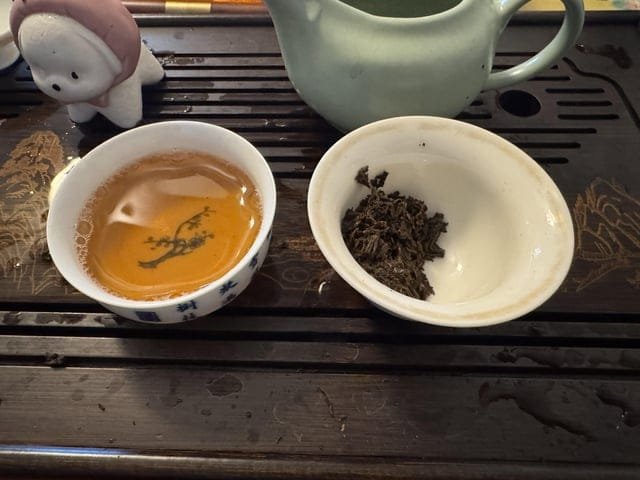
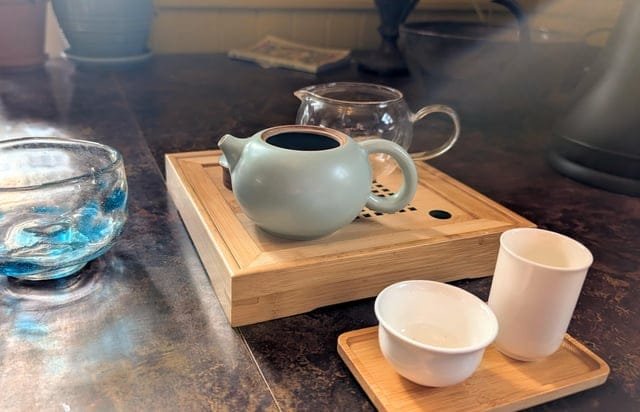
Pour yourself a cup for this one: the 2023 Xiaguan “Green Mark” raw puerh isn’t screaming for attention, but it’s quietly carving out a niche in the clay pot. Brewed with precision—5.5g in an 80mL duanni clay pot, just off boil—it unfolds in layers, each steep revealing a different facet of its character. The first wash brings wood, hay, and a faint diesel whisper, setting the stage for a tea that’s more about texture than bombast. Steep one is a timid affair, the leaves stubbornly resisting release. It’s a tightly compressed cake, and the flavor feels muted, like a shy…

Read More
Storing Puer for a Year: What You Need to Know

Storing Puer for a Year: What You Need to Know

This is worth savoring: You’ve got a 2021 Yunnan Sourcing sheng cake, and the question isn’t whether you’ll enjoy it—it’s whether you’ll ruin it. Short-term storage for puer isn’t a high-stakes gamble, but it’s still a balancing act. The key is understanding that time, humidity, and temperature aren’t your enemies here—they’re just variables you can manage. Your setup in Utah isn’t bad. The dry climate is a major plus for tea storage, as moisture is the silent killer of puer. But don’t assume the kitchen drawer is a safe zone. While your cake is shielded from direct heat and light,…
Read More
Aged Sheng: Worth the Wait or a Missed Opportunity?

Aged Sheng: Worth the Wait or a Missed Opportunity?

If you’re a puerh newbie chasing that elusive balance of floral brightness and earthy depth, you’re not alone. The journey from young sheng’s vibrant punch to aged sheng’s supposed complexity can feel like a leap into the unknown. Your recent experiments with 2007 Dayi 7542 and Xiaguan Jia Ji hint at a common struggle: aged sheng isn’t always a direct upgrade. It’s a different beast, shaped by time, storage, and the tea’s own evolution. Aged sheng’s appeal lies in its transformation, not its replication of youth. Young sheng dazzles with sharp floral notes and a bold huigan—traits that fade as…
Read More
Wood Spirit Ripe Puer: A Warm Comfort in Every Sip

Wood Spirit Ripe Puer: A Warm Comfort in Every Sip

Listen up: This isn’t your average pu-erh. Farmerleaf’s 2023 Wood Spirit Ripe puer unfolds like a slow-burn fire, balancing earthy depth with a sweetness that feels like a hug. Brewed in a titanium gaiwan just off boil, it starts with a whisper of wood and forest floor, then layers into something richer. The first steep delivers sandalwood and cocoa, with a hint of shou-y sweetness that lingers. By the second steep, the tea thickens, its cocoa notes deepening while bitterness stays subdued—a rare harmony of flavors. What makes this tea stand out isn’t complexity, but consistency. The third steep brings…
Read More
The Art of Unfolding Puer Tea Bricks

The Art of Unfolding Puer Tea Bricks

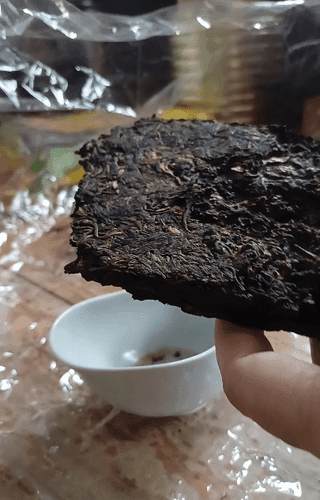
For Puer tea enthusiasts, the ritual of breaking down a hard tea brick is both an art and a test of patience. These dense, compressed cakes—often aged for years—require precision to unlock their depth. Take the Lancang Gushu Puer Raw tea from the 2000s, for instance. Its brick form, while challenging to crack, holds secrets in every fragment. The process isn’t just about extraction; it’s about coaxing out layers of flavor that demand respect. The key lies in balance. Too few tea leaves, and the brew becomes thin, lacking the bold character of aged Puer. Too many, and the tea…
Read More
Mei Leaf’s ‘Teas of the Year’ Part 2: A Closer Look at Wild Slumber, Antique Nectar, and Night Flower Sencha

Mei Leaf’s ‘Teas of the Year’ Part 2: A Closer Look at Wild Slumber, Antique Nectar, and Night Flower Sencha

The verdict is in: Mei Leaf’s 2025 “Teas of the Year” aren’t just another batch of curated blends—they’re a masterclass in balance, aroma, and storytelling. After rigorous blind tastings using gaiwan and yixing teapots, I’ve peeled back the layers of Wild Slumber, Antique Nectar, and Night Flower Sencha to reveal why these three stand out. Wild Slumber, the first to grab attention, is a floral-woody marvel. Its dry leaf offers a whisper of jasmine, but it’s the wet leaf that steals the show—rich, earthy, and subtly smoky. Steeped to perfection, it delivers a velvety mouthfeel with notes of toasted almonds…
Read More
The Creamy Tea Hunt

The Creamy Tea Hunt

This is worth savoring: A Milk Oolong that defied expectations. The tea swap encounter left me with a ziploc bag of mystery, a faint floral whisper, and a lingering question—where are the creamy notes? If you’ve ever wondered why some teas taste like silk drizzled with caramel, you’re not alone. The pursuit of a naturally milky flavor in Camellia sinensis is a niche obsession, but one that reveals fascinating truths about tea chemistry and terroir. Creamy textures in tea often stem from specific processing techniques or regional microclimates. For example, certain white teas, like Silver Needle from Fujian, develop a…
Read More
Where Japan’s Green Tea Thrives: A Map of Tradition and Terroir

Where Japan’s Green Tea Thrives: A Map of Tradition and Terroir

Here’s what you need to know: Japan’s green tea landscape isn’t just about leaves and steam—it’s a story of geography, climate, and centuries-old craftsmanship. While sencha and gyokuro dominate the conversation, their origins are as nuanced as the terroir that shapes them. Shizuoka, Japan’s largest tea-producing region, is synonymous with sencha, its flat terrain and warm climate yielding bold, vegetal notes. But don’t assume every sencha comes from there. Kagoshima’s volcanic soil and tropical warmth birth a sweeter, more delicate version, while Uji’s ancient tea fields—where the first matcha was made—produce a refined, umami-rich profile. Processing techniques, of course, play…
Read More
A Black Tea’s Honey Aroma Falls Short, But Osmanthus Flowers Save the Day

A Black Tea’s Honey Aroma Falls Short, But Osmanthus Flowers Save the Day

The verdict is in: This black tea’s honey aroma promise feels more like a marketing gimmick than a sensory revelation. While the brew isn’t terrible, it lacks the depth or complexity to justify its name. The tea’s subtle character is almost timid, offering little to entice a seasoned palate. But here’s where the story gets interesting—when paired with osmanthus flowers, the tea transforms. The floral notes of the osmanthus bloom into a harmony that elevates the tea’s muted profile, creating something unexpectedly satisfying. The tea’s base is unremarkable, hovering between the familiar and the forgettable. Yet its pairing with osmanthus…
Read More
The Enigma of Pu’erh: Why It’s More Than Just Tea

The Enigma of Pu’erh: Why It’s More Than Just Tea

Real talk: Sometimes the best moments are the ones that make you rethink your entire tea routine. Last afternoon, I cracked open a 2004 raw Pu'erh from Bu Sang, a brick dense with microbial whispers and aged complexity. It’s the kind of tea that demands patience—both in its cultivation and in its enjoyment. But here’s the catch: after six weeks of quick coffee sips (thanks to a spine injury that’s turned quiet moments into a battleground), this Pu'erh felt like a revelation. Yet, not everyone shares my obsession. The genre’s reputation for bitterness and earthy grit often overshadows its potential.…
Read More