⏱ 1 min read
The Short Version
Heat spikes during roasting are intentional, signaling key stages in bean development, not flaws—mastering them requires precision, not force. Roasters adjust curves and airflow to control spikes, reading them as milestones, not chaos.
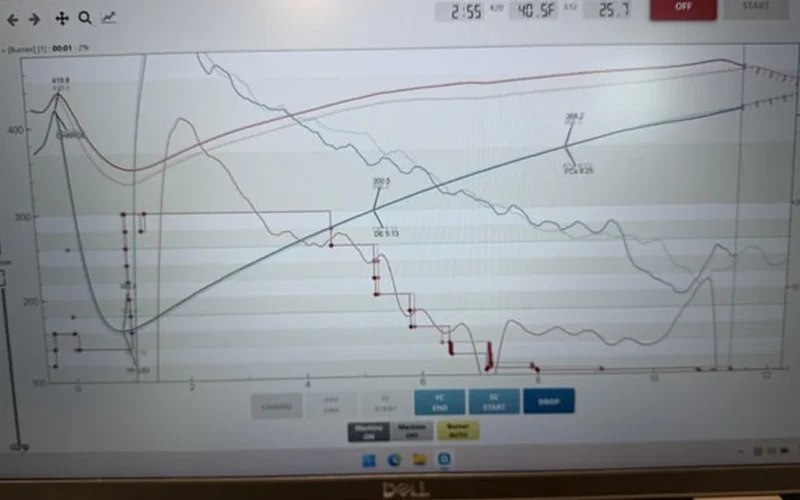
Heat spikes during roasting are not random fluctuations—they are critical indicators of the roast’s progression. For newcomers, the abrupt temperature rise after the first crack may seem erratic, but it is an essential phase in the roast curve. The Giesen and Artisan roasters are engineered for precision, their behavior shaped by thermal inertia and the timing of heat application.
The roast curve is a roadmap, and heat spikes are milestones—read them, not just react to them.
Understanding the Science of Heat Spikes
Following the first crack, beans undergo rapid expansion, which triggers a dynamic interplay between heat retention and airflow. This creates a heat spike, a natural release of stored energy rather than a flaw. It marks the transition from development to drying. A sharp spike suggests over-advancement, where heat escapes too quickly, leaving the beans under-roasted.
Adjusting for Control, Not Chaos
Managing heat spikes requires fine-tuning the roast curve. Lowering the heat slightly before the first crack can ease the transition, allowing beans to absorb heat more evenly and reducing the spike’s intensity. Some roasters adjust the Artisan’s profile to include a brief cooling phase post-crack, stabilizing temperature. Mastery lies in precision, not force. The roast curve is a roadmap, and heat spikes are milestones—read them, not just react to them. Bean origin and roast level significantly influence heat spike behavior. Darker roasts and beans with higher moisture content tend to exhibit more pronounced spikes due to their thermal properties. Understanding these variables enhances control and consistency. What’s your approach to managing heat spikes? Share your tricks—no one should roast in the dark.
Questions & Answers
How do heat spikes during roasting affect the roast curve?
Heat spikes signal the transition from development to drying. They result from beans expanding post-first crack, releasing stored energy. A sharp spike suggests over-advancement, leading to under-roasted beans. Managing these spikes ensures even heat distribution and better control.
What causes heat spikes after the first crack?
Heat spikes occur as beans expand rapidly after the first crack, creating a dynamic balance between heat retention and airflow. This stored energy is released, marking the shift from development to drying. The spike is a natural process, not a flaw, influenced by bean moisture and roast level.
Can adjusting the roast curve help manage heat spikes?
Yes, adjusting the roast curve helps manage heat spikes. Lowering heat slightly before the first crack allows beans to absorb heat more evenly, reducing spike intensity. Some roasters also add a brief cooling phase post-crack to stabilize temperature, enhancing control and consistency.
Why are heat spikes important for roasting mastery?
Heat spikes are critical for mastering the roast curve as they indicate key progression stages. They act as milestones, signaling the transition from development to drying. Reading these spikes, rather than just reacting to them, enables precise control and better roast outcomes.
Originally reported by Reddit Coffee Roasting.