⏱ 2 min read
The Short Version
Phylloxera has transformed the Yarra Valley’s wine industry, driving a slow but determined replanting effort as growers adapt to the pest’s lingering impact and climate challenges. Winemakers are reshaping their vineyards, blending resilience with innovation to redefine the region’s future.
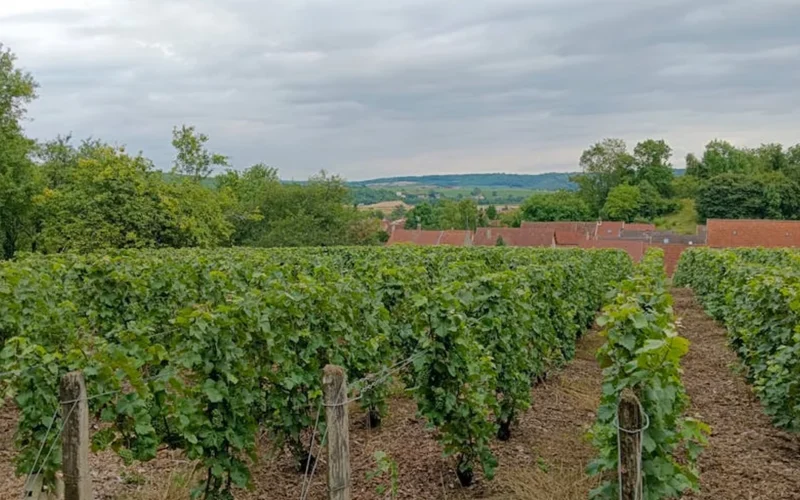
Twenty years after phylloxera first struck the Yarra Valley, the region is still grappling with its legacy. The parasite, once a European scourge, arrived in Australia in 1877 and spread relentlessly, decimating vineyards. Yet here, the disease has moved slowly—half the pace of its European counterpart—and winemakers have turned this slow burn into a quiet revolution. At TarraWarra Estate, Chris Beard points to a yellowing patch in his Southern Slope vineyard, where phylloxera now claims 10% of the land. “It’s a slow unraveling,” he says. “Not an end, but a transformation.”
Replanting means much more than replacing vines—it’s about starting over, correcting old mistakes, and positioning for the future.
Infestation Zone: A Slow Burn, Not a Collapse
The Yarra’s response has been methodical. Biosanitary measures now govern every step: heat-treated tools, chlorine foot baths, and no shared equipment. Even kangaroos and deer, unwitting vectors, are part of the equation. But the real shift lies in replanting. At De Bortoli, 250 hectares have been re-rooted, using grafts resistant to the louse. “We’re not paralyzed by it,” says Steve Webber, winemaker. “We’re building a new framework.” The cost—up to AU$120,000 per hectare—has slowed progress, but growers like Timo Mayer are “not fucking around.” For them, replanting isn’t just about survival; it’s about recalibrating the entire industry.
Replanting as Reckoning: Climate, Clones, and the Future of Pinot
Climate change has forced a deeper reckoning. Pinot Noir, which makes up 40% of the Yarra’s output, now faces a dual threat: rising temperatures and phylloxera. “Pinot needs more water, more shade,” says Beard. Growers are swapping old clones for newer, climate-adapted varieties. De Bortoli is replacing MV6 Pinot with Dijon clones, producing “far superior wines.” Meanwhile, others are planting Nebbiolo, Marsanne, and even Carricante—grapes once deemed marginal. “The good operators are asking: Are we smart to keep repeating the same strategies?” says Beard. The Yarra is no longer just a wine region; it’s a lab for reinvention.
Replanting means much more than replacing vines—it’s about starting over, correcting old mistakes, and positioning for the future.
Local communities and consumers are also adapting. As winemakers embrace innovation, so too are their customers, many of whom are now actively seeking out sustainable, small-batch, and climate-conscious wines. This shift has created a feedback loop, where the industry’s evolution is both shaped by and shaping consumer expectations.
What does the Yarra’s next chapter look like? Will its new identity be defined by resilience, or by the courage to abandon the past?
Questions & Answers
How has phylloxera affected the Yarra Valley’s vineyards?
Phylloxera has slowly damaged about 10% of the Yarra Valley’s vineyards, particularly at TarraWarra Estate. The disease has progressed at half the rate seen in Europe, prompting a gradual transformation rather than a collapse. Growers have adapted by implementing strict biosanitary measures and replanting with resistant rootstocks.
What measures are Yarra Valley winemakers taking against phylloxera?
Winemakers are using heat-treated tools, chlorine foot baths, and no shared equipment to prevent phylloxera spread. Kangaroos and deer, which can carry the pest, are also monitored. Replanting with resistant grafts is a major strategy, with some estates like De Bortoli re-rooting 250 hectares.
Why are growers in the Yarra Valley replanting their vineyards?
Growers are replanting to combat phylloxera and adapt to climate change. By replacing old clones with climate-resilient varieties like Dijon clones, they aim to improve wine quality and sustainability. This shift is part of a broader industry transformation, moving beyond survival to innovation.
What new grape varieties are being planted in the Yarra Valley?
Winemakers are experimenting with new varieties like Nebbiolo, Marsanne, and Carricante, which were once considered marginal. These choices reflect a broader strategy to diversify and adapt to both phylloxera and climate challenges, positioning the Yarra Valley as a hub for wine innovation.
Originally reported by The Drinks Business.