⏱ 2 min read
The Short Version
To combat rising temperatures and water scarcity, the Bruniers are pivoting from power to precision by utilizing old vines and whole-bunch fermentation. This technical shift prioritizes freshness and balance, ensuring their Châteauneuf-du-Pape remains elegant rather than overly concentrated.
In This Article
Daniel and Cecile Brunier recently brought the spirit of Châteauneuf-du-Pape to Mauro’s Kitchen at Raffles London, hosting a dinner that centered on a singular obsession: Grenache. While the family portfolio spans Domaine les Pallières in Gigondas and properties in Ventoux, the philosophy remains constant. For the Bruniers, every decision—from soil selection to barrel choice—revolves around how it serves the grape.
More and more we use old vines, and try to maintain them.
Managing the heat
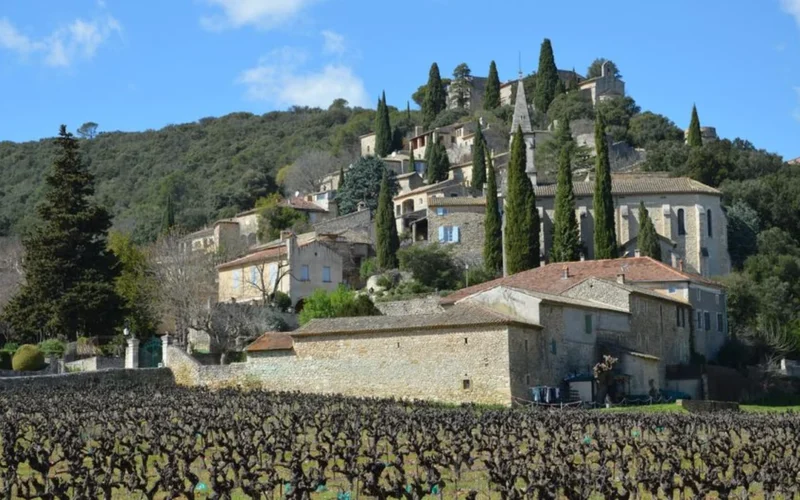
The reality of modern viticulture in the south of France is increasingly dictated by water access rather than temperature alone. Although they reside in a hot climate, Daniel Brunier notes that his primary concern is not the heat itself, but “a lack of water.” To combat this, the estate relies on a thick layer of clay beneath their northern plateau, acting as a natural sponge. They also lean heavily into the resilience of old vines, which possess deep root systems capable of weathering intense summers.
More and more we use old vines, and try to maintain them. This focus on age is paired with a technical shift toward using whole bunches more frequently. By incorporating stems, the team aims to curb rising alcohol levels and avoid the trend of overly dense, concentrated wines. Instead of aggressive extraction, they favor slow infusion over 30–40 days to preserve balance and freshness.
A generational transition
While Daniel describes himself as semi-retired, the continuity of the estate is secured by the sixth generation: his son Edouard and niece and nephew Manon and Nicolas. The transition has been seamless enough that tasting wines from both the fifth and sixth generations makes it difficult to discern a stylistic break. This stability was evident in the pours at Mauro’s, ranging from the ethereal 2022 ‘Piedlong’—an elegant expression of 85-year-old vines—to the structured 2020 ‘La Crau’.
The wines showcased a clear mastery of texture, particularly the 2024 ‘La Crau’ Blanc, which delivered saline notes and pear fruit, scoring 95/100. Even the older 2012 ‘La Crau’ red maintained its finesse, proving that their move toward lighter extraction protects longevity. As harvest dates have moved forward by more than 15 days since the early 1990s, the Bruniers are betting on precision over power to define the future of Châteauneuf-du-Pape.
How do you think increasing temperatures will reshape the classic profiles of Southern Rhône wines?
Questions & Answers
How do the Brunier family manage water scarcity in their vineyards?
The Brunier family manages water scarcity by relying on a thick layer of clay located beneath their northern plateau. This clay layer functions as a natural sponge to help retain moisture during dry periods. Additionally, they focus on maintaining old vines because their deep root systems are better equipped to access water and weather intense summer heat. These combined strategies help ensure the vines remain resilient despite the increasingly dry climate in the south of France.
What techniques are used to prevent high alcohol levels in modern wines?
Using whole bunches more frequently is a key technique used to curb rising alcohol levels and prevent wines from becoming overly dense. By incorporating stems into the fermentation process, the winemaking team aims to maintain balance and freshness rather than pursuing aggressive extraction. This approach is paired with a slow infusion process lasting between 30 and 40 days. These technical shifts help the estate move away from high-power profiles toward more precise and elegant expressions.
Why is the use of old vines important for climate resilience?
Old vines are vital for climate resilience because their deep root systems allow them to access water more effectively during intense summers. While modern viticulture faces challenges from heat, the depth of these roots helps the plants withstand periods of drought. The Brunier family places a heavy emphasis on maintaining these aged vines to ensure stability in their production. This focus on vine age helps preserve the texture and longevity of wines like the 85-year-old Piedlong.
How has the timing of the wine harvest changed over the decades?
Harvest dates have moved forward by more than 15 days since the early 1990s due to shifting climatic conditions. This change in timing has influenced the family to prioritize precision over power when defining the future of their Châteauneuf-du-Pape wines. By adjusting their approach to the earlier harvests, they aim to avoid overly concentrated wines. This evolution in winemaking helps them preserve the finesse and freshness of their wines even as the growing season changes.
Originally reported by Wine Anorak.