

⏱ 1 min read
The Short Version
UCC is ditching traditional chemical reliance to become an architect of regenerative coffee, swapping heavy inputs for shade trees and organic compost. By pioneering carbon insetting directly within Vietnamese supply chains, they’re proving that ecological resilience and scalable yields can actually coexist.
In This Article
Japan’s UCC Group is evolving its role in Vietnam from a traditional buyer to an active architect of regenerative coffee production. By partnering with ACOM, the Vietnamese subsidiary of the ECOM Group, the company is launching a pilot program designed to stabilize both the environment and the supply chain against the increasing volatility of climate change.
This groundbreaking project presents a fantastic opportunity to strengthen the relationship between ECOM and UCC for sustainable coffee sourcing in Vietnam.
Science Over Tradition
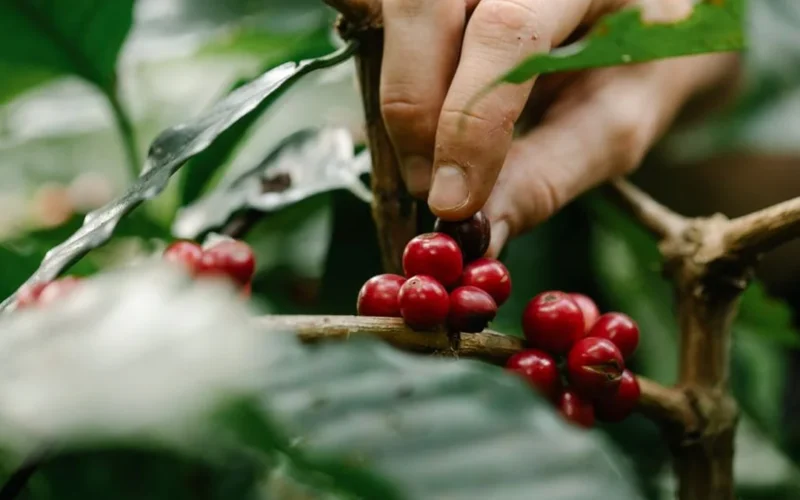
The initiative centers on a pilot farm where specific techniques will be tested to bolster tree health and increase yields. Instead of relying on heavy chemical inputs, the project emphasizes the introduction of shade trees and the application of organic compost. These methods aim to improve how crops handle environmental stress while fostering more resilient ecosystems. This collaboration marks a significant shift for UCC; as Masahito Hibi of the UCC Japan Sustainability Promotion Office notes, Vietnam has long been an inseparable partner to Japanese coffee culture, and this move evolves that relationship toward jointly creating environmental value. This groundbreaking project presents a fantastic opportunity to strengthen the relationship between ECOM and UCC for sustainable coffee sourcing in Vietnam. Through these natural solutions, UCC aims to establish a scalable blueprint for larger production landscapes.
The Carbon Inset Strategy
Beyond soil health, the partnership targets a massive logistical hurdle: greenhouse gas emissions. As part of UCC’s goal to reach carbon neutrality by 2040, the pilot program will experiment with a carbon inset model. Unlike traditional offsetting, which often feels detached from the source, insetting focuses on reducing and absorbing emissions directly within the existing supply chain. This includes using biochar and drastically cutting back on chemical fertilizers at the farm level. Through this granular approach, the companies intend to document real-world emission reductions that prove regenerative farming can be both ecologically sound and economically viable for producers.
Do you think carbon insetting is the most effective way for major roasters to tackle their climate impact?
Questions & Answers
What is the goal of the UCC and ECOM partnership in Vietnam?
The partnership between UCC Group and ACOM aims to transition coffee production from traditional buying to active regenerative farming. This pilot program focuses on stabilizing the environment and securing the supply chain against climate change volatility. By testing specific agricultural techniques, the companies hope to create a scalable blueprint for sustainable coffee landscapes. This initiative represents a strategic shift toward creating long-term environmental value within the Vietnamese coffee sector through collaborative, science-based production methods.
How does regenerative farming improve coffee tree health in this pilot program?
Regenerative farming improves coffee tree health by utilizing natural solutions rather than relying on heavy chemical inputs. The project emphasizes the introduction of shade trees and the application of organic compost to bolster crop resilience. These specific techniques help coffee plants better manage environmental stress while simultaneously fostering more resilient local ecosystems. By focusing on soil health and biodiversity, the program seeks to increase yields through ecological stability rather than through intensive synthetic fertilization.
What is the difference between carbon offsetting and carbon insetting?
Carbon insetting focuses on reducing and absorbing greenhouse gas emissions directly within an existing supply chain rather than purchasing external credits. While traditional offsetting often feels detached from the original source of production, insetting targets improvements at the farm level to address climate impact more granularly. In this specific partnership, companies use methods like biochar application and reduced chemical fertilizer use to document real-world emission reductions directly where the coffee is grown.
Why is UCC implementing a carbon inset strategy for its supply chain?
UCC is implementing a carbon inset strategy to help reach its corporate goal of achieving carbon neutrality by 2040. This approach allows the company to address greenhouse gas emissions at the source by integrating reduction methods into their actual coffee production processes. By using biochar and cutting back on chemical fertilizers, they aim to prove that regenerative farming is both ecologically sound and economically viable. This strategy ensures that emission reductions are physically tied to their specific supply chain.
Originally reported by Global Coffee Report.



[…] by a simple, frustrating reality—we cannot effectively monitor what is happening on individual coffee farms across the globe. Without precise mapping, sustainability policies remain toothless, leaving both […]
[…] Vietnam Quang Tri 96B Excelsa Natural, offers a masterclass in processing complexity. Sourced from Vietnam’s Quang Tri region, these beans underwent a rigorous 120-hour anaerobic fermentation followed by a 30-day slow-drying […]