Father

Unlocking the Complexity of a Closed Bottle

Unlocking the Complexity of a Closed Bottle

If you've ever stared at a wine bottle, wondering why it’s so closed off, you’re not alone. The term “tight” isn’t just a critique—it’s a clue about the wine’s journey. Here’s how to coax it into revealing its true self. A tight wine isn’t broken; it’s simply holding back. Think of it as a young red with tannins clamping down like a velvet glove on a steel fist. These structural elements guard the wine’s potential, shielding its flavors until they’re ready to emerge. White wines can also be tight, but their closure often stems from acidity or phenolics rather than…
Read More
The Return to Comfort: Why Familiar Wines Are Resurging

The Return to Comfort: Why Familiar Wines Are Resurging

The wine world has been in a frenzy of exploration for a decade—experimenting with obscure grapes, far-flung regions, and avant-garde styles. But now, the pendulum is swinging back. As Amber Gardner observes, consumers are craving the familiar, the comforting, and the recognizable. This shift isn’t just a trend; it’s a cultural realignment. After years of chasing novelty, people are rediscovering the solace of classic varieties like Chardonnay, Pinot Noir, and Cabernet Sauvignon. The reason? A growing disillusionment with the chaos of the “wine revolution.” For years, the industry trumpeted the virtues of terroir, esoteric appellations, and artisanal minimal intervention. Yet,…
Read More
The Unfiltered Truth About Nicosia’s Coffee Scene

The Unfiltered Truth About Nicosia’s Coffee Scene

Get ready to sip on this: In Nicosia, the difference between a chain coffee and a specialty brew is less about price and more about the science of bitterness. Christos Soteriou, a local coffee enthusiast, admits that Starbucks’ Americano is a decent fallback when no better options exist—until you add a pinch of salt to cut the harshness. This trick, he says, transforms the drink into something “at least halfway-drinkable.” But it’s not just about survival; it’s about the broader debate over what defines “good” coffee in a city where chains dominate the landscape. Nicosia’s specialty scene, led by shops…
Read More
Coffee’s New Roastery Triples Output, Embraces Simplicity

Coffee’s New Roastery Triples Output, Embraces Simplicity

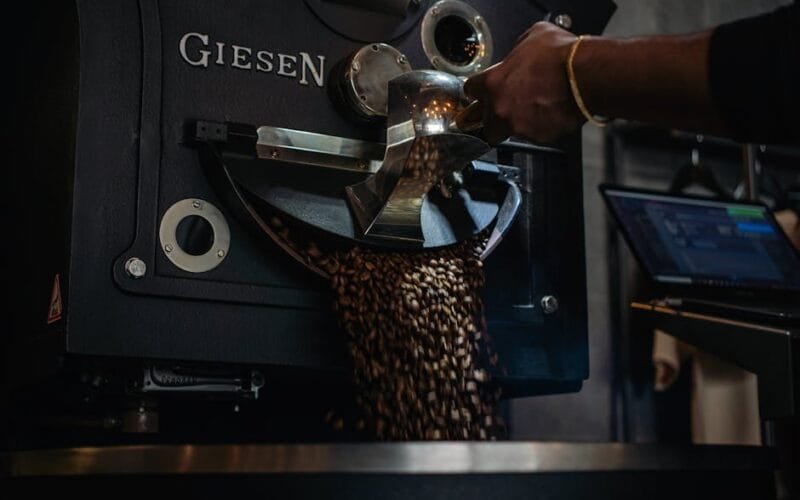
Listen up: 321 Coffee is scaling up. The North Carolina roastery, now triple the size of its original warehouse, is no longer just a hub for inclusive coffee work. It’s a production powerhouse, fueled by a bold pivot from tech-heavy systems to low-tech precision. The move reflects a deeper truth: sometimes, simplicity outshines complexity. The new 5,000-square-foot space in Raleigh houses a Loring S35 roaster alongside its existing S15 model, doubling capacity and meeting surging demand from wholesale clients and five local cafes. But the real shift isn’t the machines—it’s the workflow. After years of relying on digital systems to…
Read More
Specialty Coffee Steps into the Spotlight at James Beard Awards

Specialty Coffee Steps into the Spotlight at James Beard Awards

When the James Beard Awards—food industry’s Oscars—turned their gaze to coffee, the specialty world took notice. For the first time, a coffee shop made it to the shortlist alongside restaurants, bars, and wine counters. Arkansas-based Onyx Coffee Lab, a roastery with roots in craft coffee since 2015, has landed a semi-finalist nod in the Outstanding Bar category. The recognition isn’t just a win for Onyx—it’s a seismic shift for an industry long sidelined by mainstream culinary acclaim. Onyx’s 1907 location, a sprawling 30,000-square-foot café and roastery, embodies the ethos of modern specialty coffee. It’s not just about beans; it’s about…
Read More
The Good Food Awards Coffee Finalists: A Spotlight on Origin and Innovation

The Good Food Awards Coffee Finalists: A Spotlight on Origin and Innovation

Time to spill: The 2026 Good Food Awards coffee finalists are here, and they’re rewriting the rules of origin storytelling. With 25 single-origin entries from 20 U.S. roasters, this year’s crop leans heavily on Ethiopia and Colombia, but don’t sleep on Costa Rica, Panama, Rwanda, or El Salvador. These aren’t just beans—they’re narratives, each one tied to soil, altitude, and the roasters’ obsession with transparency. The Good Food Foundation’s criteria? No shortcuts. Roasters must prove their sourcing practices, highlight processing methods like thermal shock or anaerobic honey, and balance flavor with ethical intent. The judging process is as rigorous as…
Read More
The Chefs Who Brew the Best Coffee: A List of Their Trusted Roasters

The Chefs Who Brew the Best Coffee: A List of Their Trusted Roasters

Consider this your morning briefing: The world’s top chefs are treating coffee like a fine wine, curating roasters that match their culinary vision. From Copenhagen to Los Angeles, chefs are ditching generic brews to partner with specialty roasters, ensuring every cup aligns with their philosophy. At Noma, chef René Redzepi and Tim Wendelboe crafted a “nomacano”—a hybrid of Americano and pour-over—to complement their tasting menus. This isn’t just coffee; it’s a deliberate act of storytelling, where the bean’s origin and roast profile mirror the dish’s intention. In Los Angeles, Be Bright has become a staple for chefs like David Chang…
Read More
The Anaerobic Lactic Coffee Roasting Conundrum: A Behmor Breakdown

The Anaerobic Lactic Coffee Roasting Conundrum: A Behmor Breakdown

Pour yourself a cup for this one: You’re not alone in the struggle to coax clarity from anaerobic lactic Costa Rica on your Behmor. While anaerobic natural fermentations from the same farm thrive under your current profile, the lactic variant feels muted—like a whisper instead of a shout. The issue isn’t the beans; it’s the chemistry. Anaerobic lactic coffees ferment with wild yeast and bacteria, creating a tart, almost effervescent profile that demands precision. Unlike naturals, which develop sweetness through extended drying, lactics need a roast that balances acidity without masking their delicate fruitiness. The key lies in temperature control.…
Read More
The Best Small Roaster for Hands-Off Coffee Lovers

The Best Small Roaster for Hands-Off Coffee Lovers

Real talk: If you’re eyeing roasting as a side hustle but crave minimal effort, fluid bed roasters are your secret weapon. These machines automate temperature control and airflow, letting you focus on sourcing beans rather than micromanaging the roast. But the question remains: are they worth it? Fluid bed roasters like the Nucleus Link and Ikawa are engineered for precision, using hot air to evenly roast beans. They’re less hands-on than drum roasters, which require constant stirring. However, both models are tiny—perfect for samples but not scalable for a side business. The Nucleus Link, for instance, roasts 2–5 lbs at…
Read More
Craft Roasting for Specialty Coffee: Why It Matters

Craft Roasting for Specialty Coffee: Why It Matters

There’s something brewing in the quiet corners of the coffee world—a growing demand for roasting education that dares to prioritize craft over scale. While mainstream programs focus on efficiency and consistency, a niche movement is emerging around small-batch roasting, lighter profiles, and the intricate dance between terroir and processing. For enthusiasts who crave depth over volume, this isn’t just a trend—it’s a rebellion against homogenization. The craft approach hinges on understanding how a bean’s origin shapes its potential. Terroir—the combination of soil, climate, and altitude—dictates flavor notes, acidity, and body, while processing methods like natural or honey drying introduce layers…
Read More