⏱ 2 min read
The Short Version
Instead of traditional grafting, iconoclast Randall Grahm is gambling on a "fool’s errand" by growing vines from seeds to create a uniquely American variety. It’s a race against time as the legendary winemaker battles Parkinson’s to realize his most ambitious genetic experiment.
In This Article
Randall Grahm has spent nearly 50 years acting as California wine’s premier iconoclast, from the UFO-themed Le Cigare Volant to the sprawling reach of Bonny Doon Vineyard. Now 73, the legendary winemaker faces a new, daunting reality: a diagnosis of Parkinson’s disease. In Jeffrey Reiner’s documentary The Terroirist, Grahm confronts his own mortality while racing to complete his most ambitious project yet—a 30-acre vineyard in San Benito County called Popelouchum.
Maybe this mixed population would be uniquely suited to San Juan Bautista conditions.
A Genetic Experiment
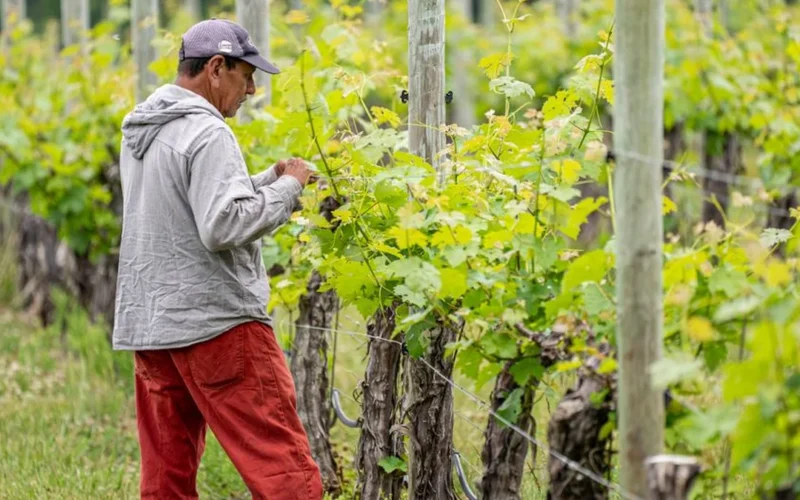
Located squarely on the San Andreas faultline, Popelouchum represents more than just another site for Grahm; it is a quest for a “wholly American variety.” While most growers rely on genetically identical cuttings via grafting, Grahm attempted the “fool’s errand” of growing vines from seeds to invite massive genetic variation. He hoped this unpredictable population would yield plants uniquely suited to the local conditions, perhaps offering better acidity or increased drought tolerance.
Maybe this mixed population would be uniquely suited to San Juan Bautista conditions.
Although the initial vast experiment proved unruly, Grahm reined the project in to focus on the offspring of a single variety, Serine. This has yielded roughly 150 variations of red and white plantings that are finally old enough to express the site’s true character. For Grahm, these grapes aren’t just a product, but a way to diffuse varietal dominance so the soil characteristics can emerge.
The Spiritual Path of Viticulture
For Grahm’s partner Chinshu Huang, his refusal to take the easy route is a defining trait: “It’s almost as if it needs to be something difficult for him to want to do it.” This relentless drive fueled a career defined by curiosity rather than the predictable “Chateau” branding of traditional estates. Amidst these medical challenges, there is a flicker of continuity; his daughter, Amélie, has begun expressing interest in the wine business, offering a potential path for his legacy to endure.
Grahm views the labor not merely as a business, but as a method of presence. He describes taking care of the vineyard as a spiritual path intended to help him become more human and less of a luftmensch. From the eccentric labels of Big House to the high-stakes gamble at Popelouchum, Grahm pursues vinous truth even as he reckons with his own finite time.
Can a winemaker’s devotion to the land outlast the physical limits of the man behind the vine?
Questions & Answers
What is Randall Grahm's Popelouchum project?
Popelouchum is an ambitious 30-acre vineyard project located in San Benito County that aims to create a uniquely American wine variety. Instead of using traditional grafting methods to ensure genetic identity, Randall Grahm is growing vines from seeds to encourage massive genetic variation. This experiment seeks to produce a diverse population of plants that are specifically adapted to the local conditions of the San Andreas faultline, potentially offering better acidity or increased drought tolerance.
How does the Popelouchum vineyard experiment work?
The Popelouchum experiment works by growing grapevines from seeds rather than using genetically identical cuttings to invite unpredictable genetic variation. While the initial experiment was quite unruly, Grahm narrowed the focus to the offspring of a single variety known as Serine. This process has resulted in approximately 150 different variations of red and white plantings. These diverse vines are designed to diffuse varietal dominance so that the specific characteristics of the local soil can emerge.
Why does Randall Grahm view viticulture as a spiritual path?
Randall Grahm views the labor of viticulture as a spiritual path intended to help him become more human and grounded. For Grahm, the act of taking care of a vineyard is a method of presence that allows him to connect deeply with the land. This philosophical approach to winemaking contrasts with traditional estate branding and reflects his lifelong pursuit of vinous truth. Even while facing a Parkinson’s diagnosis, he uses the vineyard as a way to navigate his own mortality.
What health challenges is winemaker Randall Grahm facing?
Randall Grahm is currently facing a diagnosis of Parkinson’s disease at the age of 73. This medical reality has added a sense of urgency to his work as he confronts his own mortality while racing to complete his most ambitious professional project. Despite these physical challenges, he continues to pursue his vision for the Popelouchum vineyard. His daughter, Amélie, has also begun showing interest in the wine business, which may help ensure his viticultural legacy continues.
Originally reported by Los Angeles Times.