⏱ 2 min read
The Short Version
A potential "super" El Niño—the strongest since 1950—threatens to rewrite global wine profiles by shifting fruit sweetness and power. From California deluges to South African droughts, vintners are racing to master technical refinements before traditional regional styles vanish.
In This Article
The National Oceanic and Atmospheric Administration (NOAA) has issued an advisory that could redefine upcoming vintages: there is an 83 percent chance that Pacific surface temperatures for the last quarter of 2026 will be up to 2.5 degrees higher than average. This shift signals the potential arrival of a super El Niño, the strongest since 1950. Though 17th-century Peruvian fishermen gave the phenomenon its diminutive name, “the little boy,” the NWS notes it may be the most influential climate driver on Earth, capable of altering weather patterns from California to South Africa.
We’ll also have to put up straw bales in spots to slow the water flow down… to prepare for a lot of rain because we want to keep all our soil in place.
Shifting Rain and Humidity
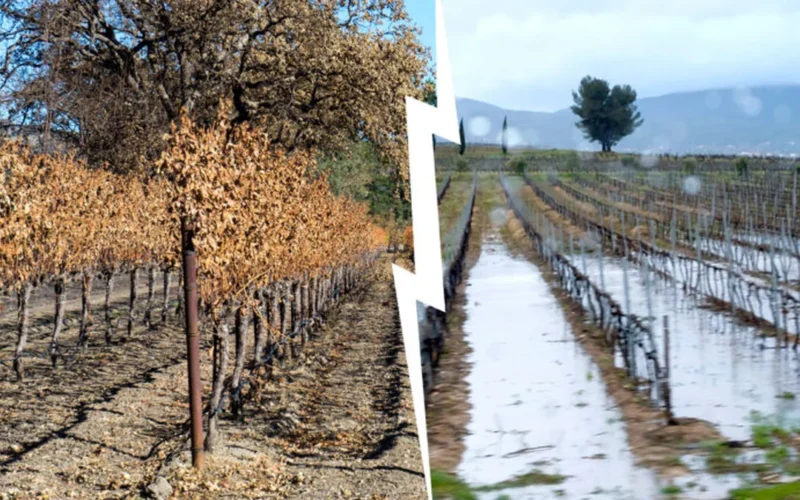
In North America, the impact is already deviating from historical norms. Marshall Miller, COO of Thornhill Companies, notes that the ocean has warmed much earlier than seen in previous cycles, increasing humidity levels unexpectedly early into the year. For vineyards like Bien Nacido in Santa Barbara County, this presents a duality of risk and reward. Gentle, consistent winter rains can drive roots deeper, reducing irrigation needs, but concentrated thunderstorms threaten flooding and soil erosion. We’ll also have to put up straw bales in spots to slow the water flow down… to prepare for a lot of rain because we want to keep all our soil in place.
The movement of the jet stream often determines whether these regions face deluge or drought. Steve Matthiasson of Matthiasson Wines observes that while Southern California typically expects more rain, Northern California can remain dry during an El Niño year. In Chile, Concha y Toro chief winemaker Marcelo Papa anticipates increased rainfall, which he views as generally positive, though late-season rain in February or March can devastate fruit quality. Increased cloud cover also reduces solar radiation, which directly alters wine profiles; Papa explains that less radiation leads to less sweet fruit and less power in reds, pushing styles away from New World fruitiness toward something more European in profile.
Global Climate Ripples
The influence of the ENSO cycle extends far beyond the Pacific Rim. While Australia’s Bureau of Meteorology predicts a warmer end to 2026, consulting viticulturist Dylan Grigg suggests that exceptional recent winter rains may temper the impact on Australian vineyards. Conversely, the shift can trigger heat and drought in South Africa. Gerard Martin of South African Wine notes that while nighttime temperatures remain cool, daytime highs increase and water availability drops.
However, the industry is not entering these cycles unprepared. Following the devastating Western Cape droughts of 2015–2018, researchers at the University of Stellenbosch have pioneered new trellising and deficit irrigation techniques. Martin reports that in some Swartland instances, producers have maintained consistent yields and quality using 50 percent less water. As El Niño continues to fluctuate, growers are increasingly leaning on these technical refinements to navigate extreme climatic swings.
Do you think the current trend of “super” climate events will eventually make traditional regional wine profiles obsolete?
Questions & Answers
How does a super El Niño affect the flavor profile of wine?
A super El Niño alters wine profiles by increasing cloud cover and reducing the amount of solar radiation reaching the vines. This reduction in sunlight leads to fruit with less sugar content and less power, particularly in red wines. Consequently, wine styles may shift away from the characteristic fruitiness found in New World regions toward a profile that is more reminiscent of European wines.
What are the specific risks of increased rainfall for vineyards in North America?
Increased rainfall presents a duality of risks including sudden flooding and significant soil erosion. While gentle and consistent winter rains can be beneficial by driving roots deeper into the ground to reduce irrigation needs, concentrated thunderstorms pose a threat to vineyard stability. To mitigate these dangers and keep soil in place, some growers use methods like placing straw bales in specific areas to slow down water flow.
Why do different wine regions experience different weather patterns during El Niño?
The movement of the jet stream determines whether specific regions face extreme deluge or drought during an El Niño cycle. For example, while Southern California typically expects more rain during these years, Northern California can remain dry. Similarly, the phenomenon can trigger heat and drought in South Africa while causing warmer conditions in Australia, demonstrating how the ENSO cycle creates diverse global climate ripples.
How are South African wine producers managing water scarcity during heat and drought?
South African producers are utilizing advanced technical refinements like new trellising and deficit irrigation techniques to combat water shortages. Following devastating droughts between 2015 and 2018, researchers at the University of Stellenbosch pioneered these methods to help growers maintain consistency. In certain areas like Swartland, these specialized techniques have allowed producers to maintain stable yields and high quality while using 50 percent less water.
Originally reported by SevenFifty Daily.