

⏱ 2 min read
The Short Version
Liberia is betting on the smoky, floral allure of Coffea liberica to reclaim its lost coffee glory. By pairing climate-smart agroforestry with a "multiplier effect" training model, the nation aims to transform this resilient, sidelined species into a high-value specialty powerhouse.
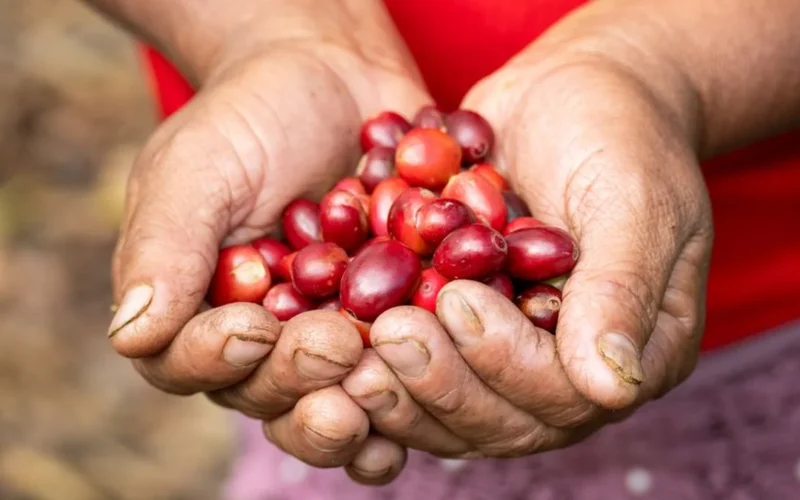
For decades, Liberia’s coffee sector has been sidelined by rubber and palm oil exports, left to languish after military coups turned managed farms into wild forests. While the country once exported significant volumes—producing roughly 209,000 bags in 1985—outdated methods and infrastructure damage caused a massive decline. Now, interest is surging again as the international specialty market discovers the unique smoky, floral, and woody profiles of Coffea liberica.
By making coffee farming more sustainable and integrated into agribusiness, the project hoped to attract young people while addressing productivity and deforestation challenges.
Reviving a Resilient Species
The resurgence centers on Liberica, a species intrinsic to equatorial rainforests that famously resisted leaf rust when Arabica faltered in the late 19th century. Although its asymmetrical beans once made processing difficult compared to Robusta, modern agronomic shifts are changing the math for smallholder farmers. Through the Seeds4Liberia project—a collaboration between the Consultative Group on International Agricultural Research (CGIAR) and the International Institute of Tropical Agriculture (IITA)—farmers are being retrained in climate-smart techniques. In August 2025, a workshop in Suakoko, Bong County, equipped agricultural officers with skills ranging from precise planting hole sizes to advanced pruning and soil fertility management.
These new strategies focus heavily on agroforestry and intercropping to ensure long-term viability. By growing suitable trees alongside coffee and mixing in short-duration crops like cowpeas or soybeans, farmers can improve moisture retention and soil health. By making coffee farming more sustainable and integrated into agribusiness, the project hoped to attract young people while addressing productivity and deforestation challenges. This approach is critical given that Liberia currently contributes less than 2% of global coffee production and struggles with minimal youth participation.
Scaling Knowledge Through Extension Services
Technical training alone cannot fix the industry’s structural gaps. Currently, Liberia faces a severe shortage of support staff: one agricultural extension officer serves approximately 35,000 farmers, far below the international recommendation of one officer per 600. To combat this, the Seeds4Liberia initiative utilizes a “multiplier effect” to bridge the gap. Dr. Ranjana Bhattacharjee, a Senior Scientist at the IITA, notes that each participant in their training of trainers program is expected to instruct at least ten additional farmers in their county.
The goal is to transform coffee from a struggling legacy crop into a sustainable vehicle for inclusive development. By modernizing how Liberica is cultivated and managed, the sector aims to move beyond subsistence toward a professionalized agribusiness model that can compete on the world stage once again.
Do you think the unique flavor profile of Liberica is enough to drive its global specialty market comeback?
Questions & Answers
What are the unique flavor characteristics of Liberica coffee?
Liberica coffee is characterized by a unique flavor profile that includes smoky, floral, and woody notes. These distinct tastes are currently driving increased interest in the international specialty coffee market. While the asymmetrical shape of the beans once made processing more difficult than Robusta, these specific sensory qualities help distinguish the species. This growing global recognition provides a significant opportunity for Liberia to reposition its coffee sector within the high-end specialty market.
How does the Seeds4Liberia project implement climate-smart farming?
The Seeds4Liberia project implements climate-smart farming through agroforestry and intercropping techniques designed to improve soil health. Farmers are trained to grow coffee alongside suitable trees and short-duration crops like soybeans or cowpeas to enhance moisture retention. This approach also includes advanced agronomic training in precise planting hole sizes, pruning, and soil fertility management. These methods aim to create a more sustainable and resilient agricultural system that can withstand changing environmental conditions.
Why is Liberica coffee considered a resilient coffee species?
Liberica is considered a resilient species because it famously resisted leaf rust during the late 19th century when Arabica coffee populations were faltering. This natural resistance makes it a valuable crop for equatorial rainforest environments where other species might struggle. Because the plant is intrinsic to these ecosystems, it is well-suited for sustainable cultivation through modern agroforestry. This biological strength provides a foundation for reviving the coffee industry in regions facing significant climate and agricultural challenges.
How does the Seeds4Liberia initiative address the shortage of agricultural extension officers?
The Seeds4Liberia initiative addresses the shortage of extension officers by utilizing a multiplier effect through a training of trainers program. Currently, Liberia faces a massive gap with only one officer serving approximately 35,000 farmers, whereas international standards recommend one officer per 600. To bridge this divide, each participant trained in the program is expected to instruct at least ten additional farmers within their county. This strategy helps scale technical knowledge rapidly across much larger populations of smallholder farmers.
Originally reported by Barista Magazine.


[…] advocates for a shift toward agroforestry and biodiversity, noting that complex landscapes are more resilient. This transition requires buyers to move away […]
[…] specialty coffee movement lies in the New Town district of Guéliz. Traditional Moroccan coffee culture centers on nousnous—a social staple of equal parts strong coffee and steamed milk—but a new […]