Coffee Facts

Expert guides on coffee brewing, roasting, beans, and equipment. Master your coffee journey with in-depth articles.

The Portable Coffee Makers That Brew Excellence on the Go

The Portable Coffee Makers That Brew Excellence on the Go

There’s a growing cult of coffee enthusiasts who refuse to compromise on quality, even when they’re on the move. Whether you’re commuting, camping, or stuck in a hotel with subpar coffee, a portable brewer can turn a mediocre situation into a moment of ritual. But not all portable coffee makers are created equal. The best ones balance compact design, durability, and the ability to deliver a cup that rivals your favorite café. Here’s how to choose. A portable coffee maker isn’t just about size—it’s about function. The ideal model should be small enough to fit in a backpack or carry-on,…
Read More
Three Delaware Coffee Roasters Redefining Specialty Coffee

Three Delaware Coffee Roasters Redefining Specialty Coffee

The verdict is in: Delaware’s coffee scene is undergoing a quiet revolution. Three new roasters are redefining what specialty coffee means, ditching mass-produced blends for traceable beans, artisanal methods, and a focus on quality over trends. These shops aren’t just serving coffee—they’re curating experiences rooted in craftsmanship and ethical sourcing. Dueling Rabbits Coffee Roasters, nestled in Wilmington’s downtown, started as a hobby for chef Adam Roush. After years in the kitchen, he traded stovetops for roasters, importing beans from obscure origins like Yemen and Australia. “We’re not here to wow you with lattes,” he says. Instead, he’s importing small-batch beans…
Read More
Rethinking Roast Profiles: A Data-Driven Approach to Coffee Perfection

Rethinking Roast Profiles: A Data-Driven Approach to Coffee Perfection

Here’s something to stir your curiosity: Imagine trying to decode a puzzle with over 4,000 possible configurations—each one a potential masterpiece or a total disaster. That’s the reality for a roaster who’s dialed in their gear, mastered the theory, and now wants to refine their process with precision. The question isn’t just about better coffee—it’s about mastering the chaos of variables like drop temperature, development time, and roast duration. For years, roasting has been a mix of intuition and trial, but one roaster is pushing past that. They’ve been using a Kaleido Sniper M2 since 2022, producing espresso and V60…
Read More
Why Your Coffee Lacks the Fruit Notes You Paid For

Why Your Coffee Lacks the Fruit Notes You Paid For

Here’s what you need to know: Coffee descriptions promise fruit-forward flavors, but many roasters struggle to deliver. The disconnect isn’t just about skill—it’s about expectations versus reality. You’ve bought beans because the notes sounded perfect, only to find yourself sipping a sweet, balanced cup that feels… incomplete. This isn’t a failure of your technique. It’s a puzzle of bean quality, processing, and the fine line between marketing and truth. The frustration stems from a simple truth: not all beans are created equal. A description touting “tropical fruit” might be based on a single batch from a specific microregion, not the…
Read More
The 100g Roast Dilemma: Why Your Kaleido M2 Isn’t Lightening Up

The 100g Roast Dilemma: Why Your Kaleido M2 Isn’t Lightening Up

This might just change your routine: If your 100g roast on the Kaleido M2 keeps coming out dark, you’re not alone. The machine’s precision is a double-edged sword—too much control can lead to confusion. The key lies in balancing airflow and heat, but even seasoned roasters trip over the same pitfalls. Your current setup—heat at 20, air at 30-40 during FC—might be the culprit. Let’s dissect why. The Kaleido M2’s airflow is a critical variable. At 30-40, you’re likely over-ventilating, which cools the beans too quickly. Light roasts demand a tighter hold on heat to let the beans develop their…
Read More
The Bitter Truth: Fixing Ethiopian Roasts and Unlocking Chocolate Notes

The Bitter Truth: Fixing Ethiopian Roasts and Unlocking Chocolate Notes

Here’s something to stir your curiosity: You’re not alone in wrestling with bitterness in Ethiopian coffees, but the solution might lie in rethinking your roast curve rather than chasing flavor profiles. The Skywalker’s metrics you’ve honed—300g green to 260g post-roast, with precise timing for each phase—have served you well. Yet lately, that same process has left your Ethiopian beans tasting flat, acidic, or overly bitter. The culprit? A misalignment between roast development and the beans’ natural profile. Ethiopian coffees, especially those from the Guji or Sidamo regions, thrive in roasts that emphasize clarity and brightness. But when bitterness creeps in,…
Read More
The Crash and Flick Dilemma: Navigating Roast Profile Pitfalls

The Crash and Flick Dilemma: Navigating Roast Profile Pitfalls

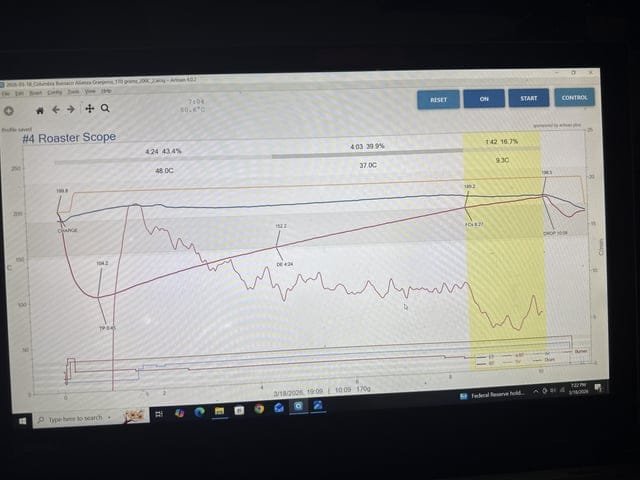
Here’s something to stir your curiosity: A light roast where you aimed for medium. The chaff crease is pale, the first crack hits at 1:42, and you dropped at 198°C—well short of your 212°C goal. Is this a sign you’re under-roasting, or just a minor misstep? The debate rages: some say the crash at first crack means you’re not carrying enough heat, while others dismiss it as irrelevant. The truth? It’s a symptom, not a verdict. The key lies in understanding how heat distribution shapes roast profiles. A light roast’s telltale signs—pale chaff, a quick first crack, and a lack…
Read More
The Art of Balancing Development Time in Rwandan Coffee Roasting

The Art of Balancing Development Time in Rwandan Coffee Roasting

Let’s talk about the delicate dance between roast time and flavor. A recent batch of Rwandan coffee revealed how small adjustments in development time can shift a cup from extraordinary to over-roasted. The first roast delivered bold mango and guava notes—uncommon and vibrant—but ended up overdeveloped, leaving a roasty aftertaste. The second roast, with 13 seconds less development, traded tropical fruit for lemongrass, proving that time is a double-edged sword. The third attempt, a middle ground, improved but still missed the initial sweetness. The challenge lies in extracting the right internal development without scorching the bean’s outer layers. Roast A,…
Read More
Behmor Roasting Just Got Data-Driven

Behmor Roasting Just Got Data-Driven

There’s something brewing in the world of coffee roasting—literally. A new app is turning the chaotic art of roasting into a science, offering real-time tracking of temperatures, heat settings, and critical roast stages. For those who’ve ever wondered how much their roast profile could improve with precise data, this tool might be your new obsession. The app’s core strength lies in its ability to map out the roasting journey with surgical precision. By logging temperature (B button) every 30 seconds, it creates a visual curve that reveals how heat interacts with beans over time. Heat settings are plotted alongside, letting…
Read More
The Road From Home Roast to Production Roaster

The Road From Home Roast to Production Roaster

Time to spill: If you’ve ever burned a batch of beans at home, you know the thrill of roasting. But can that passion lead to a career as a production roaster? The answer isn’t just yes—it’s about strategy. Transitioning from hobbyist to professional requires more than a love for coffee; it demands visibility, skill refinement, and a willingness to pivot. The path isn’t linear, but it’s navigable—if you’re ready to rethink your approach. Home roasters often underestimate the gap between backyard experimentation and industrial precision. Production roasting demands consistency, scalability, and a deep understanding of commercial equipment like drum roasters…
Read More