Coffee Facts

Expert guides on coffee brewing, roasting, beans, and equipment. Master your coffee journey with in-depth articles.

Slow Feeding the Philos: A Surprising Espresso Revelation

Slow Feeding the Philos: A Surprising Espresso Revelation

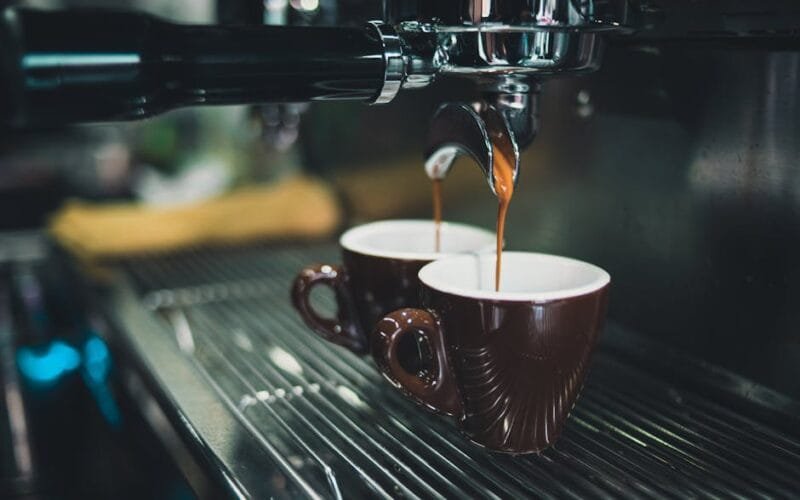
This is worth savoring: What if the way you feed your espresso beans could reshape your shot? A simple tweak to your routine—slowing the pour into your Philos grinder—unlocked a dramatic shift in extraction, proving that even small adjustments can rewrite the rules. The experiment began with a hunch: slow feeding espresso beans to the grinder might alter how they interact with heat and pressure. The results? A 45g shot in 8 seconds versus the usual 41g in 32. The numbers don’t lie. The method was deliberate. Every variable stayed locked: dose, grind, equipment, even the water spray. Only the…
Read More
The r/espresso Coffee Bean Database: A Shared Brews Library for Baristas and Curious Coffeeheads

The r/espresso Coffee Bean Database: A Shared Brews Library for Baristas and Curious Coffeeheads

Listen up: Coffee geeks and casual sippers alike have been begging for a place to swap beans, recipes, and brew wisdom—and now there’s one. The r/espresso community has launched a database where users can submit their favorite espresso blends, brewing methods, and equipment specs. Think of it as a living, breathing encyclopedia of coffee knowledge, built by enthusiasts for enthusiasts. This isn’t just a list of beans; it’s a toolkit for experimentation. Submit your brews with details like roast date, dose, yield, and shot time. Pair that with your gear (pump, grouphead, grinder) and voilà—your recipe becomes a reference point…
Read More
Grinders for Spices? Here’s Why You Should Think Twice

Grinders for Spices? Here’s Why You Should Think Twice

Grinders for spices? It’s a tempting shortcut—but the risks might outweigh the rewards. The Reddit thread buzzes with debate: is it safe to repurpose your coffee grinder for spices, or is it a recipe for disaster? The consensus leans toward caution, but the question lingers: what if you’re already grinding your own beans and want to experiment? The science is clear: coffee grinders aren’t designed for spices. Metal components and retention chambers—key features in burr grinders—trap oils and residues from spices like cinnamon or clove. These oils can seep into your coffee grounds, altering flavor profiles and potentially leaving a…
Read More
Mold Inside a Specialty Bean: How Concerned Should You Be?

Mold Inside a Specialty Bean: How Concerned Should You Be?

There’s something brewing in the world of specialty coffee that’s both alarming and oddly fascinating: the discovery of internal mold in a bean that should have been pristine. You’ve probably seen the photos—tiny worms tunneling through the bean, leaving behind a fuzzy, greenish residue. The bean itself looks fine on the outside, but the damage is done. For coffee lovers, this raises a pressing question: is this a rare flaw, a sign of poor quality, or a red flag for safety? The truth is, internal mold in specialty beans is extremely rare—but not impossible. Specialty roasters typically source beans from…
Read More
Why the Paper Filter in Your Moka Pot is Sabotaging Your Coffee

Why the Paper Filter in Your Moka Pot is Sabotaging Your Coffee

Pour yourself a cup for this one: If you’re chasing a cleaner cup from your Moka pot, adding a paper filter might be the wrong move. A Reddit user’s experiment—brewing eight cups in one morning with varying grind sizes—reveals a stark truth: paper filters strip flavor, amplify acidity, and leave you with a cup that feels like a compromise. The setup? A Bialetti 2-cup Porlex mini II grinder, set to 750μm for coarse grinds, paired with dark roasts that dominate their palate. The goal? To test whether a paper filter could elevate the Moka pot’s output. The result? A bitter,…
Read More
Reviving Fair Trade: A Coffee Entrepreneur’s Quest to Redefine the Supply Chain

Reviving Fair Trade: A Coffee Entrepreneur’s Quest to Redefine the Supply Chain

This is worth savoring: A month in Africa’s coffee heartlands revealed a stark truth—small farmers are getting less than 10% of the retail price. The same inequity echoes in South and Central America, where language, culture, and geography make operations more feasible but ethics remain unaddressed. My mission? To build a processing plant and export brand that pays farmers a living wage. I’m not the first to dream this, but I’m determined to turn the tide. The coffee world is built on a broken pyramid. Farmers, who bear the labor and risk, often earn less than a day’s wage for…
Read More
The Day I Tasted Coffee Like a Symphony

The Day I Tasted Coffee Like a Symphony

Real talk: The moment I realized coffee wasn’t just a morning habit. For years, I treated it like a grocery-store commodity—any bag that didn’t burn my tongue was fine. Then a friend handed me a cup that tasted like berries, chocolate, and sunshine. It wasn’t flavored; it was just fresh. That cup rewired my brain. Coffee, I learned, could be a conversation. A story. A sensory experience. What made that cup different? Freshness. The beans hadn’t been sitting in a warehouse for months. They’d been roasted in small batches, each one a delicate balance of heat and time. The aroma…
Read More
Why Artificially Flavored Coffee Is a Culinary Cop-Out

Why Artificially Flavored Coffee Is a Culinary Cop-Out

Get ready to sip on this: the next time you reach for that caramel-flavored bag, ask yourself—what’s the real flavor here? Artificially flavored coffee isn’t a shortcut; it’s a compromise that masks poor quality and perpetuates a broken system. The rise of lab-made flavors in the 1960s was born out of necessity—when coffee bean prices skyrocketed, companies resorted to spraying low-grade beans with synthetic oils to mimic premium notes. But this wasn’t about taste—it was about economics. The result? A legacy of cheap, chemically enhanced coffee that’s now stuck in a cycle of mediocrity. Flavored coffee is almost always low-grade.…
Read More
The Pacific’s Secret Coffee Brews: From PNG to Hawaii

The Pacific’s Secret Coffee Brews: From PNG to Hawaii

The Pacific isn’t just a vast expanse of blue—it’s a coffee frontier. While we obsess over Ethiopian heirlooms and Colombian sunsets, the Pacific’s hidden gems—Papua New Guinea, Java, Sumatra, and Hawaii—remain underappreciated. These islands, shaped by colonial history and volcanic soil, produce coffees that defy expectations. Let’s unravel their stories. Papua New Guinea’s coffee is a tale of colonial ambition and resilience. British and German colonists introduced coffee in the early 1900s, but it wasn’t until Jamaican Blue Mountain seeds arrived in the 1920s that the industry took root. Today, two worlds collide: large estates offer consistent, if unremarkable, quality,…
Read More
South America’s Coffee Chronicles: From Colombia to Bolivia

South America’s Coffee Chronicles: From Colombia to Bolivia

Here’s something to stir your curiosity: South America isn’t just a continent—it’s a coffee epicenter, with six countries crafting some of the world’s most iconic beans. From Colombia’s storied legacy to Bolivia’s high-altitude secrets, these regions have shaped the global coffee map. Let’s unravel their stories. Colombia, the second-largest producer after Brazil, is where coffee’s reputation for quality was forged. By the 1800s, it had spread its seeds across the country, creating a vast, diverse crop. The Federación Nacional de Cafeteros de Colombia, launched in 1927, revolutionized the industry, lifting millions out of poverty but also obscuring some of its…
Read More