⏱ 1 min read
The Short Version
A homebrewer's quest for balance reveals that extraction timing and roast depth are intertwined, with underdeveloped roasts leading to sour, bitter cups despite precise brewing. The sweet spot lies in matching roast maturity with extraction timing.
You’re dialing in with a scale and a timer, yet the cup feels like a miscommunication. That’s the paradox of specialty coffee: the beans whisper caramel, honey, and orange, but the cup speaks in acid, bitterness, and ambiguity. Enter HalleyRose, a homebrewer chasing the sweet spot between extraction and roast, only to find the science of coffee tasting less like a controlled experiment and more like a puzzle.
The middle of the extraction should be the sweet spot, where the beans’ complexity unfolds. If it’s sour, the roast or grind is off.
Extraction Ratios & the Three-Glass Test
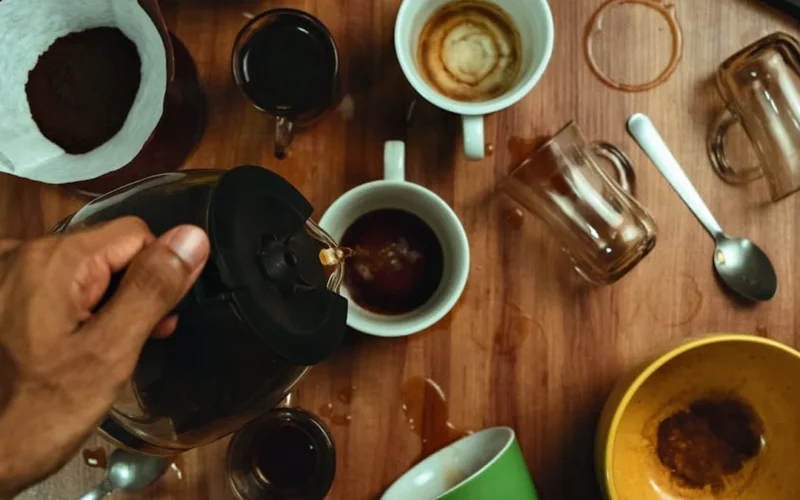
Halley’s journey started with a 1:2 ratio, producing a crisp yet acidic cup. Moving to 1:2.5 aimed for balance, but the result was over-extracted and still sharp. The three-glass test exposed a pattern: the first 8 seconds were sour, the middle 10-12 seconds were also sour, and the final 8 seconds were underwhelming. This isn’t a bean flaw—it’s a mismatch between extraction timing and roast depth. Stronger extractions pull more compounds, but without a developed roast, the result is bitterness, not balance.
The Roaster’s Edge: More Than Just Grind
The local roaster’s insight reveals a deeper truth: roast level is the unsung hero of coffee quality. A light roast emphasizes acidity, while a medium or dark roast softens it, unlocking chocolate or caramel notes. Halley’s setup, though precise, may lack the roast depth to match the beans’ potential. Even the best grinder can’t fix a roast that’s too underdeveloped. The middle of the extraction should be the sweet spot, where the beans’ complexity unfolds. If it’s sour, the roast or grind is off. Roast also affects caffeine content—lighter roasts retain more caffeine, which can influence extraction efficiency and perceived bitterness. So here’s the question: are you chasing the beans’ potential, or the machine’s precision? What’s your approach to roast level?
Questions & Answers
How does roast level affect coffee extraction?
Roast level influences extraction by altering the beans’ chemical composition. Light roasts emphasize acidity, while medium or dark roasts soften it, unlocking chocolate or caramel notes. A mismatch between roast depth and extraction timing can lead to sourness or bitterness, as seen in Halley’s three-glass test.
What causes sourness in coffee extraction?
Sourness in coffee often stems from an imbalance between extraction timing and roast depth. Halley’s three-glass test showed sourness in the first and middle stages of extraction, indicating the beans’ compounds weren’t fully developed. A lighter roast or insufficient extraction can result in sharp, acidic notes rather than balanced flavor.
Why is roast level considered the unsung hero of coffee quality?
Roast level is critical because it shapes the beans’ flavor profile and complexity. A light roast highlights acidity, while a medium or dark roast softens it, revealing deeper notes like chocolate or caramel. Without proper roast development, even precise extraction can fail to unlock the beans’ full potential.
How can a roaster improve extraction balance?
A roaster can enhance extraction balance by aligning roast depth with extraction timing. Halley’s experience shows that a medium or dark roast can soften acidity and reveal more complex flavors. Matching the roast to the beans’ potential ensures the middle of the extraction is where the cup’s flavor truly unfolds.
Originally reported by Reddit Espresso.