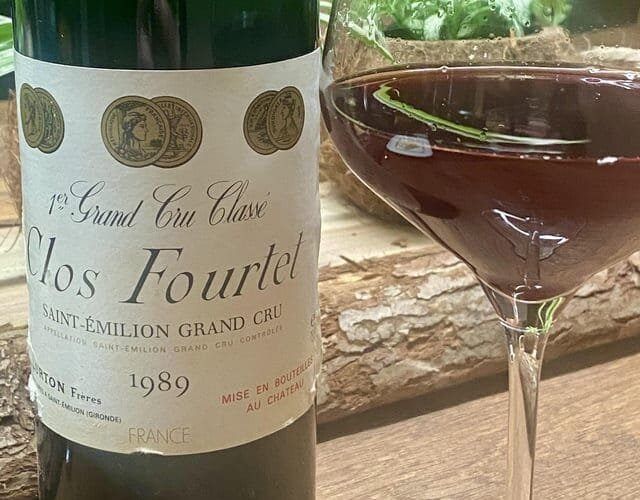
There’s something uncanny about the 1989 Clos Fourtet—a wine that feels both ancient and alive, as if it’s been whispering secrets from the limestone plateau of Saint-Émilion for decades. This is no flashy showpiece; it’s a quiet masterclass in balance, where Merlot’s plushness meets Cabernet Franc’s restraint, and the earthy soul of Bordeaux shines through. Decanted slowly, it reveals a nose that’s more about depth than drama: dried black fruits, leather, and the faintest hint of damp stone. It’s not a showy bouquet—it’s a story told in layers.
The palate is where this wine truly unfolds. Medium-bodied and silky, it’s a testament to patience. Tannins are fully resolved, like old parchment smoothed by time, while acidity lingers softly, never sharp. Flavors of dried prune, sous-bois, and savory umami dance with a touch of old oak, leaving a finish that’s refined but never heavy. What’s remarkable is how it avoids bitterness, fading cleanly into tobacco and dark cocoa. After 15 minutes, it evolves further—truffle, graphite, and a whisper of clove emerge, proving that even mature wines can surprise.
This is a wine that thrives on nuance, not power. Its limestone-rich terroir and the gentle warmth of the 1989 vintage allowed it to age gracefully, avoiding the excesses of overripe fruit or aggressive oak. The key to its longevity lies in its restraint: no volatile acidity, no nuttiness, just a seamless interplay of earth and fruit. It’s a reminder that Bordeaux’s greatest wines aren’t about intensity, but harmony.
For those who appreciate subtlety over spectacle, the 1989 Clos Fourtet is a revelation. Its evolution over time underscores the importance of patience in aging reds, while its structure offers a blueprint for how Bordeaux can age without losing its soul. Whether you’re a collector or a curious enthusiast, this is a wine that rewards slow sipping and thoughtful reflection.
Do you prefer wines that hold their power or ones that evolve into something quieter.
What’s your take on aging Bordeaux? Do you prefer wines that hold their power or ones that evolve into something quieter? Share your thoughts below.
Questions & Answers
What does the 1989 Clos Fourtet smell like?
Dried black fruits, leather, and damp stone. No drama, just layered depth from the limestone plateau of Saint-Émilion.
Is the 1989 Clos Fourtet still drinkable?
Yes, it’s medium-bodied, silky, and has resolved tannins. Acidity lingers softly, making it approachable now with decanting.
Information sourced from industry reports and news outlets.