Ever wondered why your coffee tastes different even when it’s from the same region? That’s because of the processing method used on the farm. Yes, you read that right. The way coffee beans are processed plays a significant role in their final flavor profile, making a difference as noticeable as that of the origin country. If you ever get the chance to sample two different processing methods of the same coffee bean lot, do it! You’ll be amazed at how wildly different they can taste.
The Washed Method: A Symphony of Clean and Crisp Flavors This is the most common method used in Central America, South America, and East Asia, with a few African countries also hopping on board. Coffee cherries are harvested, sorted, and those that are super-ripe are run through a pulping machine that removes the skin and most of the fruity mucilage. The now sticky beans are then soaked in water for 1-3 days to allow sugars in the cherries to ferment. After this fermentation stage, the beans are washed multiple times to remove any remaining fruity mucilage. They are then sun-dried on raised beds or large patios for up to a week.
What makes this process distinct is that the fruity part is removed early on, resulting in a relatively pure flavor that’s not much influenced by the cherries. The process is controlled, with washing stations having a lot of control over fermentation time, minimizing the risk of error compared to other methods. The coffee produced from this method is crisp and clean tasting, with more pronounced acids and a lower body, giving it a particular “brightness” and high level of “flavor clarity.” You’re more likely to find specialty-grade washed coffees because the controlled process leads to high-quality flavor.
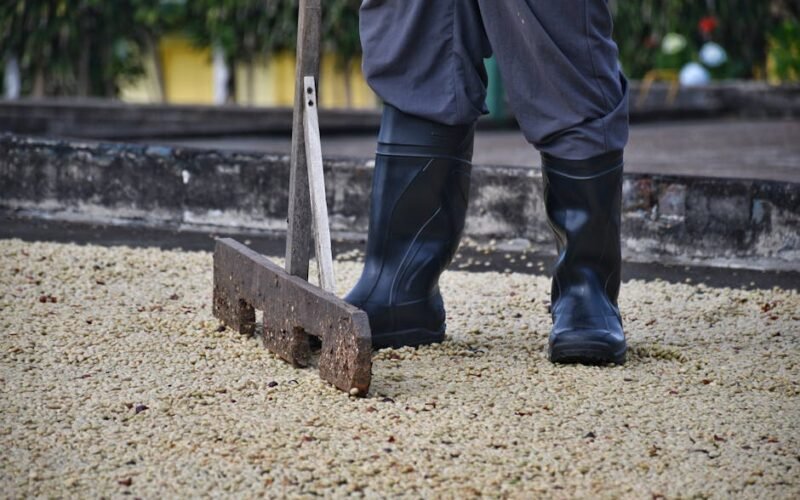
The Natural Method: A Bold and Wild Ride This is the original processing method still used in most of Africa, some of Asia, and a little in South America (mainly Brazil). In this method, the harvested cherries are spread out to dry on large patios for 2-4 weeks. They have to be turned over constantly to avoid bacteria growth or uneven fermentation. When dried to the target moisture content, the cherries are sent to a hulling machine that removes the dry fruit from the coffee beans. The beans are then sun-dried again until they reach 10-11% moisture content.
The fruit adds flavor to the beans as they absorb chemical compounds from the cherry during drying.
This method lacks control because of its long fermentation period, making it more prone to errors and accidents. However, your average natural coffee is a lower-quality bean than your average washed coffee due to this lack of control. The fruit adds flavor to the beans as they absorb chemical compounds from the cherry during drying. This generally gives these coffees a more fruity flavor, though because of the control issues, it doesn’t always taste great. The coffee produced from this method is very bold and often exotic tasting, with lower acidity, heavy body, and a rich exotic fruitiness that can’t be found in other processes.
The Honey Method: A Sweet Balance Between Washed and Natural This newer coffee processing method originates from Brazil but is now used in many countries in Central America, Asia, and the Pacific. This method is actually a collection of methods, taking techniques from both washed and natural processes and blending them into a well-rounded new process. Once harvested, the coffee cherries are sent through a pulping machine that separates the cherry skin from the mucilage-covered coffee beans. Depending on the farmer’s goals, the pulper can remove only a little mucilage or most of it.
The beans, still sticky with some mucilage, are left to dry on patios. They must be constantly raked for days to ensure fermentation isn’t unbalanced and to prevent mold or bacteria from growing. The more fermentation time, the darker the mucilage becomes, which is where we get yellow, red, and black honey methods—each slightly sweeter than the next. Before being sent to the roaster, the beans are hulled to remove the dry mucilage.
Honey processed coffees offer a decent level of control because fermentation with so much mucilage has its risks, but since the process doesn’t take long, there’s still a high rate of success. These coffees usually have a medium body, medium acidity, good flavor clarity, and an extra-noticeably sweetness, making them a superb middle-ground when it comes to the flavor experience. This process is well-rounded in almost every way, which is why so many farms are adopting it these days.
Experiment with different methods to discover the flavors that best suit your palate.
So, next time you’re shopping for coffee beans, don’t just focus on the roast level, roast date, and country of origin. Consider the processing method as well. Experiment with different methods to discover the flavors that best suit your palate. You might be surprised at which one becomes your favorite!
What’s your go-to coffee processing method, and why do you prefer it? Let us know in the comments below!
Questions & Answers
What is the impact of coffee processing methods on flavor?
Coffee processing significantly affects flavor. Methods like washed, natural, and honey process alter taste profiles, influencing acidity, body, and sweetness.
How does farming location impact the flavor of coffee beans?
The region where coffee is grown plays a crucial role in its flavor. Factors like soil composition, altitude, climate, and rainfall contribute to distinct taste characteristics across different origins.
Information sourced from industry reports and news outlets.