Delve deeper into the captivating world of coffee roasting with this glossary of essential terms. These succinct definitions will provide you with valuable insights, empowering you to appreciate the intricate process that transforms green beans into your daily brew. Whether you’re an avid home roaster or a curious coffee enthusiast, our aim is to equip you with knowledge, enhancing your understanding and enjoyment of this beloved beverage.
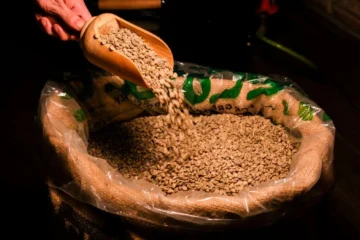
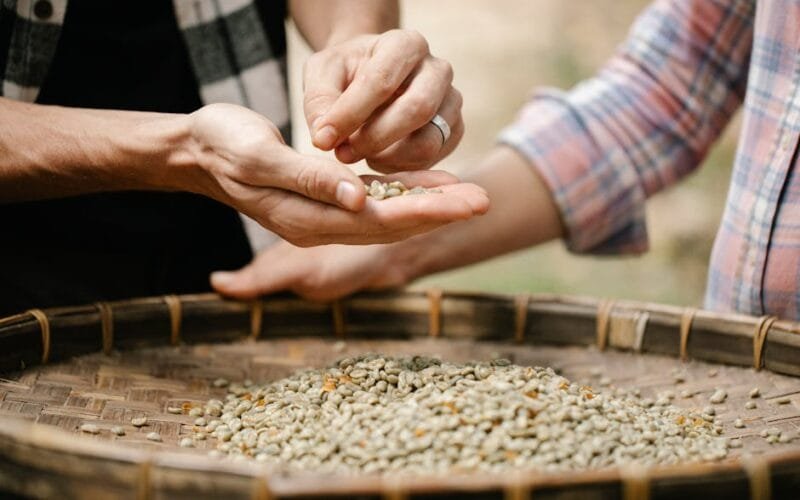
**Green Coffee:** The unroasted, green-colored seed derived from the coffee cherry. Through roasting, it undergoes thousands of chemical changes, transforming into the brown coffee beans we relish.
**Light Roast:** Resulting from a lighter degree of roasting, these beans exhibit a dark tan hue and boast bright acids, vibrant aromas, and flavor characteristics that highlight the bean’s origin.
**Medium Roast:** The outcome of medium-level roasting, these beans adopt a light brown color. They offer balanced acids, smooth and rich aromas, and harmonious flavor notes of the bean’s origin, accentuated by delightful caramel tones.
**Dark Roast:** Produced through heavy roasting, these beans turn a dark brown color and boast mellow acids, deep rich aromas, and flavors that lean toward the darker side, such as chocolate, nuts, spice, and earth.
**Dark Roast:** Produced through heavy roasting, these beans turn a dark brown color and boast mellow acids, deep rich aromas, and flavors that lean toward the darker side, such as chocolate, nuts, spice, and earth.
**French Roast:** A very heavy roast resulting in beans with a near-black appearance. They feature flavor notes of ash and carbon and an unpleasant bitterness.
**Quakers:** Unripe or underdeveloped coffee beans that are roasted, yielding a particularly light-colored bean with an unpleasant nutty flavor when brewed.
**Baked:** A dull, tasteless flavor profile arising from roasting beans for too long or at too low of a temperature.
**Under-Developed:** Beans or batches that were insufficiently roasted, often characterized by “green” flavors like hay, herbs, and bitter nuts.
**Under-Developed:** Beans or batches that were insufficiently roasted, often characterized by “green” flavors like hay, herbs, and bitter nuts.
**Scorching:** Unusual dark marks on beans caused by exposure to excessively high heat or uneven roasting due to sticking in one spot.
**New Crop:** Coffee from the most recent harvest season of a producing region.
**Past Crop:** Coffee from a previous harvest season of a producing region, typically no longer considered fresh but still capable of showcasing high-quality flavors.
**The Roasting Process:**
* **Charge:** The pre-heating of roasting equipment before inserting the green coffee. * **Drying Cycle:** Initial phase of roasting where beans rise to around 210 degrees Fahrenheit, transitioning from green to a light yellow. * **First Crack:** Second stage of roasting at approximately 350 degrees Fahrenheit, characterized by an audible “cracking” noise as the beans fissure and release vapor, turning a light brown. * **Second Crack:** Third stage of roasting near 430 degrees Fahrenheit, where beans turn a dark brown, and new chemical reactions occur, resulting in the ashy bitterness of very dark roasts. * **Cooling Stage:** Final phase where beans are dumped into a cooling tray and blasted with cool air to bring them from 400 degrees to room temperature in minutes.
**Roast Profiling:** The recording of temperatures, times, and other variables during roasting to document patterns, tests, and results.
**Chaff:** Papery flakes of the coffee bean’s silverskin, the innermost skin-like coating that remains attached after processing.
Most roasters allow their fresh coffee up to 24 hours to degas before assessing quality.
**Degassing:** A natural process where freshly roasted beans release carbon dioxide gas rapidly. Most roasters allow their fresh coffee up to 24 hours to degas before assessing quality.
**Cupping:** A tasting exercise used by roasters to determine the quality of the coffee they source and the quality of their roasting techniques.
**Equipment:**
* **Infrared Heater:** A heat generator that uses infrared waves to warm a drum for roasting coffee instead of electrical coils or a flame. * **Direct Flame Heater:** A heat generator that employs gas and direct flames to heat the drum containing the coffee during roasting. * **Stovetop Roaster:** A pot used for home roasting, placed directly on the stove, often featuring a mechanism to stir the beans as they roast. * **Drum Roaster:** A commercial-grade roaster that uses a large spinning container to agitate and stir the beans, ensuring an even roast. It is the standard for commercial roasting. * **Fluid Bed Roaster:** A roaster that forces hot air through and around the beans to roast them. Typically used for home roasting and small-scale commercial roasting. * **Sample Roaster:** A small roaster, often a drum roaster, designed to mimic larger commercial roasters and used to roast sample-size batches to fine-tune techniques and roasting profiles before moving to large commercial batches. * **Bean Probe:** A thermometer probe positioned among the beans during roasting to measure their temperature instead of the air’s temperature. * **Moisture Analyzer:** A device used by roasters and buyers to assess the moisture levels of both unroasted and roasted beans, ensuring that they are neither spoiled nor under-roasted.
Whether you’re considering home roasting or pondering a career as a roaster, we hope this glossary has been helpful.
As you can see, coffee roasting is a complex yet fascinating process with numerous factors at play. Whether you’re considering home roasting or pondering a career as a roaster, we hope this glossary has been helpful. Remember, roasting coffee can be challenging and frustrating, but always keep in mind the ultimate goal – enjoying great coffee roasted by someone else to serve as your “control” while you experiment.
Questions & Answers
What does “First Crack” mean in coffee roasting?
First Crack is a significant stage during coffee roasting, marking the beginning of rapid gas expansion and a noticeable popping sound. It occurs around 350-400°F (176-204°C) and signals the start of light to medium roast profiles.
What is “City Roast” in coffee roasting?
City Roast, also known as Light-City or New York Roast, is a coffee roast level between Light Roast and Full City Roast. It produces a mildly acidic flavor profile with subtle nuances of the bean’s origin, but without any oil appearing on the beans.
Information sourced from industry reports and news outlets.