⏱ 2 min read
The Short Version
Pastime Coffee is trading communal roasting for a high-efficiency, 1,000-square-foot production space in a former Portland flower shop. By pairing a compact layout with eco-friendly tech, the brand is scaling wholesale operations and securing entire harvests to stabilize prices for farmers.
In This Article
Justin Dedini spent years refining his craft while roasting for Portland staples like Heart Coffee and Roseline Coffee before launching Pastime Coffee. After starting as a client of the shared Buckman Coffee Factory, the brand eventually outgrew its communal roots. To solve that friction, Dedini has moved into a new 1,000-square-foot production space located in a former Northeast Portland flower shop.
Efficiency Over Excess
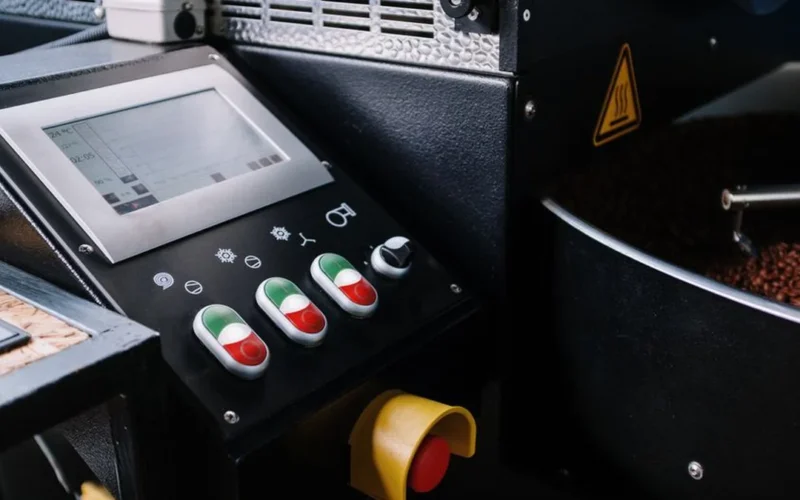
Rather than opting for an expansive footprint, Dedini prioritized a compact, high-functioning layout designed to eliminate operational drag. The facility centers around a Sivetz SRM-15 15-kilogram fluid-bed roaster, uniquely paired with a VortX EcoFilter that uses atomized water to treat exhaust instead of a gas-powered afterburner. This lean approach was intentional. We were like, what’s the smallest space we can get away with so we can be efficient but also have the tools and the back stock of coffee and things that we need to operate day-to-day without any friction?
The transition marks a major shift from shared roasting toward full-scale professional production. Alongside Dedini, co-owner Erica Schwager—who brings management experience from Gimme! Coffee and Coava Coffee—is managing both wholesale growth and operations at Thatcher’s Coffee, a Vancouver, Washington cafe acquired by Pastime in 2025. While the acquisition expands their reach, Dedini is careful not to overwrite the existing identity of the cafe, choosing instead to preserve its established community vibe.
Stability Through Sourcing
Beyond hardware and real estate, the new roastery supports a specific philosophy regarding producer relationships. Working with importers such as Shared Source, Atlantic Specialty Coffee, and ICT Coffee, Dedini aims to move toward purchasing entire harvests from single producers. The goal is to provide price stability for farmers by becoming a consistent, high-volume buyer year over year.
By controlling more of the production process, Pastime intends to serve retail and wholesale partners with greater predictability. With plans for appointment-only cuppings and a potential pop-up cart in the facility’s garage bay, the brand is focused on scaling its wholesale business while maintaining the direct connections that defined its early days.
Do you think small-batch roasters benefit more from shared facilities or moving into dedicated production spaces sooner?
Questions & Answers
What equipment does Pastime Coffee use in its new Portland roastery?
Pastime Coffee utilizes a Sivetz SRM-15 15-kilogram fluid-bed roaster at its new production facility. This specific roasting setup is uniquely paired with a VortX EcoFilter to manage emissions. Instead of using a traditional gas-powered afterburner, the VortX EcoFilter employs atomized water to treat exhaust. This specialized hardware allows the brand to maintain a high-functioning, efficient layout within a compact 1,000-square-foot space designed to minimize operational friction.
How does Pastime Coffee plan to support coffee farmers through its sourcing model?
Pastime Coffee aims to provide price stability for farmers by purchasing entire harvests from single producers. By working with importers like Shared Source, Atlantic Specialty Coffee, and ICT Coffee, the brand seeks to become a consistent, high-volume buyer year over year. This strategy moves beyond simple transactions to create more predictable financial relationships with producers. This approach ensures that farmers have a reliable partner for their crops while supporting the brand's goal of greater production control.
Why did Pastime Coffee move from a shared facility to a dedicated production space?
Pastime Coffee transitioned to a dedicated space because the brand eventually outgrew its communal roots at the Buckman Coffee Factory. Moving into a private 1,000-square-foot facility in Northeast Portland allows the company to eliminate operational drag and manage its own workflow. The new location provides the necessary space for essential tools and back stock required for day-to-day operations. This shift marks a significant evolution from shared roasting toward full-scale, professional coffee production.
What role does Erica Schwager play in the expansion of Pastime Coffee?
Erica Schwager manages wholesale growth and operations at Thatcher’s Coffee, a Vancouver, Washington cafe acquired by Pastime in 2025. She brings significant management expertise to the brand from her previous experience at Gimme! Coffee and Coava Coffee. While overseeing this acquisition and the brand's expansion, she focuses on preserving the existing community identity of the cafe. Her leadership helps balance the company's scaling efforts with the maintenance of established local connections.
Originally reported by Daily Coffee News.