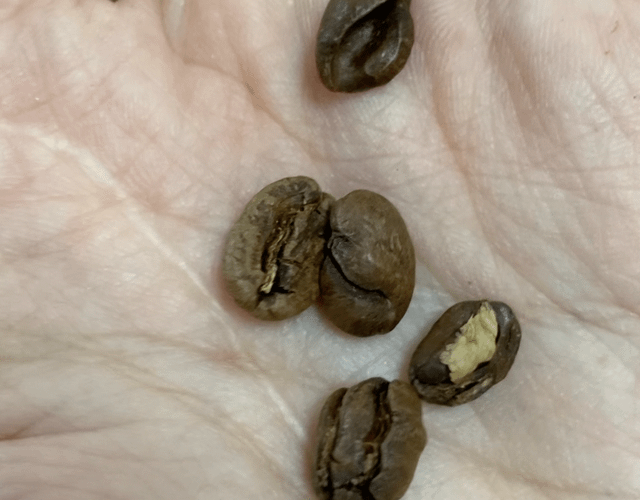
You’ve scored a batch of coffee beans with an impressive 87 SCA, but upon cupping, you find that the quality falls far short of expectations. The culprit? Deformed beans that make up around 4% of your total weight. But what exactly are these defective beans, and how can you identify and address them? Let’s dive into the fascinating world of roast defects beyond basic unevenness.
First off, it’s essential to understand that green coffee beans may contain internal or external defects due to various factors such as improper harvesting, processing, or storage. One common green defect is known as “roasted pecan” or “peaberry,” which occurs when a coffee cherry develops only one bean instead of the usual two. This single bean grows in the round shape you’ve observed, making it difficult for water to penetrate evenly during roasting.
In your case, the deformed beans resemble those that have ruptured from the inside. This phenomenon could be due to a condition called “internal fermentation,” which occurs when unripe or damaged cherries are mixed with ripe ones during processing. During fermentation, these immature cherries release enzymes that can cause adjacent ripe beans to swell and eventually burst. The resulting deformed beans may lead to inconsistent roasting, off-flavors, and reduced cup quality, as you’ve experienced.
1. Pay attention to green defects like “roasted pecan” or “peaberry,” which can affect the roasting process and final cup quality. 2. Internal fermentation can cause deformities in coffee beans, leading to inconsistent roasting and off-flavors. 3. To minimize these issues, ensure that cherries are properly sorted during processing, and monitor your sourcing for any potential quality concerns.
Share your insights, experiences, or questions about roast defects below – we’d love to hear from you.
So, what do you think? Have you encountered similar issues with deformed beans in the past? Share your insights, experiences, or questions about roast defects below – we’d love to hear from you!
Questions & Answers
What are common green defects in coffee beans?
Green coffee defects include quakers (immature beans), sour cherries (overripe beans), and brokens (damaged beans).
How can I identify roasting defects in coffee beans?
Roasting defects may manifest as scorched, smoky, or musty flavors. Over-roasted beans may have a burnt taste while under-roasted beans might be sour.
Information sourced from industry reports and news outlets.