

⏱ 1 min read
The Short Version
Serving Taittinger Brut Reserve too cold is a rookie mistake that masks its true elegance behind aggressive carbonation. Let it warm slightly to transform prickly bubbles into a velvety, creamier texture that trades sharp citrus for refined orchard fruit and surgical acidity.
In This Article
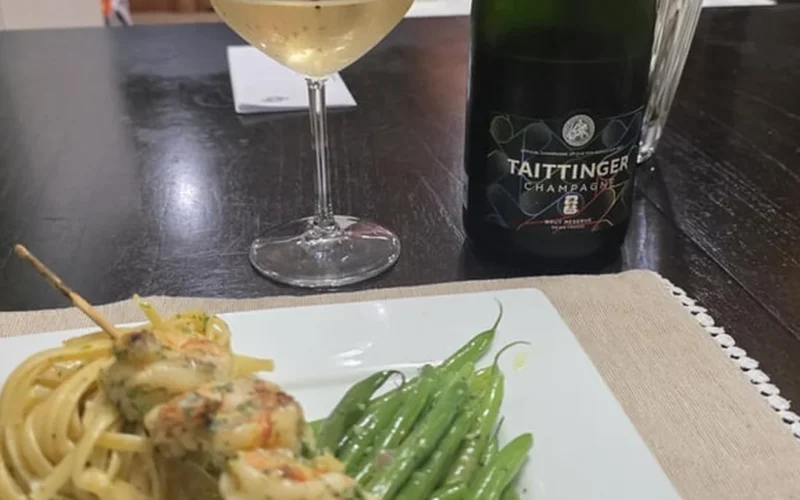
Pour yourself a cup for this one: finding high-quality Champagne at a Costco price point is a rare win, but even a classic like Taittinger Brut Reserve requires patience. Serving this bottle too cold is a rookie mistake that masks its true potential. At frigid temperatures, you are left with sharp citrus, aggressive carbonation reminiscent of soda, and a subdued nose. The real magic happens once the wine has time to breathe and reach a more moderate temperature.
This Champagne was much more about freshness and balance than rich bakery flavors.
Texture over aggression
The transformation in the glass is dramatic. As the liquid warms, the mousse evolves from prickly bubbles into something much finer and creamier, approaching the velvety texture of a nitro beer. The flavor profile shifts away from simple lemon toward the complexity of Meyer lemon or grapefruit. While many expect heavy notes of brioche or toast from lees aging, this expression leans into its Chardonnay roots. It prioritizes bright orchard fruit and a refined finesse rather than heavy bakery notes. This Champagne was much more about freshness and balance than rich bakery flavors.
Precision on the palate
Beyond the fruit, the structural integrity of this Brut Reserve makes it an exceptional partner for food. When paired with garlic herb grilled shrimp or lemon-Parmesan butter linguine, the acidity performs exactly as intended. It cuts through rich fats with surgical precision, ensuring the meal feels light rather than weighed down. This isn’t a bold, heavy-hitting wine designed to compete with big reds; instead, it relies on texture and seamless integration to elevate a dish. It serves as a dependable entry point that proves why the category holds such prestige. It is less about loud, singular flavors and more about how well each component works together to create balance. If you find yourself reaching for a bottle that offers reliable elegance without breaking the bank, this remains a sharp choice. Do you prefer your Champagne to lead with creamy brioche notes or crisp citrus acidity?
Questions & Answers
What happens when Taittinger Brut Reserve is served too cold?
Serving Taittinger Brut Reserve at frigid temperatures masks its true potential and alters the tasting experience. When the wine is too cold, the flavor profile shifts toward sharp citrus notes rather than more complex fruit flavors. Additionally, the carbonation can feel aggressive and reminiscent of soda, while the nose becomes subdued. Allowing the bottle to reach a more moderate temperature helps the mousse evolve into a finer, creamier texture that reveals its characteristic elegance and depth.
How does the flavor profile of Taittinger Brut Reserve change as it warms?
The flavor profile of Taittinger Brut Reserve shifts from simple lemon toward the complexity of Meyer lemon or grapefruit as it reaches a warmer temperature. Instead of heavy notes of brioche or toast, this expression leans into its Chardonnay roots by prioritizing bright orchard fruit and refined finesse. As the liquid warms in the glass, the bubbly mousse also transforms from prickly bubbles into a much finer, velvety texture similar to that of a nitro beer.
What foods pair best with Taittinger Brut Reserve?
Taittinger Brut Reserve pairs exceptionally well with dishes like garlic herb grilled shrimp or lemon-Parmesan butter linguine. The wine's structural integrity and acidity allow it to perform with precision when matched with these types of meals. Specifically, the acidity in the Champagne cuts through rich fats effectively, ensuring that a heavy meal feels light rather than weighed down. This makes it an ideal partner for dishes that benefit from seamless integration and refreshing balance.
Why is Taittinger Brut Reserve considered a balanced Champagne?
Taittinger Brut Reserve is considered a balanced Champagne because it focuses on how well individual components work together rather than relying on loud, singular flavors. Instead of heavy bakery notes or aggressive carbonation, this wine emphasizes freshness, texture, and precision on the palate. It prioritizes bright orchard fruit and a refined finesse that stems from its Chardonnay roots. This creates a dependable drinking experience defined by reliable elegance and seamless integration across all its sensory elements.
Originally reported by Reddit Wine.


[…] such as Lauren Fiala’s work at Bacigot, where she utilizes traditional methods to craft sparkling wines reminiscent of Champagne. The region also embraces collaborative complexity through projects like […]