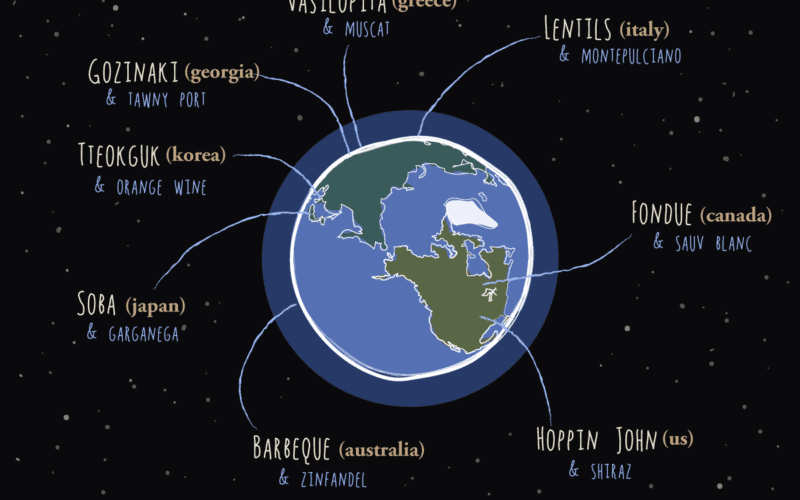
Here’s something to stir your curiosity: Around the world, New Year’s is more than a countdown—it’s a feast of flavors, each tied to ancient customs and lucky symbols. And the perfect wine? It’s not just a drink; it’s a bridge between tradition and taste. From smoky stews to sweet desserts, these pairings turn celebration into an art.
In the Southern U.S., black-eyed peas and collard greens are more than a meal—they’re a ritual. The collard greens’ bitterness and the ham’s smokiness demand a bold red. Oak-aged Australian Shiraz, with its blueberry and pepper notes, echoes the dish’s earthy depth. This pairing isn’t just about flavor; it’s a nod to West African roots, where enslaved people brought the recipe to the Carolinas. The dish’s promise of good fortune? A toast to resilience.
Across Europe, lentils take center stage. In Italy, Lenticchie al Cotechino—lentils with pork sausage—calls for Montepulciano d’Abruzzo. Its subtle tannins and fruitiness balance the dish’s savory richness, while its medium acidity keeps the flavors light. The Romans believed lentils resembled coins, a superstition that’s still alive in modern celebrations. A glass of this wine isn’t just a drink; it’s a ritual of hope.
In Switzerland, fondue is a communal act of togetherness. The gooey cheese’s saltiness needs a wine that cuts through it. Sauvignon Blanc’s gooseberry acidity and white peach aromas lift the dish without overpowering it. It’s a reminder that New Year’s isn’t just about food—it’s about connection.
For a fully local twist, GSM blends—Grenache, Shiraz, Mataro—offer a complex, sun-soaked finish.
Australia’s summer barbecues bring a different kind of energy. Rich, smoky meats pair with California Zinfandel’s jammy fruit and spice. For a fully local twist, GSM blends—Grenache, Shiraz, Mataro—offer a complex, sun-soaked finish. It’s a pairing that mirrors the country’s laid-back, bold spirit.
Japan’s Toshikoshi Soba—long noodles symbolizing longevity—pairs with Garganega’s mineral-driven acidity. The wine’s citrus notes enhance the scallions, while its salinity complements the umami of the dashi. It’s a quiet yet powerful way to honor tradition.
Korean Yeonsu Jangnok soup, with its umami-packed broth, demands an Orange wine’s earthy depth. Its dried fruit and honey notes mirror the dish’s complexity, turning a humble meal into a symphony.
Finally, Georgia’s Gozinaki—sweet walnut candies—pairs with Tawny Port’s caramel richness. The wine’s acidity balances the candy’s sweetness, while its nutty layers echo the dish’s boldness.
Match acidity with umami-rich foods to balance their intensity.
Key points: Pair bold reds with smoky, savory dishes to echo their depth. Match acidity with umami-rich foods to balance their intensity. Let tradition guide your wine choice—it’s about more than flavor.
What’s your go-to New Year’s pairing? Share your favorite in the comments below.
Questions & Answers
What wine pairs best with New Year’s Eve oysters?
A crisp, dry white like Sauvignon Blanc or a sparkling Prosecco complements oysters’ briny flavor and cleanses the palate.
Are there any wine traditions for New Year’s?
Yes, many drink sparkling wine like Champagne to celebrate the New Year, often toasting to the coming year’s success and happiness.
Information sourced from industry reports and news outlets.