⏱ 1 min read
The Short Version
Forget the Left Bank; it was the Pomerols that truly commanded the room. While decanting rescued a tight Le Gay and an oxidizing Clinet, the silky 2001 VCC proved that mature Right Bank wines are the undisputed masters of elegance.
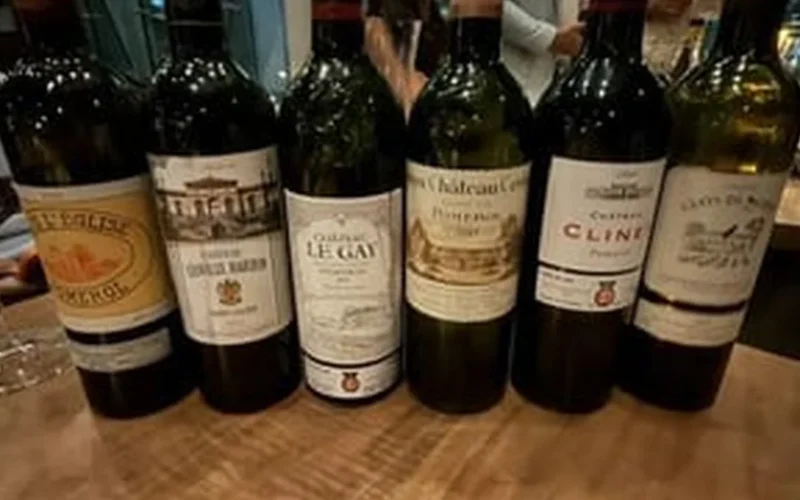
Real talk: sometimes a planned tasting takes on a life of its own. What began as a curated selection of aged Bordeaux quickly shifted focus as the right bottles revealed their true potential. While the evening kicked off with a refined 2012 Leoville Barton—showing beautiful tertiary notes despite being from a less legendary vintage—the momentum rapidly moved toward the Right Bank.
It became a lovely expression of blueberry and plum fruit paired with wet earth and spice.
The Evolution of Structure and Fruit
The transition into deeper profiles required patience and precise decanting. A 2016 Chateau Le Gay initially presented a tight, reserved nose that demanded several hours of air before revealing its substance. Once it opened, the medium-plus body delivered ripe blue fruits and plum, perfectly balanced by acidity and tannins. Similarly, the 2009 Clinet arrived showing early signs of oxidation, but ninety minutes in a decanter transformed it into something entirely different. It became a lovely expression of blueberry and plum fruit paired with wet earth and spice. This ability for older vintages to find their footing through aeration remains one of the most rewarding aspects of drinking mature wine.
Finding Excellence in Maturity
While some older selections like the 2005 Clos de Sarpe felt somewhat overshadowed by the heavy hitters, the night found its peak in the Pomerol lineup. The 2001 VCC was undeniably the standout, offering a stunningly silky texture and mature red fruit that evolved gracefully over two hours. It provided an earthy complexity that made it a pure joy to drink straight from the bottle. To close the evening, the 2003 Clos L’Eglise offered a smoky profile with hints of truffle and a remarkably long finish. These bottles proved that when Pomerol is on the table, it often commands the room. Do you prefer letting your aged Bordeaux breathe for several hours, or do you enjoy catching them in those initial, tighter moments?
Questions & Answers
What are the flavor profiles of aged Pomerol wines?
Aged Pomerol wines often feature complex notes of ripe red fruits, earth, and spice. For example, a mature 2001 VCC displays a silky texture with evolved red fruit and earthy complexity. Other standout bottles like the 2003 Clos L'Eglise offer deeper smoky profiles complemented by hints of truffle and a remarkably long finish. These characteristics allow Pomerol wines to command attention during tastings by providing deep, evolving layers of flavor as they mature over time.
How does decanting affect older Bordeaux vintages?
Decanting helps older Bordeaux vintages open up by transforming tight or oxidized profiles into more expressive flavors. A 2016 Chateau Le Gay initially presented a reserved nose but revealed its substance after several hours of air exposure. Similarly, the 2009 Clinet showed early signs of oxidation that were completely transformed after ninety minutes in a decanter. This aeration process allows the wine to find its footing and reveal essential notes like blueberry, plum, and wet earth.
Why did some Bordeaux wines require significant aeration during the tasting?
Some Bordeaux wines require significant aeration because they can initially present as tight, reserved, or even slightly oxidized. The 2016 Chateau Le Gay required several hours of air to reveal its medium-plus body and ripe blue fruit notes. Additionally, the 2009 Clinet needed ninety minutes in a decanter to move past initial oxidation and develop its full expression of plum and spice. Proper aeration is essential for these mature bottles to reach their true potential.
What characterizes the tasting experience of a 2001 VCC?
The 2001 VCC is characterized by a stunningly silky texture and mature red fruit that evolves gracefully over time. During a tasting, this specific bottle can provide an earthy complexity that makes it a joy to drink even straight from the bottle. Because its flavors change and improve after roughly two hours of exposure, it serves as a standout example of how high-quality Pomerol achieves excellence through maturity and careful handling during service.
Originally reported by Reddit Wine.