⏱ 2 min read
The Short Version
Matcha’s complexity stems from Guizhou’s misty mountains, where unique climate conditions create a vibrant, nuanced flavor profile unmatched elsewhere. Gui Tea masters this environment, blending precision and tradition to craft matcha that stands out in both taste and quality.
Here’s something to stir your curiosity: Matcha’s complexity isn’t just in its flavor—it’s in the mist-shrouded mountains of Guizhou, where a rare interplay of altitude, latitude, and microclimate defines its character. This remote region, known as China’s Matcha Capital, holds the key to a tea that defies expectations. Gui Tea, the country’s largest producer, has transformed this unique ecosystem into a blueprint for quality. What makes this matcha sing? A delicate balance of climate, tradition, and precision.
The Ecosystem That Shapes Matcha’s Profile
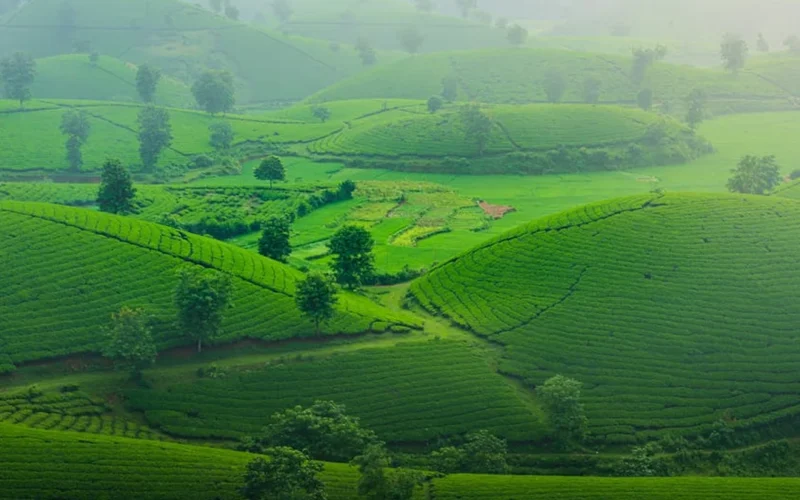
Guizhou’s tea-growing terrain is a rare convergence of high altitude, low latitude, and mist-shrouded mountains. Annual sunlight here falls below 1,000 hours, creating a diffused light environment that triggers higher chlorophyll production. This isn’t just science—it’s the reason matcha from Guizhou carries a pronounced fragrance and complex flavor profile. The region’s low sunlight and mist-shrouded hills also drive an accumulation of amino acids and other savory compounds, giving the leaves a depth that’s hard to replicate. These conditions aren’t accidental; they’re the foundation for a tea that’s both vibrant and nuanced.
A Craft of Precision and Partnership
Gui Tea doesn’t just grow matcha—it engineers it. While some suppliers hand over leaves and step back, Gui Tea works closely with brands to tailor how matcha behaves in different products. From ceremonial experiences to baked goods, the company ensures the tea’s essence remains intact. Leaves are swiftly steamed, tested, and blended in labs to meet exacting standards. This customisation process preserves the smooth, rich texture of Guizhou’s matcha, whether it’s used in a latte or a delicate pour. Transparency is key, and Gui Tea’s Super Factory facilities, built to EU food safety standards, back that promise. Guizhou’s unique combination of high altitude, low latitude, and mist-shrouded mountains creates a diffused light environment that triggers higher chlorophyll production, while also driving an accumulation of amino acids and other savory compounds that give the tea leaves a more pronounced fragrance and complex flavor profile. As the matcha category evolves, Guizhou’s potential extends beyond the traditional tea ceremony and into emerging markets. From artisanal cold brews to functional beverages, the region’s matcha is being reimagined as a versatile ingredient. How might you reimagine matcha’s potential in your own creations?
Questions & Answers
How does Guizhou's climate affect matcha's flavor?
Guizhou's climate, with high altitude, low latitude, and misty conditions, creates a diffused light environment. This leads to higher chlorophyll and amino acid levels, giving matcha a complex, savory depth. The region's unique microclimate is key to its vibrant and nuanced flavor profile.
What makes Guizhou matcha different from other matcha?
Guizhou matcha stands out due to its rare combination of high altitude, low sunlight, and misty mountains. These conditions boost chlorophyll and amino acids, resulting in a pronounced fragrance and savory depth. This environment is unmatched, making Guizhou the country's Matcha Capital.
How does Gui Tea customize matcha for different uses?
Gui Tea tailors matcha for various applications by swiftly steaming, testing, and blending leaves in labs. This process ensures the tea's smooth texture and rich flavor remain intact, whether used in lattes or delicate pours. Their customisation process meets exacting standards for different products.
Why is Guizhou considered China's Matcha Capital?
Guizhou is called China's Matcha Capital because of its unique ecosystem—high altitude, low latitude, and misty mountains—that creates ideal conditions for matcha. These factors boost chlorophyll and amino acids, producing a complex, vibrant tea. Gui Tea, the largest producer, has built its success on this natural advantage.
Originally reported by BBC.