⏱ 1 min read
The Short Version
Italy’s white wines, like Friulano and Timorasso, are bold, complex, and often overlooked, defying stereotypes with their depth and terroir-driven character. These varietals challenge the notion that Italian whites are timid, offering bold, textural, and age-worthy profiles.
In This Article
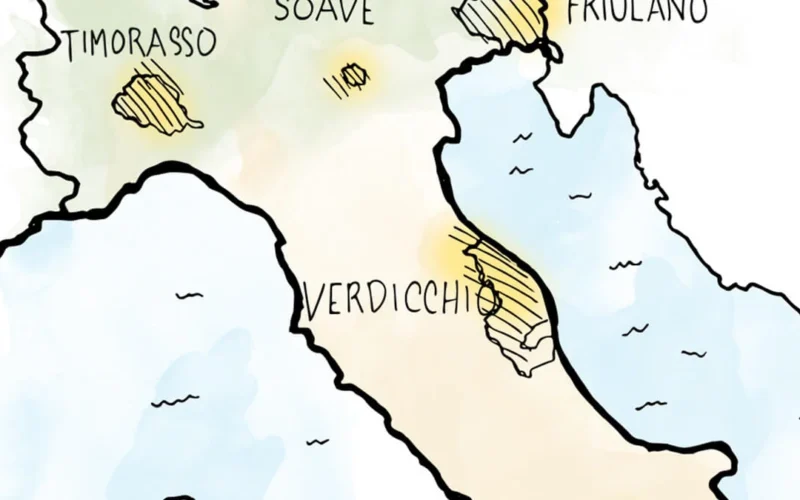
Here’s something to stir your curiosity: Italy’s white wines are underappreciated powerhouses, offering bold, complex profiles that challenge the notion of what Italian white wine can be. While Barolo and Amarone dominate headlines, the country’s white wines are quietly redefining what’s possible. From Friuli’s volcanic soils to Etna’s volcanic peaks, Italy’s white wine regions are producing wines that defy expectations—yet remain overlooked.
“Charming, confident, and elegant (typically used of a man)” is how the OED defines ‘suave’. This provides a pretty good description of Soave, too.
The Region’s Hidden Strength
Italy’s white wine landscape is a mosaic of contradictions. In Friuli Venezia Giulia, Friulano thrives in a climate where the Alps meet the Adriatic, creating a terroir that’s both sheltered and invigorating. This grape, with its greenish hue and zesty profile, is a testament to how simplicity can yield complexity. Meanwhile, in the Veneto, Soave—once a sweet wine—has evolved into a dry, mineral-driven style that balances ruggedness with refinement. These wines aren’t just surviving; they’re thriving in specific terroirs, with new generations of winemakers pushing boundaries.
Varietals That Defy Labels
Timorasso from Piemonte is another outlier. Once nearly extinct, it’s now a symbol of resilience, with its layered structure and tannic grip defying its small stature. In Campania, Greco di Tufo offers a paradox: a wine that starts sharp and astrigent but softens into creamy richness. These varietals challenge the notion that Italian whites are timid. They’re bold, textural, and often age-worthy—yet they’re rarely the first to cross your mind. “Charming, confident, and elegant (typically used of a man)” is how the OED defines ‘suave’. This provides a pretty good description of Soave, too. What if the next great white wine isn’t chasing trends but rewriting the rules? We’re curious—what’s your go-to pairing for these underrated gems?
Questions & Answers
What makes Friulano a standout Italian white wine?
Friulano thrives in Friuli Venezia Giulia’s unique terroir, where Alpine and Adriatic influences create a balanced environment. Its greenish hue and zesty profile showcase how simplicity can yield complexity, making it a bold and expressive white wine.
How has Soave evolved as a white wine?
Soave has transitioned from a sweet wine to a dry, mineral-driven style in the Veneto. This evolution balances ruggedness with refinement, demonstrating how traditional varieties can adapt and thrive in specific terroirs.
Why is Timorasso considered an outlier in Piemonte?
Timorasso, once nearly extinct, is now a symbol of resilience in Piemonte. Its layered structure and tannic grip defy its small stature, offering bold, textural wines that challenge the perception of Italian whites as timid.
What are some unique characteristics of Greco di Tufo?
Greco di Tufo starts sharp and astringent but softens into creamy richness, creating a paradox in flavor. This evolution highlights how Italian whites can be bold, age-worthy, and full of complexity.
Originally reported by Wine Folly.