Blog

Roasting 500g on a 350g Roaster? Here’s How to Fix It

Roasting 500g on a 350g Roaster? Here’s How to Fix It

Coffee lovers, wine enthusiasts, tea devotees—here’s a problem that’s been quietly brewing. The Skywalker V1 roaster is sold as a 500g machine, but its actual capacity is closer to 350-400g. That mismatch creates a tricky situation: profiles designed for smaller batches don’t work well for larger ones. Users report that auto profiles for 500g result in underdeveloped, flat roasts—think “baked beans” instead of bold, nuanced flavors. The question is simple: Can tweaking preheat, power, and fan settings by 10-15% salvage the process? The root issue lies in how roasters calculate heat distribution. Smaller batches require shorter, more intense bursts of…
Read More
Mastering Sweetness: Roast Profiles for Espresso and Pour-Over Perfection

Mastering Sweetness: Roast Profiles for Espresso and Pour-Over Perfection

Real talk: If you're dialing in your roast profiles and chasing that elusive sweetness, you’re not alone. The Kaldi mini and Artisan Scope combo is a powerhouse for precision, but even seasoned roasters tweak their approach for different brews. Your current setup—roasting 225-250g at 70rpm, dropping at 380F, and hitting 300F by the 4-minute mark—works for Central American beans, but there’s room to refine. The key lies in balancing heat retention, cooling timing, and bean development to unlock subtler notes. Sweetness in coffee often emerges from a delicate interplay of caramelization and acidity. For espresso, where extraction is aggressive, a…
Read More
When Accidental Roasting Hits the Right Notes

When Accidental Roasting Hits the Right Notes

Here’s something to stir your curiosity: A first-time roaster’s accidental batch just outperformed years of curated craft coffee. The setup? A popcorn popper that runs way too hot, a roast time that’s too short, and a darkness level that’s way beyond typical preferences. Yet, the result still landed in the same ballpark as the specialty beans from Trade and Mistobox subscriptions—small-batch, artisanal coffees that’ve been a staple for two years. How? Because sometimes, the flaws in the process become the catalyst for something unexpectedly good. The key here isn’t perfection—it’s the alchemy of imperfection. Roasting is a dance between heat,…
Read More
How Roasters Taste Fresh Coffee Without Waiting Weeks

How Roasters Taste Fresh Coffee Without Waiting Weeks

Let’s talk about the quiet art of cupping fresh coffee—yes, even before it’s rested. Light roasts, with their bright acidity and floral notes, often need weeks to mellow, but roasters still need to evaluate quality early. How do they do it without waiting? The answer lies in a blend of science, intuition, and a few clever tricks that turn the clockwork of coffee into a dance of precision. First, roasters don’t wait for perfection—they wait for enough. A few days post-roast might reveal a coffee’s raw potential, but it’s not the full story. Think of it like tasting a young…
Read More
The Secret Sauce Behind Every Coffee Shop’s House Blend

The Secret Sauce Behind Every Coffee Shop’s House Blend

Coffee shops often pride themselves on single-origin beans, but the real magic lies in the house blend. For years, we clung to purity—single-origin, no decaf, no compromises. But reality hit hard: customers needed options, and our rigid stance alienated people who couldn’t handle caffeine. By week two, we’d pivoted, adding decaf and embracing blends. It wasn’t just about inclusivity; it was about survival. Our house blend became an emergency product, born from a need to simplify coffee-making for homebrewers. Today, it’s our most popular offering, outperforming even our finest single origins. Why? Because blends demand constant attention. They’re roasted more,…
Read More
Why Big Beans Are Breaking Your Roast

Why Big Beans Are Breaking Your Roast

If your Tanzanian beans are losing flavor faster than you can say “roast,” you’re not alone. Roasters often grapple with the tricky balance between bean size and roast potential, and when beans exceed 7mm in diameter, the consequences can be subtle but devastating. Larger beans have less surface area relative to their volume, which means they retain moisture longer—and that’s a problem. The result? A fruity start that fades quickly, leaving behind an ashy note that feels like a betrayal of the bean’s promise. The key lies in understanding how size impacts moisture retention. Beans over 7mm struggle to dry…
Read More
Modding Your Rancilio Silvia: Where to Place That Pressure Gauge

Modding Your Rancilio Silvia: Where to Place That Pressure Gauge

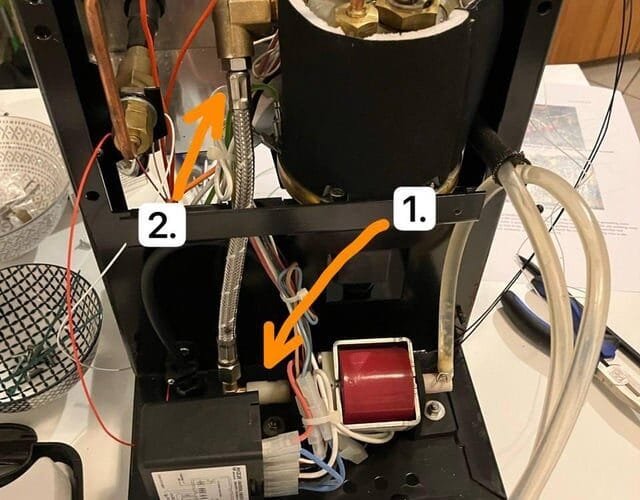
Real talk: If you're modding your Rancilio Silvia, the placement of your pressure gauge isn’t just a tweak—it’s a decision that shapes how you understand your machine’s performance. The debate over T-connector positions has sparked endless threads, but the truth is simpler than the arguments suggest. Position 1 measures pump pressure, which is inherently less useful for brewing, while position 2 captures brew pressure—the actual metric that matters. Position 3, meanwhile, is a nightmare of engineering, requiring custom fittings that most homebrewers can skip. If you’re not chasing a pressure dimmer, simplicity wins. The portafiler screw-mounted gauge is the unsung…
Read More
Why Your Espresso Is Stalling (And How to Fix It)

Why Your Espresso Is Stalling (And How to Fix It)

Get ready to sip on this: Your espresso machine isn’t rejecting you—it’s screaming for a better grind. The Breville Bambino’s electric grinder is a marvel, but even the best tools need finesse. If your portafilter is clogging like a highway during rush hour, the culprit is likely your grind size. Espresso demands a balance between finesse and flow, and the wrong setting can turn your shot into a waterlogged disaster. The Bambino’s “espresso” setting is a starting point, but it’s not a magic wand. Grind too fine, and you’re inviting a clogged filter; too coarse, and you’re left with under-extracted,…
Read More
DE1Pro and Lagom 01: A Game-Changer for Coffee Enthusiasts?

DE1Pro and Lagom 01: A Game-Changer for Coffee Enthusiasts?

Here’s something to stir your curiosity: After swapping my Lelit Bianca V3 for a DE1Pro and Lagom 01, I’ve unlocked a new level of coffee precision—without sacrificing the ritual. The upgrade wasn’t just about speed or tech specs; it was about redefining how I interact with my machine. Let’s cut to the chase: the DE1Pro’s 4-minute warmup time (vs. the Bianca’s 17 minutes) is a revelation. It’s not just about convenience—it’s about reclaiming moments. No more waiting while the machine preheats; no more sacrificing a latte for a morning routine. The real magic lies in control. The Bianca’s needle valve…
Read More
The Best Commercial Grinders for Your Coffee Cart (And Why You Should Care)

The Best Commercial Grinders for Your Coffee Cart (And Why You Should Care)

If you’re running a coffee cart, your grinder isn’t just a tool—it’s the heartbeat of your operation. The right machine can transform a decent cup into a standout experience, but choosing between a $625 Eureka Atom or a $1,860 Mahlkönig E65s isn’t just about budget. It’s about speed, consistency, and whether you’re willing to trade portability for precision. Let’s cut through the noise. The Fiorenzato AllGround Sense is a standout contender. At 850€, it’s a mid-tier option that balances performance and simplicity. It’s used in cafes, but its compact design and intuitive controls make it a solid choice for carts.…
Read More