⏱ 1 min read
The Short Version
Your Barista Express steam wand’s iridescent residue isn’t a flaw—it’s oxidation from milk proteins, requiring vinegar-based cleaning to prevent buildup and bacterial growth. Regular wiping isn’t enough; targeted scrubbing with acid breaks the cycle before it becomes visible.
In This Article
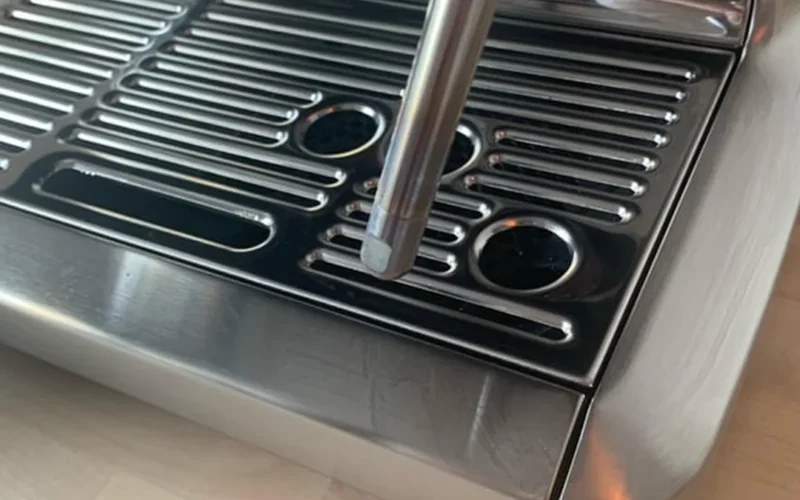
Steam wands are engineered to resist rust, but they are not immune to oxidation. The vivid residue that accumulates on your Breville/Sage Barista Express wand is not a sign of malfunction—it’s an indicator of chemical interaction. If you’re routinely wiping the wand and still notice that iridescent film, it’s not a mistake in your technique. You’re simply missing a key step in the maintenance process.
The oxide layer isn’t a stain—it’s a symptom of a routine that’s missing a critical step.
The Oxidation Game
The wand’s alloy is designed to withstand corrosion, yet it remains vulnerable to the chemical reactions triggered by steam. Milk proteins and lactose form a sticky residue that traps moisture, accelerating oxidation. This “colorful” layer is not merely grime—it’s evidence of incomplete micro-cleaning. Even with regular wiping, you’re not dismantling the protein film that develops overnight. This isn’t a defect in your machine; it’s a gap in your routine.
Cleaning Isn’t Just a Ritual
The solution isn’t increased scrubbing—it’s targeted cleaning. After each use, flush the wand with water, then scrub the tip with a brush soaked in vinegar or citric acid. The acid dissolves the protein buildup that water alone cannot. Allow it to sit for 10 seconds before rinsing thoroughly. This disrupts the oxidation cycle before it becomes visible. Neglecting this step can lead to bacterial proliferation, which may ultimately compromise the metal’s integrity. The oxide layer isn’t a stain—it’s a symptom of a routine that’s missing a critical step. You’re not alone in encountering this issue. Thousands of Barista Express users face the same challenge, yet few grasp the underlying cause. Over time, oxidation can degrade the wand’s performance and shorten its lifespan, affecting both consistency and durability. So here’s the question: Are you cleaning the wand’s tip, or just the shaft? What’s your go-to method for keeping it pristine?
Questions & Answers
How do I prevent oxidation on my Barista Express steam wand?
To prevent oxidation, flush the wand with water after each use and scrub the tip with a vinegar or citric acid-soaked brush. Let it sit for 10 seconds to dissolve protein buildup. This disrupts the oxidation cycle before it becomes visible, ensuring the wand remains functional and hygienic.
Why does my Barista Express steam wand develop an iridescent film?
The iridescent film is caused by oxidation from milk proteins and lactose trapping moisture. This residue forms overnight and indicates incomplete micro-cleaning. It’s not a sign of malfunction but a symptom of missing a key maintenance step in your routine.
What is the best way to clean a Barista Express steam wand?
The best way to clean is to flush the wand with water, then scrub the tip with a vinegar or citric acid-soaked brush. Let it sit for 10 seconds to dissolve protein buildup. This method effectively removes residue that water alone cannot, preventing oxidation and bacterial growth.
Is oxidation on a steam wand a sign of a defective machine?
Oxidation on a steam wand is not a sign of a defective machine. It’s a result of chemical reactions from milk proteins and lactose. This residue forms due to incomplete cleaning and is a symptom of a missing maintenance step, not a malfunction of the Barista Express.
Originally reported by Reddit Espresso.