
⏱ 2 min read
The Short Version
Gray Squirrel Coffee is trading its minimalist roots for a midcentury-inspired "Acorn Room" and a massive roasting upgrade. The Carrboro expansion scales production with a trio of Probat machines while introducing a dedicated slow bar for precision manual brewing.
Gray Squirrel Coffee Company has officially broken ground on its next chapter in Carrboro, North Carolina, connecting its existing East Main Street home to a newly remodeled 1,600-square-foot expansion. Since launching in 2015 within YesterYears Brewery, the company has grown from a tiny 250-square-foot footprint into a multi-faceted operation. The new addition provides approximately 30 additional seats and offers customers a direct view into an increased roasting capacity through glass doors.
Where the original cafe is industrial and minimalist, the new space brings in warmth and midcentury modern touches.
A shift toward midcentury warmth
While the original cafe maintains an industrial, minimalist aesthetic featuring gray-washed brick, the new wing—informally dubbed the “Acorn Room”—introduces a softer design language. Dark-stained walnut tables, red brick, and Googie-inspired decor replace the starker elements of the primary space. Where the original cafe is industrial and minimalist, the new space brings in warmth and midcentury modern touches. Marketing Director Sarah Persing notes that the extended hours aim to position the shop as a lounge destination for locals heading to nearby dinners or shows.
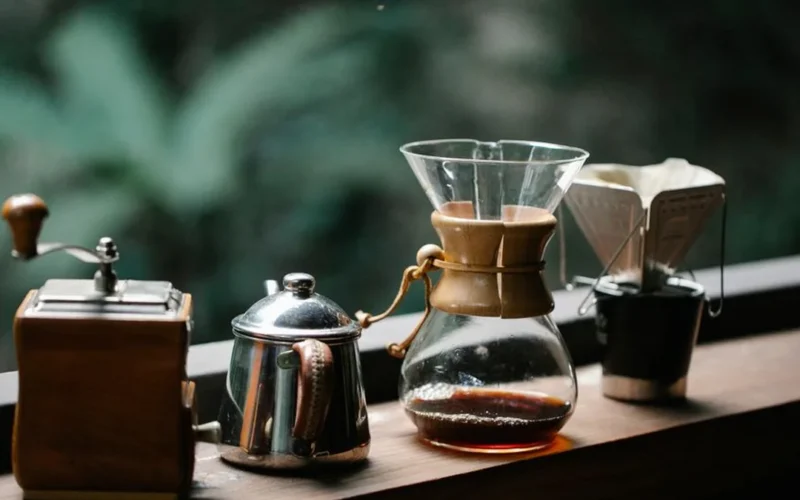
The expanded service area also introduces a dedicated slow bar focused on manual brewing methods. This station highlights the brand’s “Reserve” coffees via Chemex, Hario Switch, Etkin, and AeroPress brewers. To maintain precision, the espresso program utilizes a single-group La Marzocco Linea, while the main bar continues to rely on a Victoria Arduino Black Eagle paired with two Mahlkönig grind-by-weight grinders.
Scaling production and wholesale
At the heart of this expansion is a significant upgrade to the roasting infrastructure. Co-Owner and Head Roaster Shaw Sturton is transitioning from a single early-1990s Probat L12 to a trio of refurbished machines: an L12, an L5, and a Probatino. Supported by a new destoner and updated packaging equipment, the facility will now more aggressively serve both the local cafe and its growing wholesale clientele.
This growth isn’t limited to beans alone. Having integrated an onsite kitchen in 2018 for syrups and baked goods, the company is already eyeing future expansions to accommodate artisan breads and lunch options. Beyond the menu, Gray Squirrel maintains a distinct business model characterized by a no-tipping policy, opting instead to build employee benefits and cost-of-living increases directly into their compensation structure.
Do you think the “cafe-bakery-roastery” hybrid model is the most sustainable way for independent shops to scale?
Questions & Answers
What changes are being made to the Gray Squirrel Coffee roasting capacity?
Gray Squirrel Coffee is significantly upgrading its roasting infrastructure by moving from a single Probat L12 machine to a trio of refurbished machines. This new setup includes an L12, an L5, and a Probatino to increase production capabilities. The expansion also introduces a new destoner and updated packaging equipment to support the company's growing wholesale clientele and local cafe needs. This scaling allows the roastery to transition from its original small footprint into a much more robust multi-faceted operation.
How does the design of the new Acorn Room differ from the original cafe?
The new Acorn Room features a midcentury modern design that offers warmth and a softer aesthetic compared to the original space. While the primary cafe maintains an industrial, minimalist look with gray-washed brick, the expansion utilizes dark-stained walnut tables, red brick, and Googie-inspired decor. This stylistic shift is intended to create a lounge-like atmosphere for locals. The new wing also provides approximately 30 additional seats and features glass doors that allow customers to view the roasting process.
What manual brewing methods are available at the new slow bar?
The dedicated slow bar focuses on manual brewing methods to highlight the brand's Reserve coffee selections. Customers can enjoy specialized brews prepared using Chemex, Hario Switch, Etkin, and AeroPress brewers. This station complements the existing espresso program, which utilizes a single-group La Marzocco Linea for precision. By offering these distinct manual methods, the shop provides a high-end experience for coffee enthusiasts looking for specific flavor profiles through different extraction techniques.
Why does Gray Squirrel Coffee implement a no-tipping policy?
Gray Squirrel Coffee uses a no-tipping policy to prioritize direct employee compensation and benefits. Instead of relying on customer tips, the company builds employee benefits and cost-of-living increases directly into their base compensation structure. This business model ensures a stable income for staff while maintaining a specific service culture. This approach is part of the company's broader effort to manage its growing operation, which now includes an onsite kitchen for syrups and baked goods.
Originally reported by Daily Coffee News.