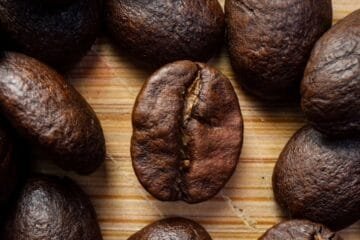
If your Tanzanian beans are losing flavor faster than you can say “roast,” you’re not alone. Roasters often grapple with the tricky balance between bean size and roast potential, and when beans exceed 7mm in diameter, the consequences can be subtle but devastating. Larger beans have less surface area relative to their volume, which means they retain moisture longer—and that’s a problem. The result? A fruity start that fades quickly, leaving behind an ashy note that feels like a betrayal of the bean’s promise.
The key lies in understanding how size impacts moisture retention. Beans over 7mm struggle to dry evenly during the initial stages of roasting. This creates a “dry zone” in the center, which can’t fully develop the sugars responsible for fruitiness. Meanwhile, the outer layers may overheat, triggering the release of volatile compounds that mimic ashiness. It’s a classic case of uneven heat distribution, and it’s not just about size—it’s about how size disrupts the delicate chemistry of roast development.
But here’s the twist: the ashy flavor isn’t always a sign of under-roasting. Sometimes, it points to overdevelopment. If the beans are sitting too long at higher temperatures, the Maillard reaction can become excessive, caramelizing sugars into burnt notes. This is especially risky with large beans, which take longer to reach their peak. The solution isn’t just about adjusting time—it’s about fine-tuning temperature curves to match the bean’s unique profile.
The takeaway? Size matters, but it’s not the whole story. First, prioritize even drying by adjusting airflow or using a slower roast profile. Second, monitor the ashy note closely—it could signal either under- or over-roasting. Third, consider splitting the batch into smaller batches to ensure consistency.
What’s your biggest challenge when roasting large beans.
What’s your biggest challenge when roasting large beans? Share your experience below.
Questions & Answers
How to remove large beans from coffee?
Use a fine mesh sieve or a bean filter. Rinse beans under running water to remove debris. Discard any large, damaged beans before brewing for better taste and smoother coffee.
Are large beans bad for coffee?
Large beans can affect extraction and flavor. They may under-extract, leading to weak coffee. Use a burr grinder to ensure even size for consistent brewing results.
Information sourced from industry reports and news outlets.