Yixing teapots, renowned for their elegance and rich history, come in a variety of shapes. Each design is unique, with its own name and story, leading us to wonder if these differences impact tea flavor. We decided to put this theory to the test.
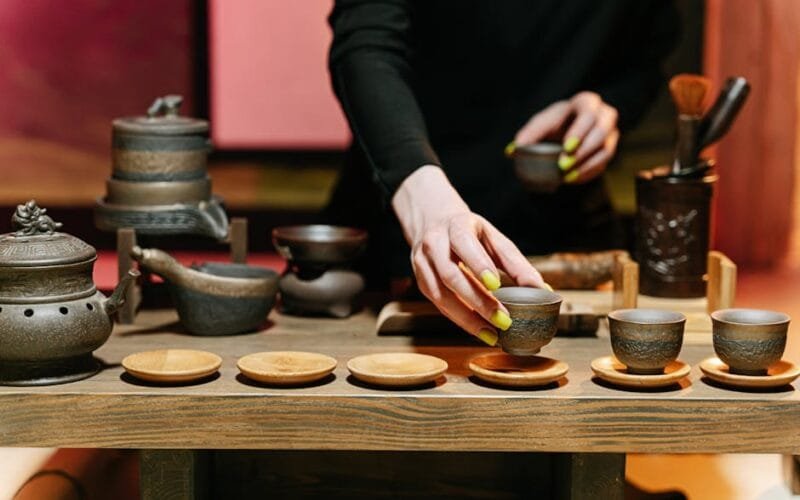
We brewed four different types of tea using four classic Yixing teapots: Si Ting, Xiao Ying, Long Dan, and Han Wa. Each pot has a distinct shape and pouring style that could potentially influence the taste of the tea. ① Si Ting, inspired by Lu Siting, features a rounded pear-like design with a slow pour. ② Xiao Ying, named after a character from an old story, boasts a plump body and strong pour. ③ Long Dan resembles a smooth egg with a fast pour, while ④ Han Wa sports a subtle curve and is known for its practical design and quick pour.
Using the same brewing parameters for all tests (boiling water, a 1:20 ratio of tea to water, and the same steeping time), we discovered that the results were nearly identical. Whether it was a fragrant Mi Lan Xiang oolong or a rich, ripe puerh, the tea from each teapot tasted almost the same. Differences in body, aroma strength, and overall depth were minimal and difficult to discern.
So, does the shape of a Yixing teapot significantly influence the flavor as some sellers claim? Our findings suggest otherwise. Instead, the material seems to matter more. Compared with a gaiwan, Yixing clay absorbs off-notes and storage smells more effectively when brewing ripe puerh, resulting in a cleaner taste.
We’d love to hear your experiences or if our findings are an exception.
Have you noticed significant differences between Yixing teapot shapes? We’d love to hear your experiences or if our findings are an exception.
And a quick question for the community: Have any of you encountered unwanted smells in your Yixing pot and found effective ways to remove them? We’ve previously shared information about classic Yixing teapot shapes, and we invite everyone to check it out.
Submitted by /u/iteaworld [link] [comments]
Questions & Answers
What teapot shapes are typically used for Yixing tea?
Common Yixing shapes include Gongfu (round), Huanglong (dragon shape), and Ding (spherical).
How does the shape of a Yixing teapot affect the taste of tea?
The shape can influence the infusion process, potentially affecting the release of flavors and aromas, but the effect may vary depending on the type of tea.
Information sourced from industry reports and news outlets.