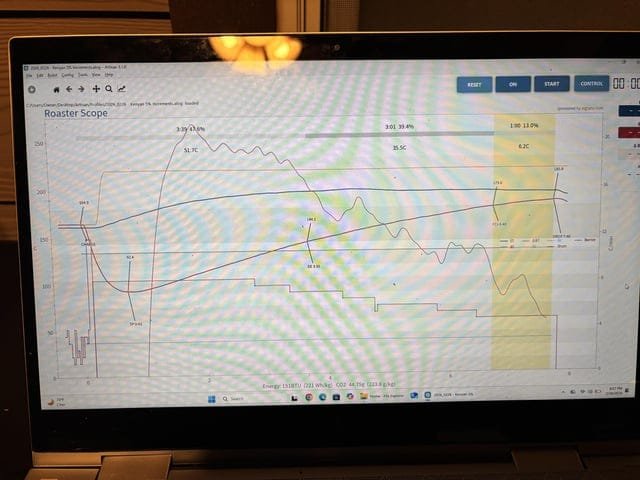
Pour yourself a cup for this one: You’re chasing fruit-forward light roasts, but your beans keep emerging dark, their flavor buried under roast character. It’s a common trap—especially when juggling gear like the Kaleido M1 Lite, Skywalker v1, and sr800. The problem isn’t the equipment; it’s the disconnect between roast time, temperature, and how lightness translates to color.
Here’s the crux: Light roasts don’t always look light. A 1:00 to :30 development time after first crack might seem like a safe bet, but if your beans are still dark when you grind them, you’re missing the bigger picture. Temperature curves matter more than clock time. On the Kaleido, preheating to 165°C and hitting first crack at 7 minutes suggests a fast, aggressive profile. That’s not inherently wrong, but it’s a recipe for overdevelopment unless you dial back the heat. Light roasts thrive on precision—balancing heat to slow the Maillard reaction while letting sugars caramelize without burning.
The real trick lies in understanding how your roaster’s heat delivery shapes the bean’s journey. The Skywalker and sr800 might have let you hit a “rolling crack” and drop below 10°C, but even that doesn’t guarantee lightness. Color is a lagging indicator; flavor development happens in the heat zone. If your beans are dark, you’re probably over-roasting—either by applying too much heat too soon or letting the roast run too long.
Key points: Monitor your temperature curve, not just time. Adjust heat to control development, not just speed. Light roasts demand patience and precision, not brute force.
Close: Ever struggled to balance heat and time for a light roast.
Close: Ever struggled to balance heat and time for a light roast? What’s your secret?
Questions & Answers
What are Constant Roast Notes?
Constant Roast Notes are detailed descriptions of coffee flavor, aroma, and texture. They help identify coffee quality and origin. Used by roasters and baristas for consistency and customer education.
How do you read roast notes?
Roast notes describe coffee’s taste, scent, and mouthfeel. They guide roasting adjustments and help match beans to brewing methods. Notes include acidity, body, and aftertaste characteristics.
Information sourced from industry reports and news outlets.