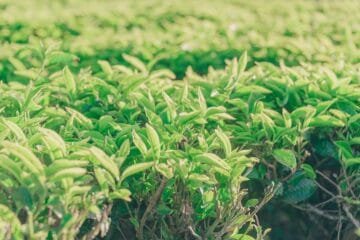
This is worth savoring: A raw Pu’er tea once transformed my understanding of minerality, delivering a stony, limestone-cave intensity that’s haunted me ever since. The experience was so vivid—like sipping a liquid stone—it’s driven me to chase that exact flavor profile. Yet, without knowing the exact tea, I’m left grasping at shadows. If you’ve ever tasted a tea that felt like drinking a mountain’s essence, you know what I mean.
Minerality in tea isn’t just about taste—it’s a geological echo. Raw Pu’er from Yunnan’s deep valleys often carries this trait, shaped by the region’s limestone-rich soil and ancient tea trees. The key lies in the terroir: teas from areas like Menghai or Banna, where the earth’s mineral content seeps into the leaves, create that stony character. But it’s not just geography. Processing matters too. A slow, careful withering process allows the leaves to retain their natural mineral signature, while over-fermentation can mute it.
Look for teas labeled as “sheng” (raw) rather than “shou” (ripe), as the former retains more of the plant’s original traits. Specifics matter: the “Lingding Yixian” from Guangdong’s coastal cliffs or the “Shuangjing” from Yunnan’s remote highlands are rumored to deliver sharp, crystalline minerality. These aren’t just teas—they’re geological artifacts, each sip a journey through earth and time.
If you’ve ever felt a tea’s flavor linger like a memory of the land, you’ll understand the pull. What tea has left you with a taste that feels like the earth itself?
Raw (sheng) Pu’er retains more natural terroir than ripe (shou) varieties.
KEY POINTS: Yunnan’s limestone-rich regions like Menghai and Banna are prime for mineral-forward raw Pu’er. Raw (sheng) Pu’er retains more natural terroir than ripe (shou) varieties. Teas like Lingding Yixian and Shuangjing are whispered to capture that stony essence.
CLOSE: What tea has left you with a taste that feels like the earth itself?
Questions & Answers
What tea has the highest minerality?
Japanese green teas like Sencha and Hojicha often have high minerality. These teas are grown in mineral-rich soils and processed to highlight their crisp, mineral-driven flavors.
How to tell if tea has minerality?
Look for a crisp, fresh taste with notes of stone, sea, or metallic undertones. Minerality in tea is often described as a clean, bright finish that lingers on the palate.
Information sourced from industry reports and news outlets.