This

2024 Côtes du Rhône: The Best Wines to Savor Now

2024 Côtes du Rhône: The Best Wines to Savor Now

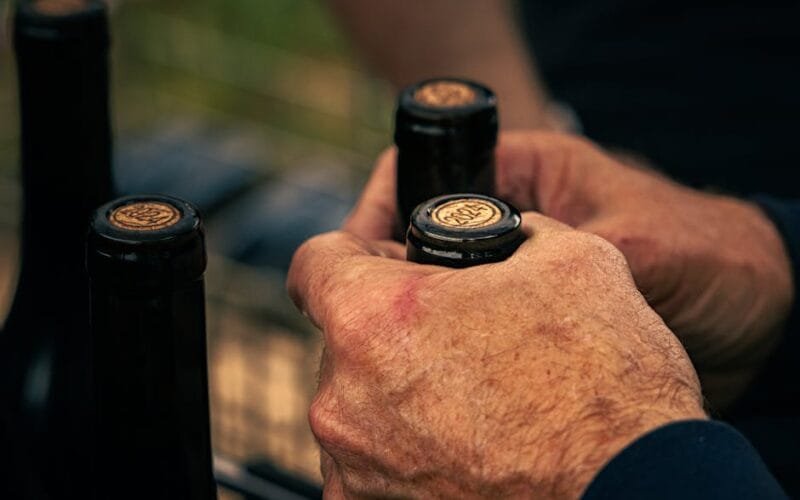
This might just change your routine: 2024 Côtes du Rhône wines are delivering a rare blend of freshness and depth. While the appellation is often dismissed as a “starter” for wine drinkers, the 2024 vintage proves otherwise. This year’s conditions—warmer than average but with timely rain—created wines that balance ripe fruit with vibrant acidity. Unlike higher-tier crus, where terroir dominates, the 2024 vintage’s impact is magnified here, making it a masterclass in how climate shapes character. The 2024 vintage’s warmth and rain delivered a paradox: wines that feel both lush and lifted. In the northern Rhône, growers like Domaine Xavier…
Read More
The Paradox of Success: Why Specialty Coffee’s Moral Narrative Falters

The Paradox of Success: Why Specialty Coffee’s Moral Narrative Falters

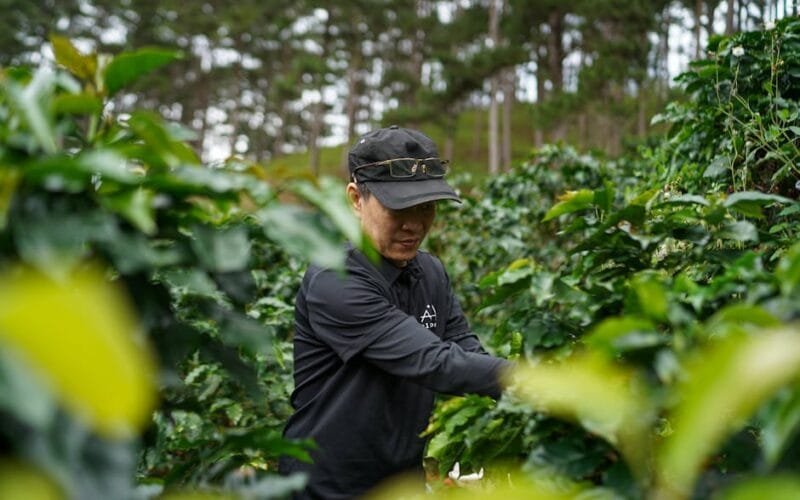
Real talk: The specialty coffee industry’s moral narrative is built on a fragile premise—producers are poor, vulnerable, and in need of rescue. But when they succeed, the system often resists. This isn’t just about economics; it’s about identity. Specialty coffee sells itself as a force for good, yet its success metrics quietly contradict that mission. The industry’s language frames producers as struggling, dependent actors, while roasters and consumers are cast as saviors. But when a farmer like Felipe Sardi of La Palma & El Tucán thrives, paying neighbors three times the regional price and reinvesting in community, the narrative shifts.…
Read More
Mastering the Giesen W6A: How to Nail Consistent Roast Levels

Mastering the Giesen W6A: How to Nail Consistent Roast Levels

Consider this your morning briefing: You’re standing at the crossroads of science and intuition, armed with a Giesen W6A and a dream of perfecting roast consistency. The question isn’t just about numbers—it’s about control. This 6-kg roaster isn’t a magic wand; it’s a tool that demands respect. So, how do you translate vague roast level goals into actionable steps? The answer lies in marrying data with practice. The Giesen W6A operates on a tightrope between precision and adaptability. Temperature profiles are your baseline, but they’re not gospel. Light roasts (180–200°C) demand rapid heat application to preserve acidity, while medium (200–220°C)…
Read More
How to Master Light Roast Development Without Sacrificing Flavor

How to Master Light Roast Development Without Sacrificing Flavor

This is worth savoring: Light roasts demand precision, and the devil is in the details of timing. If you’re chasing a filter roast with a short dry phase and Maillard, you’re already in a tightrope act—balancing speed and depth. The numbers you’re working with—4:15 dry, 3:15 Maillard, 1:25 development—hint at a race against time. But here’s the catch: your ROR (rate of rise) spikes during development, threatening to cut the window for complexity. The question isn’t just about how to slow the roast—it’s about how to let the beans breathe without losing their brightness. The core issue lies in the…
Read More
Why Robusta Extracts Faster Than Arabica (And What That Means)

Why Robusta Extracts Faster Than Arabica (And What That Means)

Consider this your morning briefing: You roasted two City+ batches on your SkyWalker 2—one Arabica, one Robusta. The results? The Robusta shot extracted in 10 seconds with a coarse grind, then 20 seconds with a finer setting. The Arabica? Perfect, at size 12. This isn’t a fluke. Robusta’s physical and chemical makeup demands a different approach. Robusta beans are denser, harder, and more compact than Arabica. Their structure resists water flow, but only up to a point. When ground too coarsely, Robusta’s particles act like a sieve, letting water pass too quickly. That’s why your first shot was under-extracted. Switch…
Read More
China’s Coffee Map Just Got a Lot Smarter—Here’s Why It Matters

China’s Coffee Map Just Got a Lot Smarter—Here’s Why It Matters

Real talk: A new remote sensing model is rewriting how we track coffee farms in China. Researchers used machine learning and Sentinel-2 satellite data to map Yunnan’s Pu’er region with near-95% accuracy, creating a template that’s lightweight, scalable, and surprisingly precise. This isn’t just about counting trees—it’s about redefining how governments, farmers, and traders monitor sustainability in complex landscapes. The study, published in Frontiers in Remote Sensing, hinges on tracking seasonal changes in vegetation, terrain, and administrative boundaries to distinguish coffee from tea bushes or shrubs. In controlled tests, the model correctly classified land pixels as coffee or non-coffee 95%…
Read More
Costa Rica Pastora Black Honey: Roasting the Black Honey Process

Costa Rica Pastora Black Honey: Roasting the Black Honey Process

Pour yourself a cup for this one: The black honey process is a delicate balance of sweetness and complexity, but it’s not immune to roasting pitfalls. A recent batch of Costa Rica Pastora Black Honey has left roasters scratching their heads—specifically, the issue of over carbonization. The problem isn’t just about dark spots or burnt notes; it’s about timing, heat control, and the hidden challenges of this process. The first batch revealed a troubling sign: second crack aromas emerging prematurely, before the first crack even fully engaged. Darkened beans hinted at uneven roasting, but the real kicker? The beans were…
Read More
Crushes, Coffee, and the Secret to Savoring the Process

Crushes, Coffee, and the Secret to Savoring the Process

There's something about the way espresso clicks—like a perfectly timed heartbeat. It’s not just the bitterness or the ritual, but the way it hums with intention. Meet someone who loves it, and suddenly you’re drawn into a world where pressure, precision, and passion collide. This isn’t just about coffee; it’s about the stories people attach to it. The story starts with a crush, of course. A friend’s birthday party, a guy who talks about espresso like it’s a language, and a brain that short-circuits at the mention of “dialing in.” You’re left staring into a cup, wondering if you’re missing…
Read More
The Geisha-Gesha Debate: Coffee Etiquette in the Making

The Geisha-Gesha Debate: Coffee Etiquette in the Making

This might just change your routine: The coffee world is fighting over a single word. For years, "geisha" was shorthand for a rare, floral Panamanian coffee, while "gesha" referred to the broader, less prestigious category. But now, the cognoscente are cracking down on the misuse of "geisha," demanding it be reserved for the specific variety. Is this a victory for precision, or a battle over exclusivity? The answer hinges on how we navigate the evolving language of coffee. The confusion began when "geisha" became a marketing tool, stripped of its origins. The true geisha, a mutation of the arabica plant…
Read More
The Hario Mugen Switch Brew: A Coffee Lover’s Secret Weapon

The Hario Mugen Switch Brew: A Coffee Lover’s Secret Weapon

There’s a brewing method that turns two Hario devices into a full immersion wonder—no bypass, no fuss. The Mugen and V60, once seen as separate tools, now form a hybrid system that balances immersion’s richness with the precision of drip. This isn’t just a hack; it’s a revelation for anyone tired of the same old routines. The core trick lies in pairing the Mugen with a V60, creating a hybrid system that balances immersion and precision. Start by placing the Mugen’s filter in the V60’s cone, then add your coffee grounds. The Mugen’s wide mouth allows even saturation, while the…
Read More