⏱ 2 min read
The Short Version
Forget treating green beans; graphene oxide membranes can now strip nearly half the caffeine from coffee after it’s already been brewed. While this molecular sieving preserves key compounds, the tech currently trades speed for precision, requiring a grueling 24-hour filtration cycle.
Researchers in Australia have developed an experimental filter capable of removing nearly half the caffeine from coffee after it has already been brewed. Published in the Journal of Membrane Science, the study details a membrane made from graphene oxide—an ultra-thin carbon-based material—that reduced caffeine concentration by approximately 47% while retaining several other key coffee compounds. This method targets caffeine once it is dissolved in liquid, offering a departure from conventional decaffeination processes that rely on water, carbon dioxide, or chemical solvents to treat green coffee beans before roasting.
The present permeance remains modest under real-coffee filtration conditions.
Engineering molecular precision
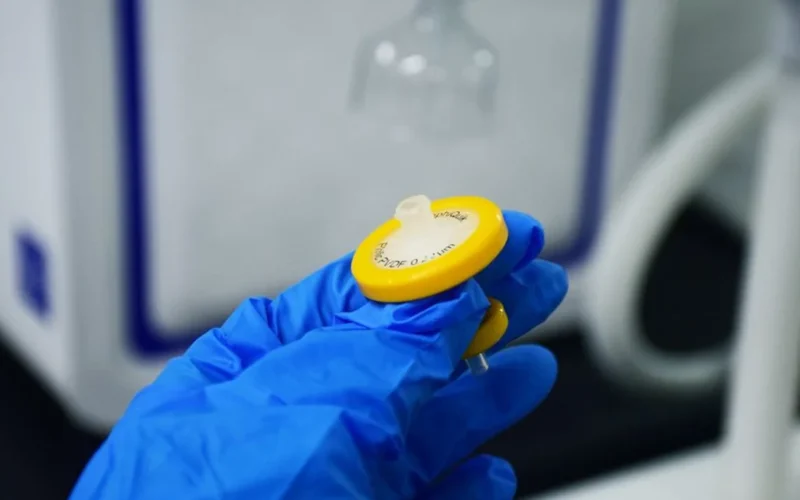
To achieve this selective filtration, the research team constructed series of graphene oxide membranes arranged in thin layers with microscopic channels between them. By integrating calcium ions and sodium alginate, a compound derived from seaweed, they adjusted the size and chemical properties of these channels to influence molecule passage. During testing using diluted commercial freeze-dried instant coffee, the best-performing membrane successfully dropped caffeine levels from 24.64 to 12.95 micrograms per milligram of dried coffee solids.
However, the laboratory results reveal a massive gap between proof-of-concept and practical utility; each 100-milliliter experiment required 24 hours of filtration at room temperature under vacuum pressure. The present permeance remains modest under real-coffee filtration conditions. While the reduction was significant, the researchers noted that the process is currently an early-stage demonstration rather than an industrially optimized solution. Although the treated coffee retained measurable amounts of trigonelline, N-methylpyridinium, choline, and hydroxymethylfurfural, some of these flavor-associated compounds also declined during the filtration process. Crucially, the study did not include sensory testing to determine how this specific level of extraction affects the final cup’s taste profile.
Challenges for commercial viability
Scaling this technology requires solving several steep technical bottlenecks. The authors identified critical areas for future research, including the need to improve filtration speed, prevent membrane clogging, and establish efficient cleaning and reuse procedures. There is also no evidence yet that this method provides any energy-saving or environmental advantage over established industry standards.
The pursuit of post-extraction decaffeination has faced difficulty in the past. In 2022, a Seattle-based startup called Decafino launched a post-brew pouch claiming it could remove up to 80% of caffeine in eight minutes, but its website is no longer active and its current status remains unconfirmed. For graphene oxide membranes to succeed where others have stalled, developers must prove they can manage operating costs while maintaining the complex chemical integrity of the brew.
Does a 47% reduction via molecular sieving interest you, or is traditional bean-level decaffeination still the gold standard?
Questions & Answers
How does the graphene oxide membrane remove caffeine from brewed coffee?
The graphene oxide membrane works by using ultra-thin layers of carbon-based material to create microscopic channels that act as a molecular sieve. Researchers adjusted the size and chemical properties of these channels by integrating calcium ions and sodium alginate, a compound derived from seaweed. This engineering allows the membrane to selectively target and filter out caffeine molecules once they are already dissolved in the liquid. During laboratory testing, this precise filtration method successfully reduced caffeine concentrations by approximately 47 percent.
What are the main differences between this new method and traditional decaffeination?
The primary difference lies in the timing and medium of the decaffeination process. Conventional methods treat green coffee beans before they are roasted using water, carbon dioxide, or chemical solvents. In contrast, the graphene oxide membrane technology targets caffeine after the coffee has already been brewed and the caffeine is dissolved in liquid. While traditional methods focus on the raw bean, this experimental approach offers a post-extraction method designed to filter the finished beverage through molecular sieving.
What challenges must be overcome to make graphene oxide filtration commercially viable?
Developers must significantly improve filtration speed and prevent membrane clogging to make this technology practical for industry use. Currently, the process is an early-stage demonstration that requires 24 hours of filtration for every 100 milliliters of liquid, which is too slow for large-scale production. Future research must also establish efficient cleaning and reuse procedures for the membranes. Additionally, researchers need to prove that this method can manage operating costs and offer energy or environmental advantages over existing industry standards.
How does the graphene oxide filtration process affect other compounds in coffee?
The filtration process retains several key coffee compounds but can also cause a decline in certain flavor-associated elements. While the membrane successfully kept measurable amounts of trigonelline, N-methylpyridinium, choline, and hydroxymethylfurfural in the liquid, some of these substances also decreased during the filtration. Because the study focused on molecular concentration rather than sensory testing, it remains unknown exactly how this specific level of extraction and compound reduction will impact the final taste profile of the coffee.
Originally reported by Daily Coffee News.